

342
10 Proteins of Muscle and the Cytoskeleton
19 41
5'-NT 4
13 20 42 64
Human-heart
+
-aorta
+
Rat-SkMu
+
+
-p
+
+
Chicken-SkMu
+
+
-heart
+
+
-aorta
+
+
-ex
?
+
Sea urchin-CyI
-CyII
+
-pSpG28
+
Bomby~-A1, A2
N 0
-A3
?
Drosophila -1
-2
+
-4
+
-6
-3,5
N 0
Caen.-I,II,III
+
-IV
+
Yeast
+
Soybean
+
Tetrahymena
N 0
Dictyostelium
N 0
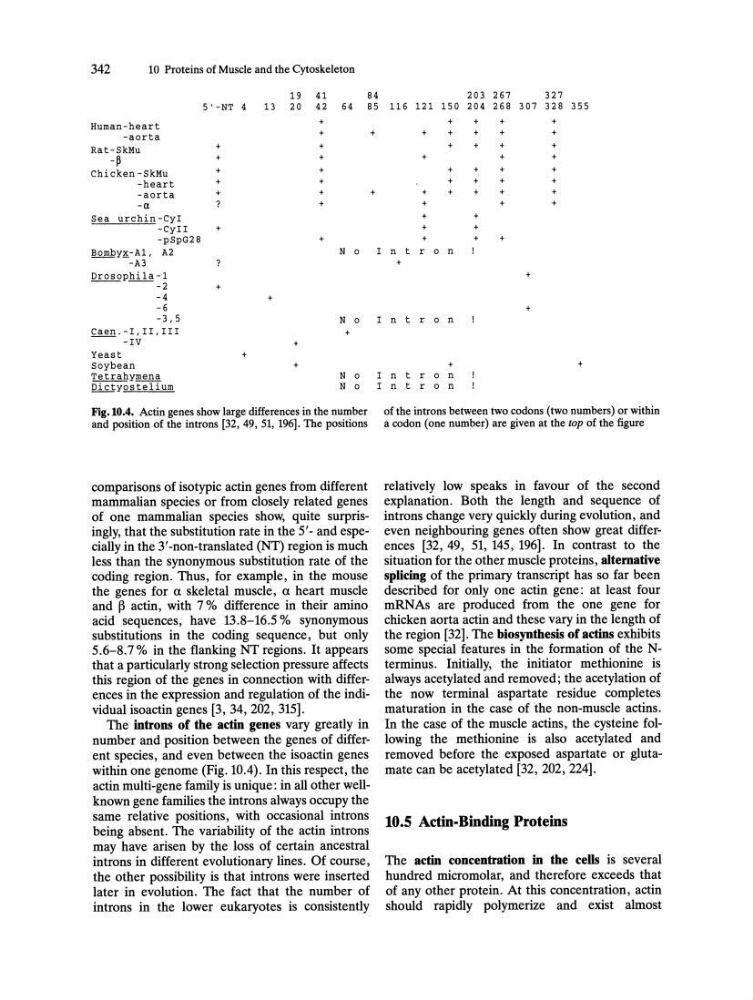
Fig.l0.4. Actin genes show large differences in the number
and position of the introns [32, 49, 51, 196]. The positions
comparisons of isotypic actin genes from different
mammalian species or from closely related genes
of one mammalian species show, quite surprisingly, that the substitution rate in the 5'- and especially in the 3'-non-translated (NT) region is much
less than the synonymous substitution rate of the
coding region. Thus, for example, in the mouse
the genes for a skeletal muscle, a heart muscle
and ~ actin, with 7 % difference in their amino
acid sequences, have 13.8-16.5 % synonymous
substitutions in the coding sequence, but only
5.6-8.7 % in the flanking NT regions. It appears
that a particularly strong selection pressure affects
this region of the genes in connection with differences in the expression and regulation of the individual isoactin genes [3, 34, 202, 315].
The introns of the actin genes vary greatly in
number and position between the genes of different species, and even between the isoactin genes
within one genome (Fig.lO.4). In this respect, the
actin mUlti-gene family is unique: in all other wellknown gene families the introns always occupy the
same relative positions, with occasional introns
being absent. The variability of the actin introns
may have arisen by the loss of certain ancestral
introns in different evolutionary lines. Of course,
the other possibility is that introns were inserted
later in evolution. The fact that the number of
introns in the lower eukaryotes is consistently
84
85
+
+
I
I
I
I
203 267
327
116 121 150 204 268 307 328 355
+
+
+
+
+
+
+
+
+
+
+
+
+
+
+
+
+
+
+
+
+
+
+
+
+
+
+
+
+
+
+
+
+
+
+
+
+
+
+
n t r 0 n
+
+
+
n t r 0 n
+
+
n t r 0 n
n t r 0 n
of the introns between two codons (two numbers) or within
a codon (one number) are given at the top of the figure
relatively low speaks in favour of the second
explanation. Both the length and sequence of
introns change very quickly during evolution, and
even neighbouring genes often show great differences [32,49, 51, 145, 196]. In contrast to the
situation for the other muscle proteins, alternative
splicing of the primary transcript has so far been
described for only one actin gene: at least four
mRNAs are produced from the one gene for
chicken aorta actin and these vary in the length of
the region [32]. The biosynthesis of amns exhibits
some special features in the formation of the Nterminus. Initially, the initiator methionine is
always acetylated and removed; the acetylation of
the now terminal aspartate residue completes
maturation in the case of ·the non-muscle actins.
In the case of the muscle actins, the cysteine following the methionine is also acetylated and
removed before the exposed aspartate or glutamate can be acetylated [32,202,224].
10.5 Actin-Binding Proteins
The actin concentration in the cells is several
hundred micromolar, and therefore exceeds that
of any other protein. At this concentration, actin
should rapidly polymerize and exist almost
10 Proteins of Muscle and the Cytoskeleton
19 41
5'-NT 4
13 20 42 64
Human-heart
+
-aorta
+
Rat-SkMu
+
+
-p
+
+
Chicken-SkMu
+
+
-heart
+
+
-aorta
+
+
-ex
?
+
Sea urchin-CyI
-CyII
+
-pSpG28
+
Bomby~-A1, A2
N 0
-A3
?
Drosophila -1
-2
+
-4
+
-6
-3,5
N 0
Caen.-I,II,III
+
-IV
+
Yeast
+
Soybean
+
Tetrahymena
N 0
Dictyostelium
N 0
Fig.l0.4. Actin genes show large differences in the number
and position of the introns [32, 49, 51, 196]. The positions
comparisons of isotypic actin genes from different
mammalian species or from closely related genes
of one mammalian species show, quite surprisingly, that the substitution rate in the 5'- and especially in the 3'-non-translated (NT) region is much
less than the synonymous substitution rate of the
coding region. Thus, for example, in the mouse
the genes for a skeletal muscle, a heart muscle
and ~ actin, with 7 % difference in their amino
acid sequences, have 13.8-16.5 % synonymous
substitutions in the coding sequence, but only
5.6-8.7 % in the flanking NT regions. It appears
that a particularly strong selection pressure affects
this region of the genes in connection with differences in the expression and regulation of the individual isoactin genes [3, 34, 202, 315].
The introns of the actin genes vary greatly in
number and position between the genes of different species, and even between the isoactin genes
within one genome (Fig.lO.4). In this respect, the
actin mUlti-gene family is unique: in all other wellknown gene families the introns always occupy the
same relative positions, with occasional introns
being absent. The variability of the actin introns
may have arisen by the loss of certain ancestral
introns in different evolutionary lines. Of course,
the other possibility is that introns were inserted
later in evolution. The fact that the number of
introns in the lower eukaryotes is consistently
84
85
+
+
I
I
I
I
203 267
327
116 121 150 204 268 307 328 355
+
+
+
+
+
+
+
+
+
+
+
+
+
+
+
+
+
+
+
+
+
+
+
+
+
+
+
+
+
+
+
+
+
+
+
+
+
+
+
n t r 0 n
+
+
+
n t r 0 n
+
+
n t r 0 n
n t r 0 n
of the introns between two codons (two numbers) or within
a codon (one number) are given at the top of the figure
relatively low speaks in favour of the second
explanation. Both the length and sequence of
introns change very quickly during evolution, and
even neighbouring genes often show great differences [32,49, 51, 145, 196]. In contrast to the
situation for the other muscle proteins, alternative
splicing of the primary transcript has so far been
described for only one actin gene: at least four
mRNAs are produced from the one gene for
chicken aorta actin and these vary in the length of
the region [32]. The biosynthesis of amns exhibits
some special features in the formation of the Nterminus. Initially, the initiator methionine is
always acetylated and removed; the acetylation of
the now terminal aspartate residue completes
maturation in the case of ·the non-muscle actins.
In the case of the muscle actins, the cysteine following the methionine is also acetylated and
removed before the exposed aspartate or glutamate can be acetylated [32,202,224].
10.5 Actin-Binding Proteins
The actin concentration in the cells is several
hundred micromolar, and therefore exceeds that
of any other protein. At this concentration, actin
should rapidly polymerize and exist almost