

9.4 Proteotoxins of Other Invertebrates
327
a) Bymenopterans:
Melittin: Apis mellifera
A. florea
G1GAVLKVLTTGLPAL1SW1KRKRQQ-amide
G1GA1LKVLATGLPTL1SW1KNKRKQ-amide
CNCKAPETALCARRCQQH-amide
1KCNCKRHV1KPH1CRK1CGKN-amide
1NLKALAALAKK1L-amide
FLPL1LRK1VTAL-amide
Apamin
MCD-Peptide
Mastoparan
Crabrolin
b) Conus geographus:
(l-Conotoxin G-1
p-Conotoxin G-V111A
ffi-Conotoxin G-V11A
c) Sea anemones:
ECCNPACGRHYSC-amide
RDCCTPPKKCKDRQCKPQRCCA-amide
I I
I
HOOH
OH
CKSPGTPCSRGMRDCCTSCLLYSNKCRRY
I
I
OH OH
AsV
Ax1
RpII1
GVPCLCDSDGPSVRGNTLSG1LWLA--GCPSGWHNCKKHKPT1GWCCK
GVSCLCDSDGPSVRGNTLSGTLWLYPSGCPSGWHNCKAHGPT1GWCCKQ
GNCKCDDEGPNVRTAPLTGYVDLG--YCNEGWEKCASYYSP1AECCRKKK
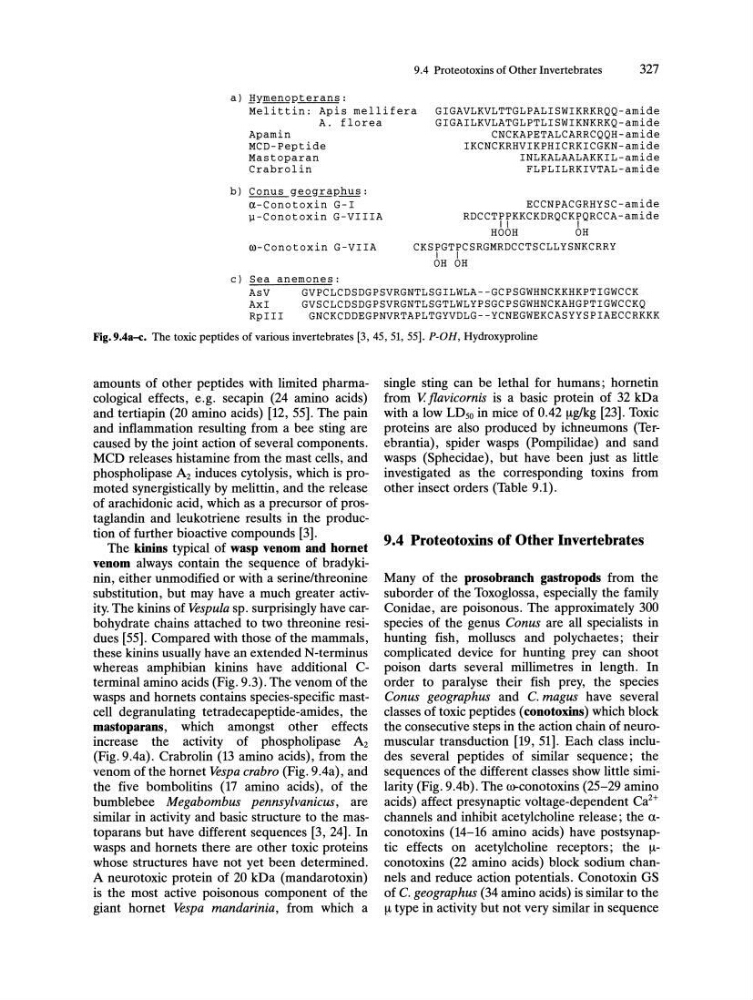
Fig.9.4a-c. The toxic peptides of various invertebrates [3, 45, 51, 55]. P-OH, Hydroxyproline
amounts of other peptides with limited pharmacological effects, e.g. secapin (24 amino acids)
and tertiapin (20 amino acids) [12, 55]. The pain
and inflammation resulting from a bee sting are
caused by the joint action of several components.
MCD releases histamine from the mast cells, and
phospholipase Az induces cytolysis, which is promoted synergistically by melittin, and the release
of arachidonic acid, which as a precursor of prostaglandin and leukotriene results in the production of further bioactive compounds [3].
The kinins typical of wasp venom and hornet
venom always contain the sequence of bradykinin, either unmodified or with a serine/threonine
substitution, but may have a much greater activity. The kinins of Vespula sp. surprisingly have carbohydrate chains attached to two threonine residues [55]. Compared with those of the mammals,
these kinins usually have an extended N-terminus
whereas amphibian kinins have additional Cterminal amino acids (Fig. 9.3). The venom of the
wasps and hornets contains species-specific mastcell degranulating tetradecapeptide-amides, the
mastoparans, which amongst other effects
increase the activity of phospholipase Az
(Fig.9.4a). Crabrolin (13 amino acids), from the
venom ofthe hornet Vespa crabro (Fig. 9.4a) , and
the five bombolitins (17 amino acids), of the
bumblebee Megabombus pennsylvanicus, are
similar in activity and basic structure to the mastoparans but have different sequences [3, 24]. In
wasps and hornets there are other toxic proteins
whose structures have not yet been determined.
A neurotoxic protein of 20 kDa (mandarotoxin)
is the most active poisonous component of the
giant hornet Vespa mandarinia, from which a
single sting can be lethal for humans; hornetin
from V. flavicornis is a basic protein of 32 kDa
with a low LDso in mice of 0.42 !!g/kg [23]. Toxic
proteins are also produced by ichneumons (Terebrantia), spider wasps (Pompilidae) and sand
wasps (Sphecidae), but have been just as little
investigated as the corresponding toxins from
other insect orders (Table 9.1).
9.4 Proteotoxins of Other Invertebrates
Many of the prosobranch gastropods from the
suborder of the Toxoglossa, especially the family
Conidae, are poisonous. The approximately 300
species of the genus Conus are all specialists in
hunting fish, molluscs and polychaetes; their
complicated device for hunting prey can shoot
poison darts several millimetres in length. In
order to paralyse their fish prey, the species
Conus geographus and C. magus have several
classes of toxic peptides (conotoxins) which block
the consecutive steps in the action chain of neuromuscular transduction [19,51]. Each class includes several peptides of similar sequence; the
sequences of the different classes show little similarity (Fig. 9.4b). The w-conotoxins (25-29 amino
acids) affect presynaptic voltage-dependent Ca z +
channels and inhibit acetylcholine release; the aconotoxins (14-16 amino acids) have postsynaptic effects on acetylcholine receptors; the !!conotoxins (22 amino acids) block sodium channels and reduce action potentials. Conotoxin GS
of C. geographus (34 amino acids) is similar to the
!! type in activity but not very similar in sequence
327
a) Bymenopterans:
Melittin: Apis mellifera
A. florea
G1GAVLKVLTTGLPAL1SW1KRKRQQ-amide
G1GA1LKVLATGLPTL1SW1KNKRKQ-amide
CNCKAPETALCARRCQQH-amide
1KCNCKRHV1KPH1CRK1CGKN-amide
1NLKALAALAKK1L-amide
FLPL1LRK1VTAL-amide
Apamin
MCD-Peptide
Mastoparan
Crabrolin
b) Conus geographus:
(l-Conotoxin G-1
p-Conotoxin G-V111A
ffi-Conotoxin G-V11A
c) Sea anemones:
ECCNPACGRHYSC-amide
RDCCTPPKKCKDRQCKPQRCCA-amide
I I
I
HOOH
OH
CKSPGTPCSRGMRDCCTSCLLYSNKCRRY
I
I
OH OH
AsV
Ax1
RpII1
GVPCLCDSDGPSVRGNTLSG1LWLA--GCPSGWHNCKKHKPT1GWCCK
GVSCLCDSDGPSVRGNTLSGTLWLYPSGCPSGWHNCKAHGPT1GWCCKQ
GNCKCDDEGPNVRTAPLTGYVDLG--YCNEGWEKCASYYSP1AECCRKKK
Fig.9.4a-c. The toxic peptides of various invertebrates [3, 45, 51, 55]. P-OH, Hydroxyproline
amounts of other peptides with limited pharmacological effects, e.g. secapin (24 amino acids)
and tertiapin (20 amino acids) [12, 55]. The pain
and inflammation resulting from a bee sting are
caused by the joint action of several components.
MCD releases histamine from the mast cells, and
phospholipase Az induces cytolysis, which is promoted synergistically by melittin, and the release
of arachidonic acid, which as a precursor of prostaglandin and leukotriene results in the production of further bioactive compounds [3].
The kinins typical of wasp venom and hornet
venom always contain the sequence of bradykinin, either unmodified or with a serine/threonine
substitution, but may have a much greater activity. The kinins of Vespula sp. surprisingly have carbohydrate chains attached to two threonine residues [55]. Compared with those of the mammals,
these kinins usually have an extended N-terminus
whereas amphibian kinins have additional Cterminal amino acids (Fig. 9.3). The venom of the
wasps and hornets contains species-specific mastcell degranulating tetradecapeptide-amides, the
mastoparans, which amongst other effects
increase the activity of phospholipase Az
(Fig.9.4a). Crabrolin (13 amino acids), from the
venom ofthe hornet Vespa crabro (Fig. 9.4a) , and
the five bombolitins (17 amino acids), of the
bumblebee Megabombus pennsylvanicus, are
similar in activity and basic structure to the mastoparans but have different sequences [3, 24]. In
wasps and hornets there are other toxic proteins
whose structures have not yet been determined.
A neurotoxic protein of 20 kDa (mandarotoxin)
is the most active poisonous component of the
giant hornet Vespa mandarinia, from which a
single sting can be lethal for humans; hornetin
from V. flavicornis is a basic protein of 32 kDa
with a low LDso in mice of 0.42 !!g/kg [23]. Toxic
proteins are also produced by ichneumons (Terebrantia), spider wasps (Pompilidae) and sand
wasps (Sphecidae), but have been just as little
investigated as the corresponding toxins from
other insect orders (Table 9.1).
9.4 Proteotoxins of Other Invertebrates
Many of the prosobranch gastropods from the
suborder of the Toxoglossa, especially the family
Conidae, are poisonous. The approximately 300
species of the genus Conus are all specialists in
hunting fish, molluscs and polychaetes; their
complicated device for hunting prey can shoot
poison darts several millimetres in length. In
order to paralyse their fish prey, the species
Conus geographus and C. magus have several
classes of toxic peptides (conotoxins) which block
the consecutive steps in the action chain of neuromuscular transduction [19,51]. Each class includes several peptides of similar sequence; the
sequences of the different classes show little similarity (Fig. 9.4b). The w-conotoxins (25-29 amino
acids) affect presynaptic voltage-dependent Ca z +
channels and inhibit acetylcholine release; the aconotoxins (14-16 amino acids) have postsynaptic effects on acetylcholine receptors; the !!conotoxins (22 amino acids) block sodium channels and reduce action potentials. Conotoxin GS
of C. geographus (34 amino acids) is similar to the
!! type in activity but not very similar in sequence