

306
8 Peptide Hormones
a) FMRF-amide-like'peptides and opioids
(widespread)
(widespread)
(Helix aspersa)
(Lymnaea stagnalis)
(Octopus vulgaris)
for comparison: Met-Encephalin
FMRF-amide
FLRF-amide
pEDPFLRF-amide
GDPFLRF-amide
YGGFMRF-amide
YGGFM
b) ELH (Aplysia californica)
ISINQDLKAITDMLLTEQIRERQRYLADLRQRLLEK-amide
c) CDCH (Lymnaea stagnalis)
LSITNDLRAIADSYLYDQHWLRERQEENLRRRFLEL-amide
d) Eclosion hormone (Manduca sexta)
NPAIATGYDPMEICIENCAQCKKMLGAWFEGPLCAESCIKFKGKLIPECEDFASIAPFLNKL
e) Proctolin
RYLPT
f) Paragonial peptide (Drosophila funebris)
DVPSANANANNQRTAAAKPQANAEASS
g) AKH I (Locusta, Schistocerca)
pELNFTPNWGT-amide
AKH II-L (Locusta migratoria)
pELNFSAGW-amide
AKH II-S (Schistocerca gregaria)
pELNFSTGW-amide
CC I
(Periplaneta americana)
pEVNFSPNw-amide
CC II (Periplaneta americana)
pELTFTPNW-amide
h) RPCH (Pandalus borealis)
pELNFSPGW-amide
i) aPDH (Pandalus borealis)
NSGMINSILGIPRVMTEA-amide
j) PDF
(Romalea microptera)
NSEIINSLLGLPKLLNDA-amide
k) Leucosulfakinin (Leucophaea maderae)
EQFGDYGHMRF-amide
for comparison: Gastrin-17 (pig)
-EEEEAYGWMDF-amide
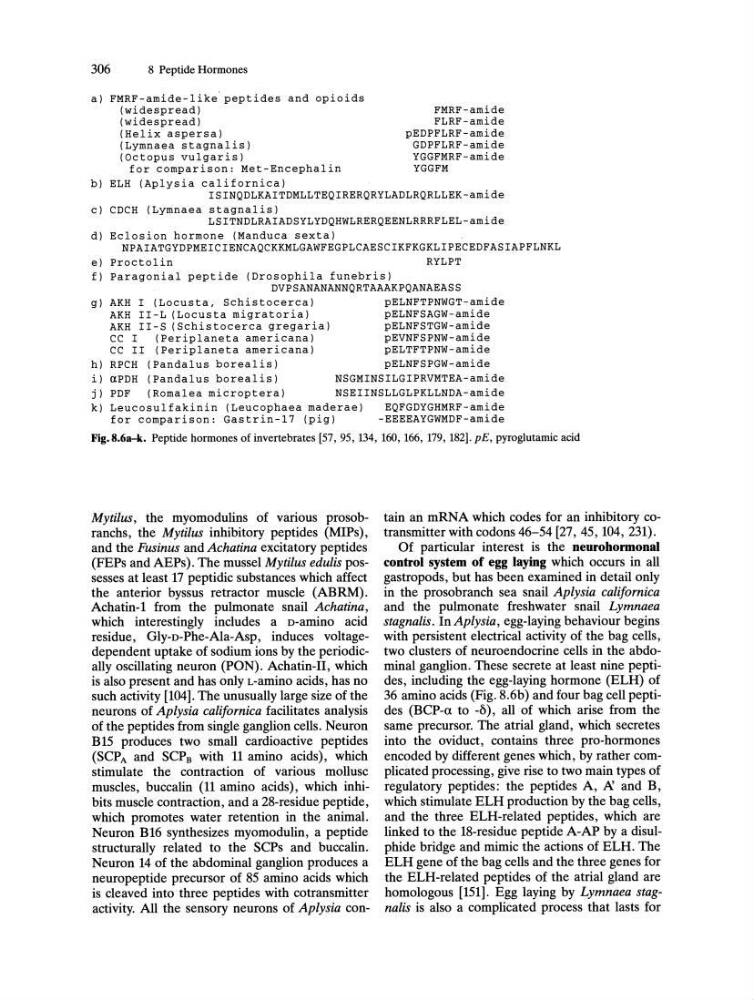
Fig. S.6a-k. Peptide hormones of invertebrates [57, 95, 134, 160, 166, 179, 182]. pE, pyroglutamic acid
Mytilus, the myomodulins of various prosobranchs, the Mytilus inhibitory peptides (MIPs),
and the Fusinus and Achatina excitatory peptides
(FEPs and AEPs). The mussel Mytilus edulis possesses at least 17 peptidic substances which affect
the anterior byssus retractor muscle (ABRM).
Achatin-l from the pulmonate snail Achatina,
which interestingly includes a D-amino acid
residue, GlY-D-Phe-Ala-Asp, induces voltagedependent uptake of sodium ions by the periodically oscillating neuron (PON). Achatin-II, which
is also present and has only L-amino acids, has no
such activity [104]. The unusually large size of the
neurons of Aplysia cali/arnica facilitates analysis
of the peptides from single ganglion cells. Neuron
B 15 produces two small cardioactive peptides
(SCPA and SCPB with 11 amino acids), which
stimulate the contraction of various mollusc
muscles, buccalin (11 amino acids), which inhibits muscle contraction, and a 28-residue peptide,
which promotes water retention in the animal.
Neuron B16 synthesizes myomodulin, a peptide
structurally related to the SCPs and buccalin.
Neuron 14 of the abdominal ganglion produces a
neuropeptide precursor of 85 amino acids which
is cleaved into three peptides with cotransmitter
activity. All the sensory neurons of Aplysia contain an mRNA which codes for an inhibitory cotransmitter with co dons 46-54 [27, 45, 104, 231).
Of particular interest is the neurohormonal
control system of egg laying which occurs in all
gastropods, but has been examined in detail only
in the prosobranch sea snail Aplysia cali/arnica
and the pulmonate freshwater snail Lymnaea
stagnalis. In Ap/ysia, egg-laying behaviour begins
with persistent electrical activity of the bag cells,
two clusters of neuroendocrine cells in the abdominal ganglion. These secrete at least nine peptides, including the egg-laying hormone (ELH) of
36 amino acids (Fig. 8.6b) and four bag cell peptides (BCP-a to -(», all of which arise from the
same precursor. The atrial gland, which secretes
into the oviduct, contains three pro-hormones
encoded by different genes which, by rather complicated processing, give rise to two main types of
regulatory peptides: the peptides A, It( and B,
which stimulate ELH production by the bag cells,
and the three ELH-related peptides, which are
linked to the 18-residue peptide A-AP by a disulphide bridge and mimic the actions of ELH. The
ELH gene of the bag cells and the three genes for
the ELH-related peptides of the atrial gland are
homologous [151]. Egg laying by Lymnaea stagnalis is also a complicated process that lasts for
8 Peptide Hormones
a) FMRF-amide-like'peptides and opioids
(widespread)
(widespread)
(Helix aspersa)
(Lymnaea stagnalis)
(Octopus vulgaris)
for comparison: Met-Encephalin
FMRF-amide
FLRF-amide
pEDPFLRF-amide
GDPFLRF-amide
YGGFMRF-amide
YGGFM
b) ELH (Aplysia californica)
ISINQDLKAITDMLLTEQIRERQRYLADLRQRLLEK-amide
c) CDCH (Lymnaea stagnalis)
LSITNDLRAIADSYLYDQHWLRERQEENLRRRFLEL-amide
d) Eclosion hormone (Manduca sexta)
NPAIATGYDPMEICIENCAQCKKMLGAWFEGPLCAESCIKFKGKLIPECEDFASIAPFLNKL
e) Proctolin
RYLPT
f) Paragonial peptide (Drosophila funebris)
DVPSANANANNQRTAAAKPQANAEASS
g) AKH I (Locusta, Schistocerca)
pELNFTPNWGT-amide
AKH II-L (Locusta migratoria)
pELNFSAGW-amide
AKH II-S (Schistocerca gregaria)
pELNFSTGW-amide
CC I
(Periplaneta americana)
pEVNFSPNw-amide
CC II (Periplaneta americana)
pELTFTPNW-amide
h) RPCH (Pandalus borealis)
pELNFSPGW-amide
i) aPDH (Pandalus borealis)
NSGMINSILGIPRVMTEA-amide
j) PDF
(Romalea microptera)
NSEIINSLLGLPKLLNDA-amide
k) Leucosulfakinin (Leucophaea maderae)
EQFGDYGHMRF-amide
for comparison: Gastrin-17 (pig)
-EEEEAYGWMDF-amide
Fig. S.6a-k. Peptide hormones of invertebrates [57, 95, 134, 160, 166, 179, 182]. pE, pyroglutamic acid
Mytilus, the myomodulins of various prosobranchs, the Mytilus inhibitory peptides (MIPs),
and the Fusinus and Achatina excitatory peptides
(FEPs and AEPs). The mussel Mytilus edulis possesses at least 17 peptidic substances which affect
the anterior byssus retractor muscle (ABRM).
Achatin-l from the pulmonate snail Achatina,
which interestingly includes a D-amino acid
residue, GlY-D-Phe-Ala-Asp, induces voltagedependent uptake of sodium ions by the periodically oscillating neuron (PON). Achatin-II, which
is also present and has only L-amino acids, has no
such activity [104]. The unusually large size of the
neurons of Aplysia cali/arnica facilitates analysis
of the peptides from single ganglion cells. Neuron
B 15 produces two small cardioactive peptides
(SCPA and SCPB with 11 amino acids), which
stimulate the contraction of various mollusc
muscles, buccalin (11 amino acids), which inhibits muscle contraction, and a 28-residue peptide,
which promotes water retention in the animal.
Neuron B16 synthesizes myomodulin, a peptide
structurally related to the SCPs and buccalin.
Neuron 14 of the abdominal ganglion produces a
neuropeptide precursor of 85 amino acids which
is cleaved into three peptides with cotransmitter
activity. All the sensory neurons of Aplysia contain an mRNA which codes for an inhibitory cotransmitter with co dons 46-54 [27, 45, 104, 231).
Of particular interest is the neurohormonal
control system of egg laying which occurs in all
gastropods, but has been examined in detail only
in the prosobranch sea snail Aplysia cali/arnica
and the pulmonate freshwater snail Lymnaea
stagnalis. In Ap/ysia, egg-laying behaviour begins
with persistent electrical activity of the bag cells,
two clusters of neuroendocrine cells in the abdominal ganglion. These secrete at least nine peptides, including the egg-laying hormone (ELH) of
36 amino acids (Fig. 8.6b) and four bag cell peptides (BCP-a to -(», all of which arise from the
same precursor. The atrial gland, which secretes
into the oviduct, contains three pro-hormones
encoded by different genes which, by rather complicated processing, give rise to two main types of
regulatory peptides: the peptides A, It( and B,
which stimulate ELH production by the bag cells,
and the three ELH-related peptides, which are
linked to the 18-residue peptide A-AP by a disulphide bridge and mimic the actions of ELH. The
ELH gene of the bag cells and the three genes for
the ELH-related peptides of the atrial gland are
homologous [151]. Egg laying by Lymnaea stagnalis is also a complicated process that lasts for