

interactions between heterodimers. However,
these concepts cannot, as a rule, be applied to
invertebrate haemoglobins. Cooperative homodimers and the resulting tetramers are known from
various mussel species of the family Arcidae. In
these cases, the contacts between the subunits are
formed via the helices E and F; consequently, the
subunits have exactly the opposite orientation to
those in vertebrates where E and F are external
[17, 108]. Compared with vertebrate tetramers,
the homotetramers of haemoglobin F-I from Urechis caupo are also "inside out"; the G/H helices
lie on the tetramer surface. The contacts between
the subunits, however, are different to those in
the Arcidae; the haemoglobin shows neither
cooperativity nor a Bohr effect nor any other
heterotropic interaction [46, 86]. In the giant haemoglobins of the annelids, the Hill constants, n,
have maximal values of about 7-8, although the
whole molecule contains at least 144 haem
groups. In this case, the cooperative subunit
apparently corresponds to one of the 12 structural
units visible in electron micrographs of this molecule, which has the form of two hexagons [108].
The even larger extracellular haemoglobins of the
marine mussels from the families Astartidae and
Carditidae, which contain hundreds of haem
groups, show no cooperativity whatsoever [163].
Many, but by no means all, invertebrate haemoglobins show a Bohr effect. Many of the haemoglobins show both the normal (alkaline) and the
inverse ( acidic) Bohr effect; the haemoglobins
CTT-III and CTT-IV of Chironomus have only
the alkaline effect, and Dicrocoelium shows only
the acidic effect [151]. Of all the invertebrate haemoglobins, the molecular mechanism of the alkaline Bohr effect has been clarified to some extent
only in Chironomus [151]. Heterotropic modulation of haemoglobins by organophosphates,
which is of great importance in the vertebrates, is
apparently not found in the invertebrates [174].
The enthalpy values (~H) of oxygenation are
as variable in the invertebrates as they are in the
poikilothermal vertebrates. The different haemoglobins of Chironomus have values between
--40 and -81 kJ/mol O2 [182]; the haemoglobin of
the earthworm Maoridrilus montanusi has a value
of -27 kJ/mol O2, like other annelids [43]; and
the tetrameric and monomeric haemoglobins of
the mussel Barbatia reeveana have values of -22.6
and -12.1 kJ/mol O2, respectively [57]. In spite of
the basic similarity of haem pocket structures,
marked deviations in the amino acid sequence
result in large differences in Orbinding kinetics
between invertebrate haemoglobins, especially in
7.2.1 Annelids, Pogonophora and Echiurids
267
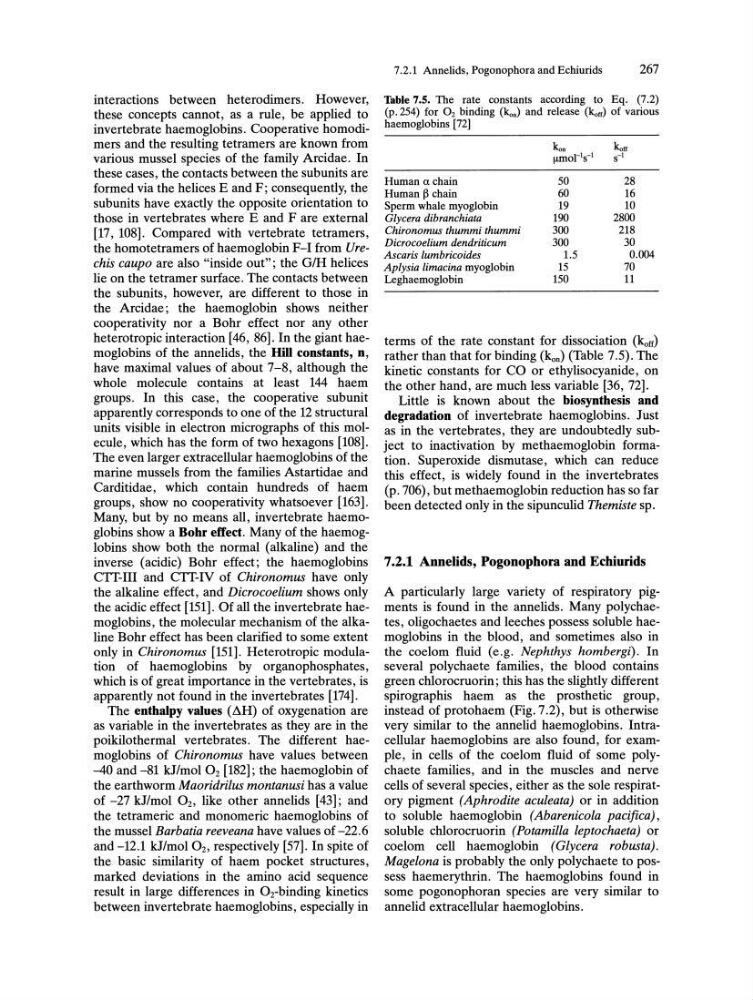
Table 7.5. The rate constants according to Eq. (7.2)
(p.254) for O2 binding (kon) and release (koff) of various
haemoglobins [72]
Human a chain
Human ~ chain
Sperm whale myoglobin
Glycera dibranchiata
Chironomus thummi thummi
Dicrocoelium dendriticum
Ascaris lumbricoides
Aplysia limacina myoglobin
Leghaemoglobin
kon
koff
!lmol-'s-'
s-'
50
60
19
190
300
300
1.5
15
150
28
16
10
2800
218
30
0.004
70
11
terms of the rate constant for dissociation (koff)
rather than that for binding (kon) (Table 7.5). The
kinetic constants for CO or ethylisocyanide, on
the other hand, are much less variable [36, 72].
Little is known about the biosynthesis and
degradation of invertebrate haemoglobins. Just
as in the vertebrates, they are undoubtedly subject to inactivation by methaemoglobin formation. Superoxide dismutase, which can reduce
this effect, is widely found in the invertebrates
(p. 706), but methaemoglobin reduction has so far
been detected only in the sipunculid Themiste sp.
7.2.1 Annelids, Pogonophora and Echiurids
A particularly large variety of respiratory pigments is found in the annelids. Many polychaetes, oligochaetes and leeches possess soluble haemoglobins in the blood, and sometimes also in
the coelom fluid (e.g. Nephthys hombergi). In
several polychaete families, the blood contains
green chlorocruorin; this has the slightly different
spirographis haem as the prosthetic group,
instead of protohaem (Fig. 7.2), but is otherwise
very similar to the annelid haemoglobins. Intracellular haemoglobins are also found, for example, in cells of the coelom fluid of some polychaete families, and in the muscles and nerve
cells of several species, either as the sole respiratory pigment (Aphrodite aculeata) or in addition
to soluble haemoglobin (Abarenicola pacifica),
soluble chlorocruorin (Potamilla leptochaeta) or
coelom cell haemoglobin (Glycera robusta).
Magelona is probably the only polychaete to possess haemerythrin. The haemoglobins found in
some pogonophoran species are very similar to
annelid extracellular haemoglobins.
these concepts cannot, as a rule, be applied to
invertebrate haemoglobins. Cooperative homodimers and the resulting tetramers are known from
various mussel species of the family Arcidae. In
these cases, the contacts between the subunits are
formed via the helices E and F; consequently, the
subunits have exactly the opposite orientation to
those in vertebrates where E and F are external
[17, 108]. Compared with vertebrate tetramers,
the homotetramers of haemoglobin F-I from Urechis caupo are also "inside out"; the G/H helices
lie on the tetramer surface. The contacts between
the subunits, however, are different to those in
the Arcidae; the haemoglobin shows neither
cooperativity nor a Bohr effect nor any other
heterotropic interaction [46, 86]. In the giant haemoglobins of the annelids, the Hill constants, n,
have maximal values of about 7-8, although the
whole molecule contains at least 144 haem
groups. In this case, the cooperative subunit
apparently corresponds to one of the 12 structural
units visible in electron micrographs of this molecule, which has the form of two hexagons [108].
The even larger extracellular haemoglobins of the
marine mussels from the families Astartidae and
Carditidae, which contain hundreds of haem
groups, show no cooperativity whatsoever [163].
Many, but by no means all, invertebrate haemoglobins show a Bohr effect. Many of the haemoglobins show both the normal (alkaline) and the
inverse ( acidic) Bohr effect; the haemoglobins
CTT-III and CTT-IV of Chironomus have only
the alkaline effect, and Dicrocoelium shows only
the acidic effect [151]. Of all the invertebrate haemoglobins, the molecular mechanism of the alkaline Bohr effect has been clarified to some extent
only in Chironomus [151]. Heterotropic modulation of haemoglobins by organophosphates,
which is of great importance in the vertebrates, is
apparently not found in the invertebrates [174].
The enthalpy values (~H) of oxygenation are
as variable in the invertebrates as they are in the
poikilothermal vertebrates. The different haemoglobins of Chironomus have values between
--40 and -81 kJ/mol O2 [182]; the haemoglobin of
the earthworm Maoridrilus montanusi has a value
of -27 kJ/mol O2, like other annelids [43]; and
the tetrameric and monomeric haemoglobins of
the mussel Barbatia reeveana have values of -22.6
and -12.1 kJ/mol O2, respectively [57]. In spite of
the basic similarity of haem pocket structures,
marked deviations in the amino acid sequence
result in large differences in Orbinding kinetics
between invertebrate haemoglobins, especially in
7.2.1 Annelids, Pogonophora and Echiurids
267
Table 7.5. The rate constants according to Eq. (7.2)
(p.254) for O2 binding (kon) and release (koff) of various
haemoglobins [72]
Human a chain
Human ~ chain
Sperm whale myoglobin
Glycera dibranchiata
Chironomus thummi thummi
Dicrocoelium dendriticum
Ascaris lumbricoides
Aplysia limacina myoglobin
Leghaemoglobin
kon
koff
!lmol-'s-'
s-'
50
60
19
190
300
300
1.5
15
150
28
16
10
2800
218
30
0.004
70
11
terms of the rate constant for dissociation (koff)
rather than that for binding (kon) (Table 7.5). The
kinetic constants for CO or ethylisocyanide, on
the other hand, are much less variable [36, 72].
Little is known about the biosynthesis and
degradation of invertebrate haemoglobins. Just
as in the vertebrates, they are undoubtedly subject to inactivation by methaemoglobin formation. Superoxide dismutase, which can reduce
this effect, is widely found in the invertebrates
(p. 706), but methaemoglobin reduction has so far
been detected only in the sipunculid Themiste sp.
7.2.1 Annelids, Pogonophora and Echiurids
A particularly large variety of respiratory pigments is found in the annelids. Many polychaetes, oligochaetes and leeches possess soluble haemoglobins in the blood, and sometimes also in
the coelom fluid (e.g. Nephthys hombergi). In
several polychaete families, the blood contains
green chlorocruorin; this has the slightly different
spirographis haem as the prosthetic group,
instead of protohaem (Fig. 7.2), but is otherwise
very similar to the annelid haemoglobins. Intracellular haemoglobins are also found, for example, in cells of the coelom fluid of some polychaete families, and in the muscles and nerve
cells of several species, either as the sole respiratory pigment (Aphrodite aculeata) or in addition
to soluble haemoglobin (Abarenicola pacifica),
soluble chlorocruorin (Potamilla leptochaeta) or
coelom cell haemoglobin (Glycera robusta).
Magelona is probably the only polychaete to possess haemerythrin. The haemoglobins found in
some pogonophoran species are very similar to
annelid extracellular haemoglobins.