

2.1.3 The Genetic Code
13
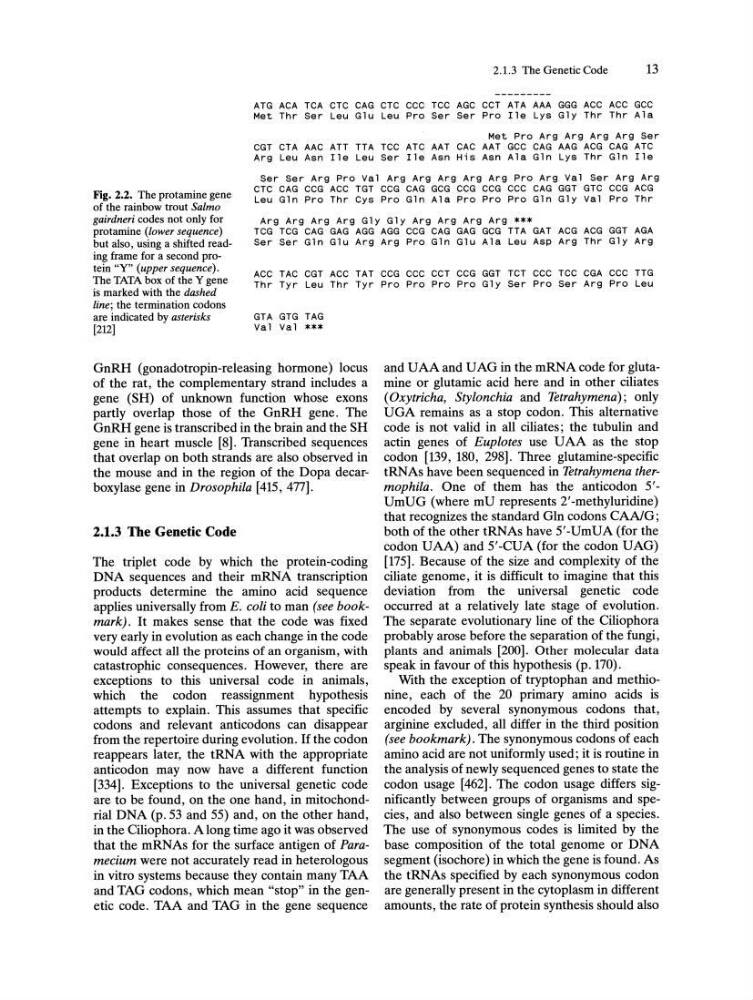
--------ATG ACA TCA CTC CAG CTC CCC TCC AGC CCT ATA AAA GGG ACC ACC GCC
Met Thr Ser Leu Glu Leu Pro Ser Ser Pro Ile Lys Gly Thr Thr Ala
Met Pro Arg Arg Arg Arg Ser
CGT CTA AAC ATT TTA TCC ATC AAT CAC AAT GCC CAG AAG ACG CAG ATC
Arg Leu Asn Ile Leu Ser Ile Asn His Asn Ala Gln Lys Thr Gln Ile
Fig. 2.2. The protamine gene
of the rainbow trout Salrno
gairdneri codes not only for
protamine (lower sequence)
but also, using a shifted reading frame for a second protein "Y" (upper sequence).
The TATA box of the Y gene
is marked with the dashed
line; the termination codons
are indicated by asterisks
[212]
Ser Ser Arg Pro Val Arg Arg Arg Arg Arg Pro Arg Val Ser Arg Arg
CTC CAG CCG ACC TGT CCG CAG GCG CCG CCG CCC CAG GGT GTC CCG ACG
Leu Gln Pro Thr Cys Pro Gln Ala Pro Pro Pro Gln Gly Val Pro Thr
Arg Arg Arg Arg Gly Gly Arg Arg Arg Arg ***
TCG TCG CAG GAG AGG AGG CCG CAG GAG GCG TTA GAT ACG ACG GGT AGA
Ser Ser Gln Glu Arg Arg Pro Gln Glu Ala Leu Asp Arg Thr Gly Arg
ACC TAC CGT ACC TAT CCG CCC CCT CCG GGT TCT CCC TCC CGA CCC TTG
Thr Tyr Leu Thr Tyr Pro Pro Pro Pro Gly Ser Pro Ser Arg Pro Leu
GTA GTG TAG
Val Val ***
GnRH (gonadotropin-releasing hormone) locus
of the rat, the complementary strand includes a
gene (SH) of unknown function whose exons
partly overlap those of the GnRH gene. The
GnRH gene is transcribed in the brain and the SH
gene in heart muscle [8]. Transcribed sequences
that overlap on both strands are also observed in
the mouse and in the region of the Dopa decarboxylase gene in Drosophila [415, 477].
2.1.3 The Genetic Code
The triplet code by which the protein-coding
DNA sequences and their mRNA transcription
products determine the amino acid sequence
applies universally from E. coli to man (see bookmark). It makes sense that the code was fixed
very early in evolution as each change in the code
would affect all the proteins of an organism, with
catastrophic consequences. However, there are
exceptions to this universal code in animals,
which the codon reassignment hypothesis
attempts to explain. This assumes that specific
codons and relevant anticodons can disappear
from the repertoire during evolution. If the codon
reappears later, the tRNA with the appropriate
anticodon may now have a different function
[334]. Exceptions to the universal genetic code
are to be found, on the one hand, in mitochondrial DNA (p. 53 and 55) and, on the other hand,
in the Ciliophora. A long time ago it was observed
that the mRNAs for the surface antigen of Paramecium were not accurately read in heterologous
in vitro systems because they contain many TAA
and TAG codons, which mean "stop" in the genetic code. TAA and TAG in the gene sequence
and UAA and UAG in the mRNA code for glutamine or glutamic acid here and in other ciliates
(Oxytricha, Stylonchia and Tetrahymena); only
UGA remains as a stop codon. This alternative
code is not valid in all ciliates; the tubulin and
actin genes of Euplotes use UAA as the stop
codon [139, 180, 298]. Three glutamine-specific
tRNAs have been sequenced in Tetrahymena thermophila. One of them has the anticodon 5'UmUG (where mU represents 2'-methyluridine)
that recognizes the standard GIn codons CAAlG;
both of the other tRNAs have 5'-UmUA (for the
codon UAA) and 5'-CUA (for the codon UAG)
[175]. Because of the size and complexity of the
ciliate genome, it is difficult to imagine that this
deviation from the universal genetic code
occurred at a relatively late stage of evolution.
The separate evolutionary line of the Ciliophora
probably arose before the separation of the fungi,
plants and animals [200]. Other molecular data
speak in favour of this hypothesis (p. 170).
With the exception of tryptophan and methionine, each of the 20 primary amino acids is
encoded by several synonymous codons that,
arginine excluded, all differ in the third position
(see bookmark). The synonymous co dons of each
amino acid are not uniformly used; it is routine in
the analysis of newly sequenced genes to state the
codon usage [462]. The codon usage differs significantly between groups of organisms and species, and also between single genes of a species.
The use of synonymous codes is limited by the
base composition of the total genome or DNA
segment (isochore) in which the gene is found. As
the tRNAs specified by each synonymous codon
are generally present in the cytoplasm in different
amounts, the rate of protein synthesis should also
13
--------ATG ACA TCA CTC CAG CTC CCC TCC AGC CCT ATA AAA GGG ACC ACC GCC
Met Thr Ser Leu Glu Leu Pro Ser Ser Pro Ile Lys Gly Thr Thr Ala
Met Pro Arg Arg Arg Arg Ser
CGT CTA AAC ATT TTA TCC ATC AAT CAC AAT GCC CAG AAG ACG CAG ATC
Arg Leu Asn Ile Leu Ser Ile Asn His Asn Ala Gln Lys Thr Gln Ile
Fig. 2.2. The protamine gene
of the rainbow trout Salrno
gairdneri codes not only for
protamine (lower sequence)
but also, using a shifted reading frame for a second protein "Y" (upper sequence).
The TATA box of the Y gene
is marked with the dashed
line; the termination codons
are indicated by asterisks
[212]
Ser Ser Arg Pro Val Arg Arg Arg Arg Arg Pro Arg Val Ser Arg Arg
CTC CAG CCG ACC TGT CCG CAG GCG CCG CCG CCC CAG GGT GTC CCG ACG
Leu Gln Pro Thr Cys Pro Gln Ala Pro Pro Pro Gln Gly Val Pro Thr
Arg Arg Arg Arg Gly Gly Arg Arg Arg Arg ***
TCG TCG CAG GAG AGG AGG CCG CAG GAG GCG TTA GAT ACG ACG GGT AGA
Ser Ser Gln Glu Arg Arg Pro Gln Glu Ala Leu Asp Arg Thr Gly Arg
ACC TAC CGT ACC TAT CCG CCC CCT CCG GGT TCT CCC TCC CGA CCC TTG
Thr Tyr Leu Thr Tyr Pro Pro Pro Pro Gly Ser Pro Ser Arg Pro Leu
GTA GTG TAG
Val Val ***
GnRH (gonadotropin-releasing hormone) locus
of the rat, the complementary strand includes a
gene (SH) of unknown function whose exons
partly overlap those of the GnRH gene. The
GnRH gene is transcribed in the brain and the SH
gene in heart muscle [8]. Transcribed sequences
that overlap on both strands are also observed in
the mouse and in the region of the Dopa decarboxylase gene in Drosophila [415, 477].
2.1.3 The Genetic Code
The triplet code by which the protein-coding
DNA sequences and their mRNA transcription
products determine the amino acid sequence
applies universally from E. coli to man (see bookmark). It makes sense that the code was fixed
very early in evolution as each change in the code
would affect all the proteins of an organism, with
catastrophic consequences. However, there are
exceptions to this universal code in animals,
which the codon reassignment hypothesis
attempts to explain. This assumes that specific
codons and relevant anticodons can disappear
from the repertoire during evolution. If the codon
reappears later, the tRNA with the appropriate
anticodon may now have a different function
[334]. Exceptions to the universal genetic code
are to be found, on the one hand, in mitochondrial DNA (p. 53 and 55) and, on the other hand,
in the Ciliophora. A long time ago it was observed
that the mRNAs for the surface antigen of Paramecium were not accurately read in heterologous
in vitro systems because they contain many TAA
and TAG codons, which mean "stop" in the genetic code. TAA and TAG in the gene sequence
and UAA and UAG in the mRNA code for glutamine or glutamic acid here and in other ciliates
(Oxytricha, Stylonchia and Tetrahymena); only
UGA remains as a stop codon. This alternative
code is not valid in all ciliates; the tubulin and
actin genes of Euplotes use UAA as the stop
codon [139, 180, 298]. Three glutamine-specific
tRNAs have been sequenced in Tetrahymena thermophila. One of them has the anticodon 5'UmUG (where mU represents 2'-methyluridine)
that recognizes the standard GIn codons CAAlG;
both of the other tRNAs have 5'-UmUA (for the
codon UAA) and 5'-CUA (for the codon UAG)
[175]. Because of the size and complexity of the
ciliate genome, it is difficult to imagine that this
deviation from the universal genetic code
occurred at a relatively late stage of evolution.
The separate evolutionary line of the Ciliophora
probably arose before the separation of the fungi,
plants and animals [200]. Other molecular data
speak in favour of this hypothesis (p. 170).
With the exception of tryptophan and methionine, each of the 20 primary amino acids is
encoded by several synonymous codons that,
arginine excluded, all differ in the third position
(see bookmark). The synonymous co dons of each
amino acid are not uniformly used; it is routine in
the analysis of newly sequenced genes to state the
codon usage [462]. The codon usage differs significantly between groups of organisms and species, and also between single genes of a species.
The use of synonymous codes is limited by the
base composition of the total genome or DNA
segment (isochore) in which the gene is found. As
the tRNAs specified by each synonymous codon
are generally present in the cytoplasm in different
amounts, the rate of protein synthesis should also