

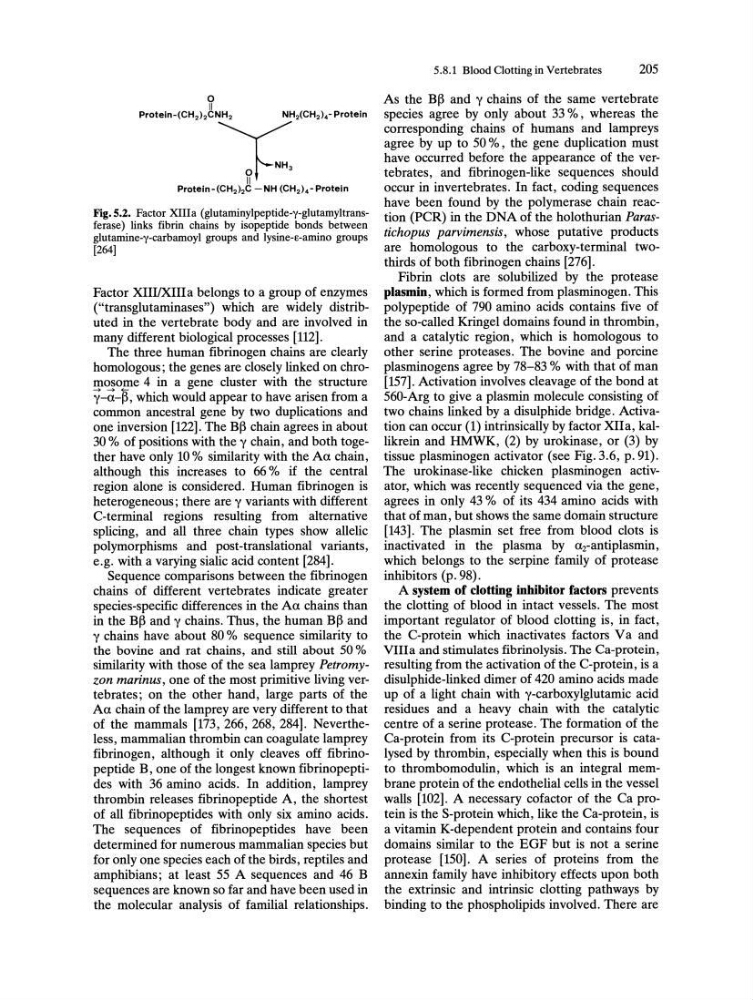
Fig.S.2. Factor XIIIa (glutaminylpeptide-y-glutamyltransferase) links fibrin chains by isopeptide bonds between
glutamine-y-carbamoyl groups and lysine-E-amino groups
[264]
Factor XIIIIXIIIa belongs to a group of enzymes
("transglutaminases") which are widely distributed in the vertebrate body and are involved in
many different biological processes [112].
The three human fibrinogen chains are clearly
homologous; the genes are closely linked on chromosome 4 in a gene cluster with the structure
-->-->0y-u-p, which would appear to have arisen from a
common ancestral gene by two duplications and
one inversion [122]. The B~ chain agrees in about
30 % of positions with the y chain, and both together have only 10 % similarity with the Au chain,
although this increases to 66 % if the central
region alone is considered. Human fibrinogen is
heterogeneous; there are y variants with different
C-terminal regions resulting from alternative
splicing, and all three chain types show allelic
polymorphisms and post-translational variants,
e.g. with a varying sialic acid content [284].
Sequence comparisons between the fibrinogen
chains of different vertebrates indicate greater
species-specific differences in the Au chains than
in the B~ and y chains. Thus, the human B~ and
y chains have about 80 % sequence similarity to
the bovine and rat chains, and still about 50 %
similarity with those of the sea lamprey Petromyzon marinus, one of the most primitive living vertebrates; on the other hand, large parts of the
Au chain of the lamprey are very different to that
of the mammals [173,266, 268, 284]. Nevertheless, mammalian thrombin can coagulate lamprey
fibrinogen, although it only cleaves off fibrinopeptide B, one of the longest known fibrinopeptides with 36 amino acids. In addition, lamprey
thrombin releases fibrinopeptide A, the shortest
of all fibrinopeptides with only six amino acids.
The sequences of fibrinopeptides have been
determined for numerous mammalian species but
for only one species each of the birds, reptiles and
amphibians; at least 55 A sequences and 46 B
sequences are known so far and have been used in
the molecular analysis of familial relationships.
5.8.1 Blood Clotting in Vertebrates
205
As the B~ and y chains of the same vertebrate
species agree by only about 33 %, whereas the
corresponding chains of humans and lampreys
agree by up to 50 %, the gene duplication must
have occurred before the appearance of the vertebrates, and fibrinogen-like sequences should
occur in invertebrates. In fact, coding sequences
have been found by the polymerase chain reaction (PCR) in the DNA of the holothurian Parastichopus parvimensis, whose putative products
are homologous to the carboxy-terminal twothirds of both fibrinogen chains [276].
Fibrin clots are solubilized by the protease
plasmin, which is formed from plasminogen. This
polypeptide of 790 amino acids contains five of
the so-called Kringel domains found in thrombin,
and a catalytic region, which is homologous to
other serine proteases. The bovine and porcine
plasminogens agree by 78-83 % with that of man
[157]. Activation involves cleavage of the bond at
560-Arg to give a plasmin molecule consisting of
two chains linked by a disulphide bridge. Activation can occur (1) intrinsically by factor XIIa, kallikrein and HMWK, (2) by urokinase, or (3) by
tissue plasminogen activator (see Fig. 3.6, p.91).
The urokinase-like chicken plasminogen activator, which was recently sequenced via the gene,
agrees in only 43 % of its 434 amino acids with
that of man, but shows the same domain structure
[143]. The plasmin set free from blood clots is
inactivated in the plasma by u2-antiplasmin,
which belongs to the serpine family of protease
inhibitors (p. 98).
A system of clotting inhibitor factors prevents
the clotting of blood in intact vessels. The most
important regulator of blood clotting is, in fact,
the C-protein which inactivates factors Va and
VIlla and stimulates fibrinolysis. The Ca-protein,
resulting from the activation of the C-protein, is a
disulphide-linked dimer of 420 amino acids made
up of a light chain with y-carboxylglutamic acid
residues and a heavy chain with the catalytic
centre of a serine protease. The formation of the
Ca-protein from its C-protein precursor is catalysed by thrombin, especially when this is bound
to thrombomodulin, which is an integral membrane protein of the endothelial cells in the vessel
walls [102]. A necessary cofactor of the Ca protein is the S-protein which, like the Ca-protein, is
a vitamin K-dependent protein and contains four
domains similar to the EGF but is not a serine
protease [150]. A series of proteins from the
annexin family have inhibitory effects upon both
the extrinsic and intrinsic clotting pathways by
binding to the phospholipids involved. There are
glutamine-y-carbamoyl groups and lysine-E-amino groups
[264]
Factor XIIIIXIIIa belongs to a group of enzymes
("transglutaminases") which are widely distributed in the vertebrate body and are involved in
many different biological processes [112].
The three human fibrinogen chains are clearly
homologous; the genes are closely linked on chromosome 4 in a gene cluster with the structure
-->-->0y-u-p, which would appear to have arisen from a
common ancestral gene by two duplications and
one inversion [122]. The B~ chain agrees in about
30 % of positions with the y chain, and both together have only 10 % similarity with the Au chain,
although this increases to 66 % if the central
region alone is considered. Human fibrinogen is
heterogeneous; there are y variants with different
C-terminal regions resulting from alternative
splicing, and all three chain types show allelic
polymorphisms and post-translational variants,
e.g. with a varying sialic acid content [284].
Sequence comparisons between the fibrinogen
chains of different vertebrates indicate greater
species-specific differences in the Au chains than
in the B~ and y chains. Thus, the human B~ and
y chains have about 80 % sequence similarity to
the bovine and rat chains, and still about 50 %
similarity with those of the sea lamprey Petromyzon marinus, one of the most primitive living vertebrates; on the other hand, large parts of the
Au chain of the lamprey are very different to that
of the mammals [173,266, 268, 284]. Nevertheless, mammalian thrombin can coagulate lamprey
fibrinogen, although it only cleaves off fibrinopeptide B, one of the longest known fibrinopeptides with 36 amino acids. In addition, lamprey
thrombin releases fibrinopeptide A, the shortest
of all fibrinopeptides with only six amino acids.
The sequences of fibrinopeptides have been
determined for numerous mammalian species but
for only one species each of the birds, reptiles and
amphibians; at least 55 A sequences and 46 B
sequences are known so far and have been used in
the molecular analysis of familial relationships.
5.8.1 Blood Clotting in Vertebrates
205
As the B~ and y chains of the same vertebrate
species agree by only about 33 %, whereas the
corresponding chains of humans and lampreys
agree by up to 50 %, the gene duplication must
have occurred before the appearance of the vertebrates, and fibrinogen-like sequences should
occur in invertebrates. In fact, coding sequences
have been found by the polymerase chain reaction (PCR) in the DNA of the holothurian Parastichopus parvimensis, whose putative products
are homologous to the carboxy-terminal twothirds of both fibrinogen chains [276].
Fibrin clots are solubilized by the protease
plasmin, which is formed from plasminogen. This
polypeptide of 790 amino acids contains five of
the so-called Kringel domains found in thrombin,
and a catalytic region, which is homologous to
other serine proteases. The bovine and porcine
plasminogens agree by 78-83 % with that of man
[157]. Activation involves cleavage of the bond at
560-Arg to give a plasmin molecule consisting of
two chains linked by a disulphide bridge. Activation can occur (1) intrinsically by factor XIIa, kallikrein and HMWK, (2) by urokinase, or (3) by
tissue plasminogen activator (see Fig. 3.6, p.91).
The urokinase-like chicken plasminogen activator, which was recently sequenced via the gene,
agrees in only 43 % of its 434 amino acids with
that of man, but shows the same domain structure
[143]. The plasmin set free from blood clots is
inactivated in the plasma by u2-antiplasmin,
which belongs to the serpine family of protease
inhibitors (p. 98).
A system of clotting inhibitor factors prevents
the clotting of blood in intact vessels. The most
important regulator of blood clotting is, in fact,
the C-protein which inactivates factors Va and
VIlla and stimulates fibrinolysis. The Ca-protein,
resulting from the activation of the C-protein, is a
disulphide-linked dimer of 420 amino acids made
up of a light chain with y-carboxylglutamic acid
residues and a heavy chain with the catalytic
centre of a serine protease. The formation of the
Ca-protein from its C-protein precursor is catalysed by thrombin, especially when this is bound
to thrombomodulin, which is an integral membrane protein of the endothelial cells in the vessel
walls [102]. A necessary cofactor of the Ca protein is the S-protein which, like the Ca-protein, is
a vitamin K-dependent protein and contains four
domains similar to the EGF but is not a serine
protease [150]. A series of proteins from the
annexin family have inhibitory effects upon both
the extrinsic and intrinsic clotting pathways by
binding to the phospholipids involved. There are