

126
4 Molecular Evolution
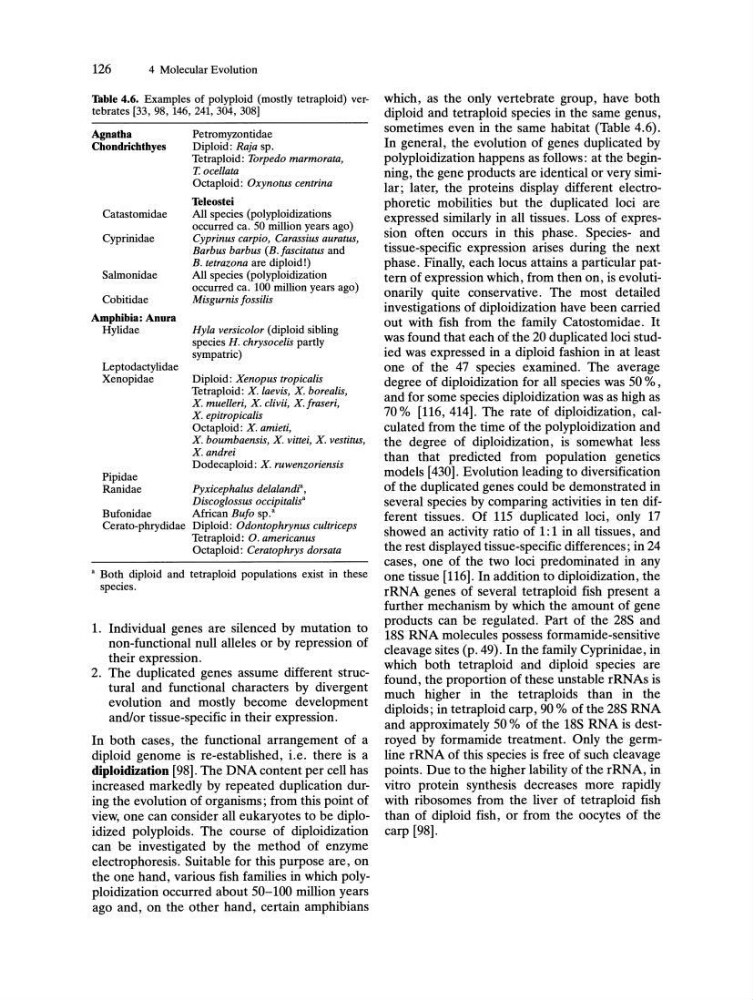
Table 4.6. Examples of polyploid (mostly tetraploid) vertebrates [33, 98, 146, 241, 304, 308]
Agnatha
Chondrichthyes
Catastomidae
Cyprinidae
Salmonidae
Cobitidae
Amphibia: Anura
Hylidae
Leptodactylidae
Xenopidae
Pipidae
Petromyzontidae
Diploid: Raja sp.
Tetraploid: Torpedo marmorata,
T. ocellata
Octaploid: Oxynotus centrina
Teleostei
All species (polyploidizations
occurred ca. 50 million years ago)
Cyprinus carpio, Carassius auratus,
Barbus barbus (B.fascitatus and
B. tetrazona are diploid!)
All species (polyploidization
occurred ca. 100 million years ago)
Misgurnis fossilis
Hyla versicolor (diploid sibling
species H. chrysocelis partly
sympatric)
Diploid: Xenopus tropicalis
Tetraploid: X. laevis, X. borealis,
X. muelleri, X. clivii, X. fraseri,
x. epitropicalis
Octaploid: X. amieti,
X. boumbaensis, X. vittei, X. vestitus,
X. andrei
Dodecaploid: X. ruwenzoriensis
Ranidae
Pyxicephalus delalandi",
Discoglossus occipitalis"
Bufonidae
African Bufo sp."
Cerato-phrydidae Diploid: Odontophrynus cultriceps
Tetraploid: O. american us
Octaploid: Ceratophrys dorsata
" Both diploid and tetraploid populations exist in these
species.
1. Individual genes are silenced by mutation to
non-functional null alleles or by repression of
their expression.
2. The duplicated genes assume different structural and functional characters by divergent
evolution and mostly become development
and/or tissue-specific in their expression.
In both cases, the functional arrangement of a
diploid genome is re-established, i.e. there is a
diploidization [98]. The DNA content per cell has
increased markedly by repeated duplication during the evolution of organisms; from this point of
view, one can consider all eukaryotes to be diploidized polyploids. The course of diploidization
can be investigated by the method of enzyme
electrophoresis. Suitable for this purpose are, on
the one hand, various fish families in which polyploidization occurred about 50-100 million years
ago and, on the other hand, certain amphibians
which, as the only vertebrate group, have both
diploid and tetraploid species in the same genus,
sometimes even in the same habitat (Table 4.6).
In general, the evolution of genes duplicated by
polyploidization happens as follows: at the beginning, the gene products are identical or very similar; later, the proteins display different electrophoretic mobilities but the duplicated loci are
expressed similarly in all tissues. Loss of expression often occurs in this phase. Species- and
tissue-specific expression arises during the next
phase. Finally, each locus attains a particular pattern of expression which, from then on, is evolutionarily quite conservative. The most detailed
investigations of diploidization have been carried
out with fish from the family Catostomidae. It
was found that each of the 20 duplicated loci studied was expressed in a diploid fashion in at least
one of the 47 species examined. The average
degree of diploidization for all species was 50 % ,
and for some species diploidization was as high as
70 % [116, 414]. The rate of diploidization, calculated from the time of the polyploidization and
the degree of diploidization, is somewhat less
than that predicted from population genetics
models [430]. Evolution leading to diversification
of the duplicated genes could be demonstrated in
several species by comparing activities in ten different tissues. Of 115 duplicated loci, only 17
showed an activity ratio of 1: 1 in all tissues, and
the rest displayed tissue-specific differences; in 24
cases, one of the two loci predominated in any
one tissue [116]. In addition to diploidization, the
rRNA genes of several tetraploid fish present a
further mechanism by which the amount of gene
products can be regulated. Part of the 28S and
18S RNA molecules possess formamide-sensitive
cleavage sites (p. 49). In the family Cyprinidae, in
which both tetraploid and diploid species are
found, the proportion of these unstable rRNAs is
much higher in the tetraploids than in the
diploids; in tetraploid carp, 90 % of the 28S RNA
and approximately 50 % of the 18S RNA is destroyed by formamide treatment. Only the germline rRNA of this species is free of such cleavage
points. Due to the higher lability of the rRNA, in
vitro protein synthesis decreases more rapidly
with ribosomes from the liver of tetraploid fish
than of diploid fish, or from the oocytes of the
carp [98].
4 Molecular Evolution
Table 4.6. Examples of polyploid (mostly tetraploid) vertebrates [33, 98, 146, 241, 304, 308]
Agnatha
Chondrichthyes
Catastomidae
Cyprinidae
Salmonidae
Cobitidae
Amphibia: Anura
Hylidae
Leptodactylidae
Xenopidae
Pipidae
Petromyzontidae
Diploid: Raja sp.
Tetraploid: Torpedo marmorata,
T. ocellata
Octaploid: Oxynotus centrina
Teleostei
All species (polyploidizations
occurred ca. 50 million years ago)
Cyprinus carpio, Carassius auratus,
Barbus barbus (B.fascitatus and
B. tetrazona are diploid!)
All species (polyploidization
occurred ca. 100 million years ago)
Misgurnis fossilis
Hyla versicolor (diploid sibling
species H. chrysocelis partly
sympatric)
Diploid: Xenopus tropicalis
Tetraploid: X. laevis, X. borealis,
X. muelleri, X. clivii, X. fraseri,
x. epitropicalis
Octaploid: X. amieti,
X. boumbaensis, X. vittei, X. vestitus,
X. andrei
Dodecaploid: X. ruwenzoriensis
Ranidae
Pyxicephalus delalandi",
Discoglossus occipitalis"
Bufonidae
African Bufo sp."
Cerato-phrydidae Diploid: Odontophrynus cultriceps
Tetraploid: O. american us
Octaploid: Ceratophrys dorsata
" Both diploid and tetraploid populations exist in these
species.
1. Individual genes are silenced by mutation to
non-functional null alleles or by repression of
their expression.
2. The duplicated genes assume different structural and functional characters by divergent
evolution and mostly become development
and/or tissue-specific in their expression.
In both cases, the functional arrangement of a
diploid genome is re-established, i.e. there is a
diploidization [98]. The DNA content per cell has
increased markedly by repeated duplication during the evolution of organisms; from this point of
view, one can consider all eukaryotes to be diploidized polyploids. The course of diploidization
can be investigated by the method of enzyme
electrophoresis. Suitable for this purpose are, on
the one hand, various fish families in which polyploidization occurred about 50-100 million years
ago and, on the other hand, certain amphibians
which, as the only vertebrate group, have both
diploid and tetraploid species in the same genus,
sometimes even in the same habitat (Table 4.6).
In general, the evolution of genes duplicated by
polyploidization happens as follows: at the beginning, the gene products are identical or very similar; later, the proteins display different electrophoretic mobilities but the duplicated loci are
expressed similarly in all tissues. Loss of expression often occurs in this phase. Species- and
tissue-specific expression arises during the next
phase. Finally, each locus attains a particular pattern of expression which, from then on, is evolutionarily quite conservative. The most detailed
investigations of diploidization have been carried
out with fish from the family Catostomidae. It
was found that each of the 20 duplicated loci studied was expressed in a diploid fashion in at least
one of the 47 species examined. The average
degree of diploidization for all species was 50 % ,
and for some species diploidization was as high as
70 % [116, 414]. The rate of diploidization, calculated from the time of the polyploidization and
the degree of diploidization, is somewhat less
than that predicted from population genetics
models [430]. Evolution leading to diversification
of the duplicated genes could be demonstrated in
several species by comparing activities in ten different tissues. Of 115 duplicated loci, only 17
showed an activity ratio of 1: 1 in all tissues, and
the rest displayed tissue-specific differences; in 24
cases, one of the two loci predominated in any
one tissue [116]. In addition to diploidization, the
rRNA genes of several tetraploid fish present a
further mechanism by which the amount of gene
products can be regulated. Part of the 28S and
18S RNA molecules possess formamide-sensitive
cleavage sites (p. 49). In the family Cyprinidae, in
which both tetraploid and diploid species are
found, the proportion of these unstable rRNAs is
much higher in the tetraploids than in the
diploids; in tetraploid carp, 90 % of the 28S RNA
and approximately 50 % of the 18S RNA is destroyed by formamide treatment. Only the germline rRNA of this species is free of such cleavage
points. Due to the higher lability of the rRNA, in
vitro protein synthesis decreases more rapidly
with ribosomes from the liver of tetraploid fish
than of diploid fish, or from the oocytes of the
carp [98].