

74
G. Lericolais
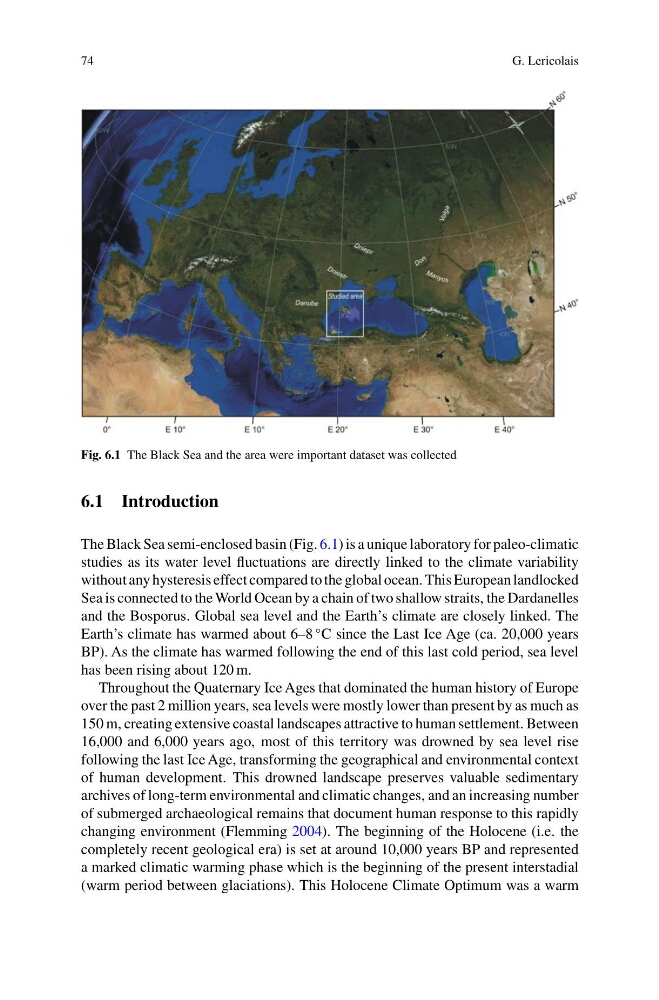
Fig. 6.1 The Black Sea and the area were important dataset was collected
6.1 Introduction
The Black Sea semi-enclosed basin (Fig. 6.1) is a unique laboratory for paleo-climatic
studies as its water level fluctuations are directly linked to the climate variability
without any hysteresis effect compared to the global ocean. This European landlocked
Sea is connected to the World Ocean by a chain of two shallow straits, the Dardanelles
and the Bosporus. Global sea level and the Earth’s climate are closely linked. The
Earth’s climate has warmed about 6–8
◦ C since the Last Ice Age (ca. 20,000 years
BP). As the climate has warmed following the end of this last cold period, sea level
has been rising about 120 m.
Throughout the Quaternary Ice Ages that dominated the human history of Europe
over the past 2 million years, sea levels were mostly lower than present by as much as
150 m, creating extensive coastal landscapes attractive to human settlement. Between
16,000 and 6,000 years ago, most of this territory was drowned by sea level rise
following the last Ice Age, transforming the geographical and environmental context
of human development. This drowned landscape preserves valuable sedimentary
archives of long-term environmental and climatic changes, and an increasing number
of submerged archaeological remains that document human response to this rapidly
changing environment (Flemming 2004). The beginning of the Holocene (i.e. the
completely recent geological era) is set at around 10,000 years BP and represented
a marked climatic warming phase which is the beginning of the present interstadial
(warm period between glaciations). This Holocene Climate Optimum was a warm
G. Lericolais
Fig. 6.1 The Black Sea and the area were important dataset was collected
6.1 Introduction
The Black Sea semi-enclosed basin (Fig. 6.1) is a unique laboratory for paleo-climatic
studies as its water level fluctuations are directly linked to the climate variability
without any hysteresis effect compared to the global ocean. This European landlocked
Sea is connected to the World Ocean by a chain of two shallow straits, the Dardanelles
and the Bosporus. Global sea level and the Earth’s climate are closely linked. The
Earth’s climate has warmed about 6–8
◦ C since the Last Ice Age (ca. 20,000 years
BP). As the climate has warmed following the end of this last cold period, sea level
has been rising about 120 m.
Throughout the Quaternary Ice Ages that dominated the human history of Europe
over the past 2 million years, sea levels were mostly lower than present by as much as
150 m, creating extensive coastal landscapes attractive to human settlement. Between
16,000 and 6,000 years ago, most of this territory was drowned by sea level rise
following the last Ice Age, transforming the geographical and environmental context
of human development. This drowned landscape preserves valuable sedimentary
archives of long-term environmental and climatic changes, and an increasing number
of submerged archaeological remains that document human response to this rapidly
changing environment (Flemming 2004). The beginning of the Holocene (i.e. the
completely recent geological era) is set at around 10,000 years BP and represented
a marked climatic warming phase which is the beginning of the present interstadial
(warm period between glaciations). This Holocene Climate Optimum was a warm