

1 Introduction: Towards a Shared Language: Semantic Exchanges . . .
9
Culture
Percepon
Cultural filters
History of art
Landscape
representaons
Literature
Audio-visual arts, etc.
Environmental sciences
Geology
Geomorphology
Sedimentology
Oceanography
Ecology, etc.
Planning and society
Landscape inventories
Dynamics and challenges
Land Planning
Landscape protecon
Landscape design, etc.
Economic and legal
sciences
Fisheries resources
Mineral resources
Energy resources
Tourist resources
Law of the sea
Coastal law, etc.
InteracƟons
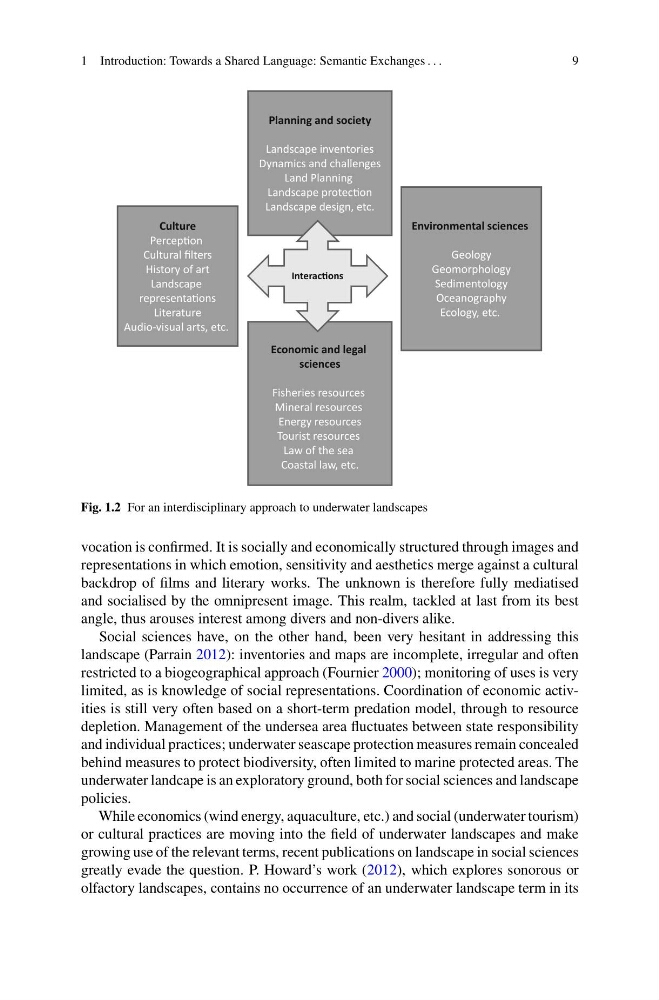
Fig. 1.2 For an interdisciplinary approach to underwater landscapes
vocation is confirmed. It is socially and economically structured through images and
representations in which emotion, sensitivity and aesthetics merge against a cultural
backdrop of films and literary works. The unknown is therefore fully mediatised
and socialised by the omnipresent image. This realm, tackled at last from its best
angle, thus arouses interest among divers and non-divers alike.
Social sciences have, on the other hand, been very hesitant in addressing this
landscape (Parrain 2012): inventories and maps are incomplete, irregular and often
restricted to a biogeographical approach (Fournier 2000); monitoring of uses is very
limited, as is knowledge of social representations. Coordination of economic activities is still very often based on a short-term predation model, through to resource
depletion. Management of the undersea area fluctuates between state responsibility
and individual practices; underwater seascape protection measures remain concealed
behind measures to protect biodiversity, often limited to marine protected areas. The
underwater landcape is an exploratory ground, both for social sciences and landscape
policies.
While economics (wind energy, aquaculture, etc.) and social (underwater tourism)
or cultural practices are moving into the field of underwater landscapes and make
growing use of the relevant terms, recent publications on landscape in social sciences
greatly evade the question. P. Howard’s work (2012), which explores sonorous or
olfactory landscapes, contains no occurrence of an underwater landscape term in its
9
Culture
Percepon
Cultural filters
History of art
Landscape
representaons
Literature
Audio-visual arts, etc.
Environmental sciences
Geology
Geomorphology
Sedimentology
Oceanography
Ecology, etc.
Planning and society
Landscape inventories
Dynamics and challenges
Land Planning
Landscape protecon
Landscape design, etc.
Economic and legal
sciences
Fisheries resources
Mineral resources
Energy resources
Tourist resources
Law of the sea
Coastal law, etc.
InteracƟons
Fig. 1.2 For an interdisciplinary approach to underwater landscapes
vocation is confirmed. It is socially and economically structured through images and
representations in which emotion, sensitivity and aesthetics merge against a cultural
backdrop of films and literary works. The unknown is therefore fully mediatised
and socialised by the omnipresent image. This realm, tackled at last from its best
angle, thus arouses interest among divers and non-divers alike.
Social sciences have, on the other hand, been very hesitant in addressing this
landscape (Parrain 2012): inventories and maps are incomplete, irregular and often
restricted to a biogeographical approach (Fournier 2000); monitoring of uses is very
limited, as is knowledge of social representations. Coordination of economic activities is still very often based on a short-term predation model, through to resource
depletion. Management of the undersea area fluctuates between state responsibility
and individual practices; underwater seascape protection measures remain concealed
behind measures to protect biodiversity, often limited to marine protected areas. The
underwater landcape is an exploratory ground, both for social sciences and landscape
policies.
While economics (wind energy, aquaculture, etc.) and social (underwater tourism)
or cultural practices are moving into the field of underwater landscapes and make
growing use of the relevant terms, recent publications on landscape in social sciences
greatly evade the question. P. Howard’s work (2012), which explores sonorous or
olfactory landscapes, contains no occurrence of an underwater landscape term in its