

11 Management of Infralittoral Habitats: Towards a Seascape Scale Approach
171
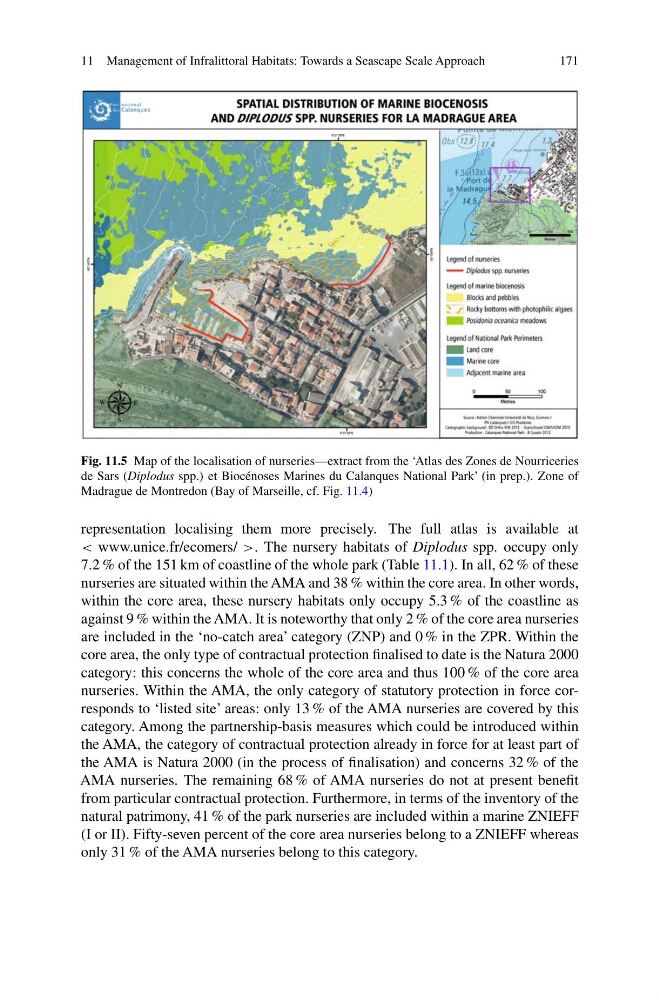
Fig. 11.5 Map of the localisation of nurseries—extract from the ‘Atlas des Zones de Nourriceries
de Sars (Diplodus spp.) et Biocénoses Marines du Calanques National Park’ (in prep.). Zone of
Madrague de Montredon (Bay of Marseille, cf. Fig. 11.4)
representation localising them more precisely. The full atlas is available at
< www.unice.fr/ecomers/ >. The nursery habitats of Diplodus spp. occupy only
7.2 % of the 151 km of coastline of the whole park (Table 11.1). In all, 62 % of these
nurseries are situated within the AMA and 38 % within the core area. In other words,
within the core area, these nursery habitats only occupy 5.3 % of the coastline as
against 9 % within the AMA. It is noteworthy that only 2 % of the core area nurseries
are included in the ‘no-catch area’ category (ZNP) and 0 % in the ZPR. Within the
core area, the only type of contractual protection finalised to date is the Natura 2000
category: this concerns the whole of the core area and thus 100 % of the core area
nurseries. Within the AMA, the only category of statutory protection in force corresponds to ‘listed site’ areas: only 13 % of the AMA nurseries are covered by this
category. Among the partnership-basis measures which could be introduced within
the AMA, the category of contractual protection already in force for at least part of
the AMA is Natura 2000 (in the process of finalisation) and concerns 32 % of the
AMA nurseries. The remaining 68 % of AMA nurseries do not at present benefit
from particular contractual protection. Furthermore, in terms of the inventory of the
natural patrimony, 41 % of the park nurseries are included within a marine ZNIEFF
(I or II). Fifty-seven percent of the core area nurseries belong to a ZNIEFF whereas
only 31 % of the AMA nurseries belong to this category.
171
Fig. 11.5 Map of the localisation of nurseries—extract from the ‘Atlas des Zones de Nourriceries
de Sars (Diplodus spp.) et Biocénoses Marines du Calanques National Park’ (in prep.). Zone of
Madrague de Montredon (Bay of Marseille, cf. Fig. 11.4)
representation localising them more precisely. The full atlas is available at
< www.unice.fr/ecomers/ >. The nursery habitats of Diplodus spp. occupy only
7.2 % of the 151 km of coastline of the whole park (Table 11.1). In all, 62 % of these
nurseries are situated within the AMA and 38 % within the core area. In other words,
within the core area, these nursery habitats only occupy 5.3 % of the coastline as
against 9 % within the AMA. It is noteworthy that only 2 % of the core area nurseries
are included in the ‘no-catch area’ category (ZNP) and 0 % in the ZPR. Within the
core area, the only type of contractual protection finalised to date is the Natura 2000
category: this concerns the whole of the core area and thus 100 % of the core area
nurseries. Within the AMA, the only category of statutory protection in force corresponds to ‘listed site’ areas: only 13 % of the AMA nurseries are covered by this
category. Among the partnership-basis measures which could be introduced within
the AMA, the category of contractual protection already in force for at least part of
the AMA is Natura 2000 (in the process of finalisation) and concerns 32 % of the
AMA nurseries. The remaining 68 % of AMA nurseries do not at present benefit
from particular contractual protection. Furthermore, in terms of the inventory of the
natural patrimony, 41 % of the park nurseries are included within a marine ZNIEFF
(I or II). Fifty-seven percent of the core area nurseries belong to a ZNIEFF whereas
only 31 % of the AMA nurseries belong to this category.