

142
E. Bigando
material
components (26)
atmosphere (22)
sensaons and
emoons (21)
visual aspects (20)
ecological and
biological
consideraons (6)
comparisons with
terrestrial
landscapes (5)
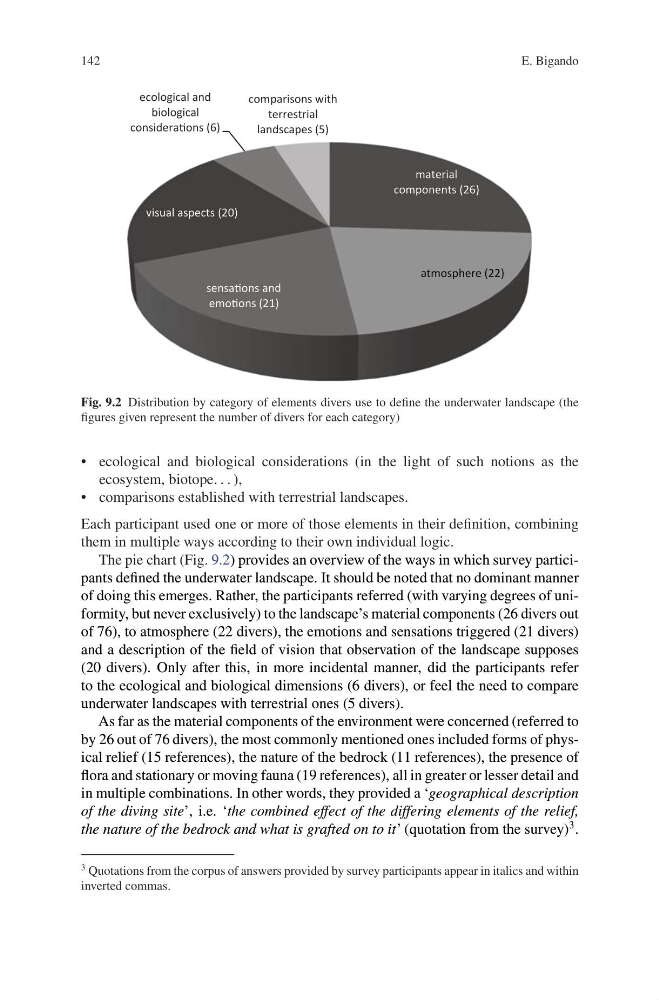
Fig. 9.2 Distribution by category of elements divers use to define the underwater landscape (the
figures given represent the number of divers for each category)
• ecological and biological considerations (in the light of such notions as the
ecosystem, biotope. . . ),
• comparisons established with terrestrial landscapes.
Each participant used one or more of those elements in their definition, combining
them in multiple ways according to their own individual logic.
The pie chart (Fig. 9.2) provides an overview of the ways in which survey participants defined the underwater landscape. It should be noted that no dominant manner
of doing this emerges. Rather, the participants referred (with varying degrees of uniformity, but never exclusively) to the landscape’s material components (26 divers out
of 76), to atmosphere (22 divers), the emotions and sensations triggered (21 divers)
and a description of the field of vision that observation of the landscape supposes
(20 divers). Only after this, in more incidental manner, did the participants refer
to the ecological and biological dimensions (6 divers), or feel the need to compare
underwater landscapes with terrestrial ones (5 divers).
As far as the material components of the environment were concerned (referred to
by 26 out of 76 divers), the most commonly mentioned ones included forms of physical relief (15 references), the nature of the bedrock (11 references), the presence of
flora and stationary or moving fauna (19 references), all in greater or lesser detail and
in multiple combinations. In other words, they provided a ‘geographical description
of the diving site’, i.e. ‘the combined effect of the differing elements of the relief,
the nature of the bedrock and what is grafted on to it’ (quotation from the survey)
3 .
3 Quotations from the corpus of answers provided by survey participants appear in italics and within
inverted commas.
E. Bigando
material
components (26)
atmosphere (22)
sensaons and
emoons (21)
visual aspects (20)
ecological and
biological
consideraons (6)
comparisons with
terrestrial
landscapes (5)
Fig. 9.2 Distribution by category of elements divers use to define the underwater landscape (the
figures given represent the number of divers for each category)
• ecological and biological considerations (in the light of such notions as the
ecosystem, biotope. . . ),
• comparisons established with terrestrial landscapes.
Each participant used one or more of those elements in their definition, combining
them in multiple ways according to their own individual logic.
The pie chart (Fig. 9.2) provides an overview of the ways in which survey participants defined the underwater landscape. It should be noted that no dominant manner
of doing this emerges. Rather, the participants referred (with varying degrees of uniformity, but never exclusively) to the landscape’s material components (26 divers out
of 76), to atmosphere (22 divers), the emotions and sensations triggered (21 divers)
and a description of the field of vision that observation of the landscape supposes
(20 divers). Only after this, in more incidental manner, did the participants refer
to the ecological and biological dimensions (6 divers), or feel the need to compare
underwater landscapes with terrestrial ones (5 divers).
As far as the material components of the environment were concerned (referred to
by 26 out of 76 divers), the most commonly mentioned ones included forms of physical relief (15 references), the nature of the bedrock (11 references), the presence of
flora and stationary or moving fauna (19 references), all in greater or lesser detail and
in multiple combinations. In other words, they provided a ‘geographical description
of the diving site’, i.e. ‘the combined effect of the differing elements of the relief,
the nature of the bedrock and what is grafted on to it’ (quotation from the survey)
3 .
3 Quotations from the corpus of answers provided by survey participants appear in italics and within
inverted commas.