

140
E. Bigando
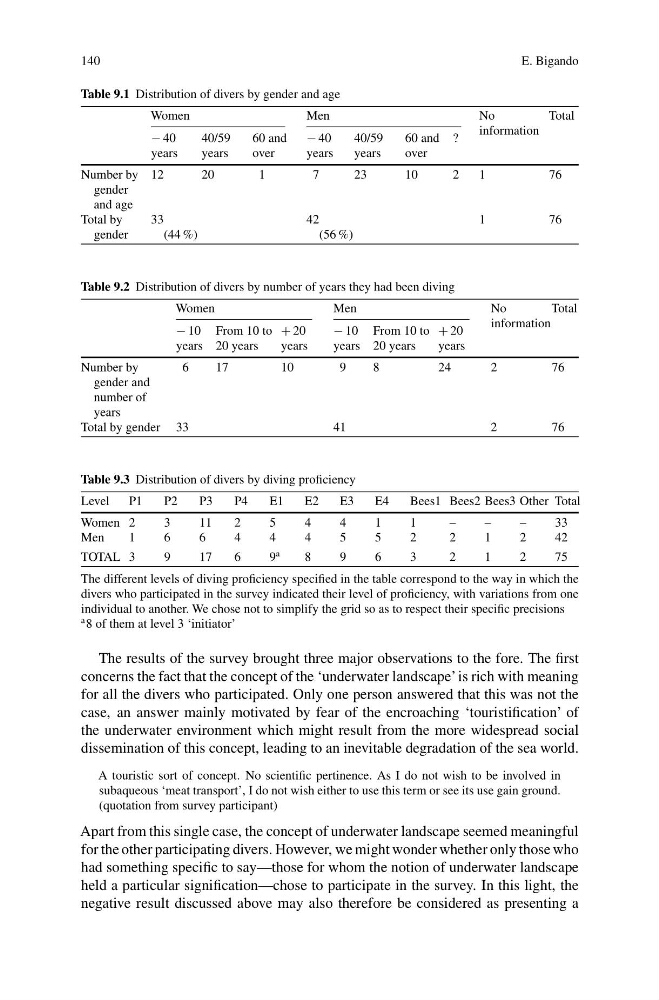
Table 9.1 Distribution of divers by gender and age
Women
Men
No
information
Total
− 40
years
40/59
years
60 and
over
− 40
years
40/59
years
60 and
over
?
Number by
gender
and age
12
20
1
7
23
10
2
1
76
Total by
gender
33
(44 %)
42
(56 %)
1
7 6
Table 9.2 Distribution of divers by number of years they had been diving
Women
Men
No
information
Total
− 10
years
From 10 to
20 years
+ 20
years
− 10
years
From 10 to
20 years
+ 20
years
Number by
gender and
number of
years
6
17
10
9
8
24
2
76
Total by gender 33
41
2
76
Table 9.3 Distribution of divers by diving proficiency
Level
P1
P2
P3
P4
E1
E2
E3
E4
Bees1 Bees2 Bees3 Other Total
Women 2
3
11
2
5
4
4
1
1
–
–
–
33
Men
1
6
6
4
4
4
5
5
2
2
1
2
42
TO T AL 3
9
17
6
9
a
8
9
6
3
2
1
2
75
The different levels of diving proficiency specified in the table correspond to the way in which the
divers who participated in the survey indicated their level of proficiency, with variations from one
individual to another. We chose not to simplify the grid so as to respect their specific precisions
a 8 of them at level 3 ‘initiator’
The results of the survey brought three major observations to the fore. The first
concerns the fact that the concept of the ‘underwater landscape’ is rich with meaning
for all the divers who participated. Only one person answered that this was not the
case, an answer mainly motivated by fear of the encroaching ‘touristification’ of
the underwater environment which might result from the more widespread social
dissemination of this concept, leading to an inevitable degradation of the sea world.
A touristic sort of concept. No scientific pertinence. As I do not wish to be involved in
subaqueous ‘meat transport’, I do not wish either to use this term or see its use gain ground.
(quotation from survey participant)
Apart from this single case, the concept of underwater landscape seemed meaningful
for the other participating divers. However, we might wonder whether only those who
had something specific to say—those for whom the notion of underwater landscape
held a particular signification—chose to participate in the survey. In this light, the
negative result discussed above may also therefore be considered as presenting a
E. Bigando
Table 9.1 Distribution of divers by gender and age
Women
Men
No
information
Total
− 40
years
40/59
years
60 and
over
− 40
years
40/59
years
60 and
over
?
Number by
gender
and age
12
20
1
7
23
10
2
1
76
Total by
gender
33
(44 %)
42
(56 %)
1
7 6
Table 9.2 Distribution of divers by number of years they had been diving
Women
Men
No
information
Total
− 10
years
From 10 to
20 years
+ 20
years
− 10
years
From 10 to
20 years
+ 20
years
Number by
gender and
number of
years
6
17
10
9
8
24
2
76
Total by gender 33
41
2
76
Table 9.3 Distribution of divers by diving proficiency
Level
P1
P2
P3
P4
E1
E2
E3
E4
Bees1 Bees2 Bees3 Other Total
Women 2
3
11
2
5
4
4
1
1
–
–
–
33
Men
1
6
6
4
4
4
5
5
2
2
1
2
42
TO T AL 3
9
17
6
9
a
8
9
6
3
2
1
2
75
The different levels of diving proficiency specified in the table correspond to the way in which the
divers who participated in the survey indicated their level of proficiency, with variations from one
individual to another. We chose not to simplify the grid so as to respect their specific precisions
a 8 of them at level 3 ‘initiator’
The results of the survey brought three major observations to the fore. The first
concerns the fact that the concept of the ‘underwater landscape’ is rich with meaning
for all the divers who participated. Only one person answered that this was not the
case, an answer mainly motivated by fear of the encroaching ‘touristification’ of
the underwater environment which might result from the more widespread social
dissemination of this concept, leading to an inevitable degradation of the sea world.
A touristic sort of concept. No scientific pertinence. As I do not wish to be involved in
subaqueous ‘meat transport’, I do not wish either to use this term or see its use gain ground.
(quotation from survey participant)
Apart from this single case, the concept of underwater landscape seemed meaningful
for the other participating divers. However, we might wonder whether only those who
had something specific to say—those for whom the notion of underwater landscape
held a particular signification—chose to participate in the survey. In this light, the
negative result discussed above may also therefore be considered as presenting a