

126
L. Le Dû-Blayo
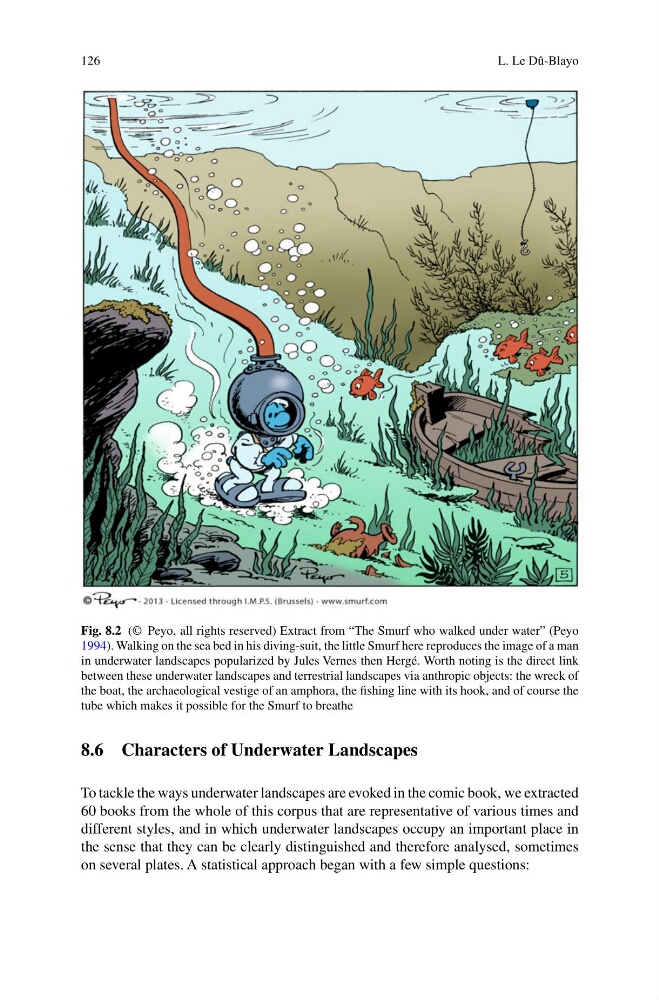
Fig. 8.2 (© Peyo, all rights reserved) Extract from “The Smurf who walked under water” (Peyo
1994). Walking on the sea bed in his diving-suit, the little Smurf here reproduces the image of a man
in underwater landscapes popularized by Jules Vernes then Hergé. Worth noting is the direct link
between these underwater landscapes and terrestrial landscapes via anthropic objects: the wreck of
the boat, the archaeological vestige of an amphora, the fishing line with its hook, and of course the
tube which makes it possible for the Smurf to breathe
8.6 Characters of Underwater Landscapes
To tackle the ways underwater landscapes are evoked in the comic book, we extracted
60 books from the whole of this corpus that are representative of various times and
different styles, and in which underwater landscapes occupy an important place in
the sense that they can be clearly distinguished and therefore analysed, sometimes
on several plates. A statistical approach began with a few simple questions:
L. Le Dû-Blayo
Fig. 8.2 (© Peyo, all rights reserved) Extract from “The Smurf who walked under water” (Peyo
1994). Walking on the sea bed in his diving-suit, the little Smurf here reproduces the image of a man
in underwater landscapes popularized by Jules Vernes then Hergé. Worth noting is the direct link
between these underwater landscapes and terrestrial landscapes via anthropic objects: the wreck of
the boat, the archaeological vestige of an amphora, the fishing line with its hook, and of course the
tube which makes it possible for the Smurf to breathe
8.6 Characters of Underwater Landscapes
To tackle the ways underwater landscapes are evoked in the comic book, we extracted
60 books from the whole of this corpus that are representative of various times and
different styles, and in which underwater landscapes occupy an important place in
the sense that they can be clearly distinguished and therefore analysed, sometimes
on several plates. A statistical approach began with a few simple questions: