

116
C. Ronzani and A. Freytet
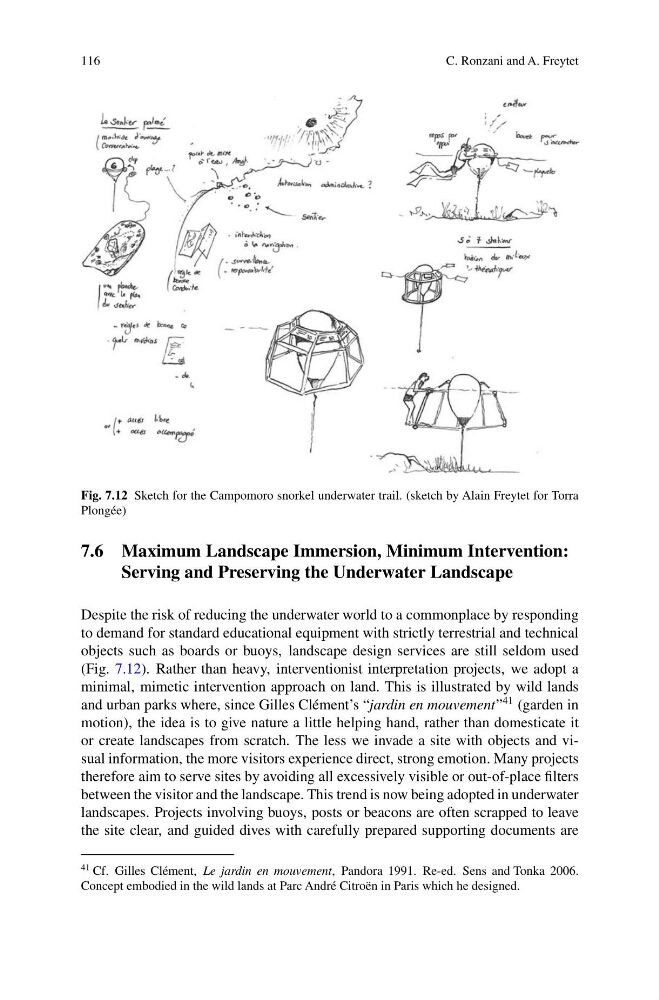
Fig. 7.12 Sketch for the Campomoro snorkel underwater trail. (sketch by Alain Freytet for Torra
Plongée)
7.6 Maximum Landscape Immersion, Minimum Intervention:
Serving and Preserving the Underwater Landscape
Despite the risk of reducing the underwater world to a commonplace by responding
to demand for standard educational equipment with strictly terrestrial and technical
objects such as boards or buoys, landscape design services are still seldom used
(Fig. 7.12). Rather than heavy, interventionist interpretation projects, we adopt a
minimal, mimetic intervention approach on land. This is illustrated by wild lands
and urban parks where, since Gilles Clément’s “jardin en mouvement”
41 (garden in
motion), the idea is to give nature a little helping hand, rather than domesticate it
or create landscapes from scratch. The less we invade a site with objects and visual information, the more visitors experience direct, strong emotion. Many projects
therefore aim to serve sites by avoiding all excessively visible or out-of-place filters
between the visitor and the landscape. This trend is now being adopted in underwater
landscapes. Projects involving buoys, posts or beacons are often scrapped to leave
the site clear, and guided dives with carefully prepared supporting documents are
41 Cf. Gilles Clément, Le jardin en mouvement, Pandora 1991. Re-ed. Sens and Tonka 2006.
Concept embodied in the wild lands at Parc André Citroën in Paris which he designed.
C. Ronzani and A. Freytet
Fig. 7.12 Sketch for the Campomoro snorkel underwater trail. (sketch by Alain Freytet for Torra
Plongée)
7.6 Maximum Landscape Immersion, Minimum Intervention:
Serving and Preserving the Underwater Landscape
Despite the risk of reducing the underwater world to a commonplace by responding
to demand for standard educational equipment with strictly terrestrial and technical
objects such as boards or buoys, landscape design services are still seldom used
(Fig. 7.12). Rather than heavy, interventionist interpretation projects, we adopt a
minimal, mimetic intervention approach on land. This is illustrated by wild lands
and urban parks where, since Gilles Clément’s “jardin en mouvement”
41 (garden in
motion), the idea is to give nature a little helping hand, rather than domesticate it
or create landscapes from scratch. The less we invade a site with objects and visual information, the more visitors experience direct, strong emotion. Many projects
therefore aim to serve sites by avoiding all excessively visible or out-of-place filters
between the visitor and the landscape. This trend is now being adopted in underwater
landscapes. Projects involving buoys, posts or beacons are often scrapped to leave
the site clear, and guided dives with carefully prepared supporting documents are
41 Cf. Gilles Clément, Le jardin en mouvement, Pandora 1991. Re-ed. Sens and Tonka 2006.
Concept embodied in the wild lands at Parc André Citroën in Paris which he designed.