

600
W. Judson Kenworthy et al.
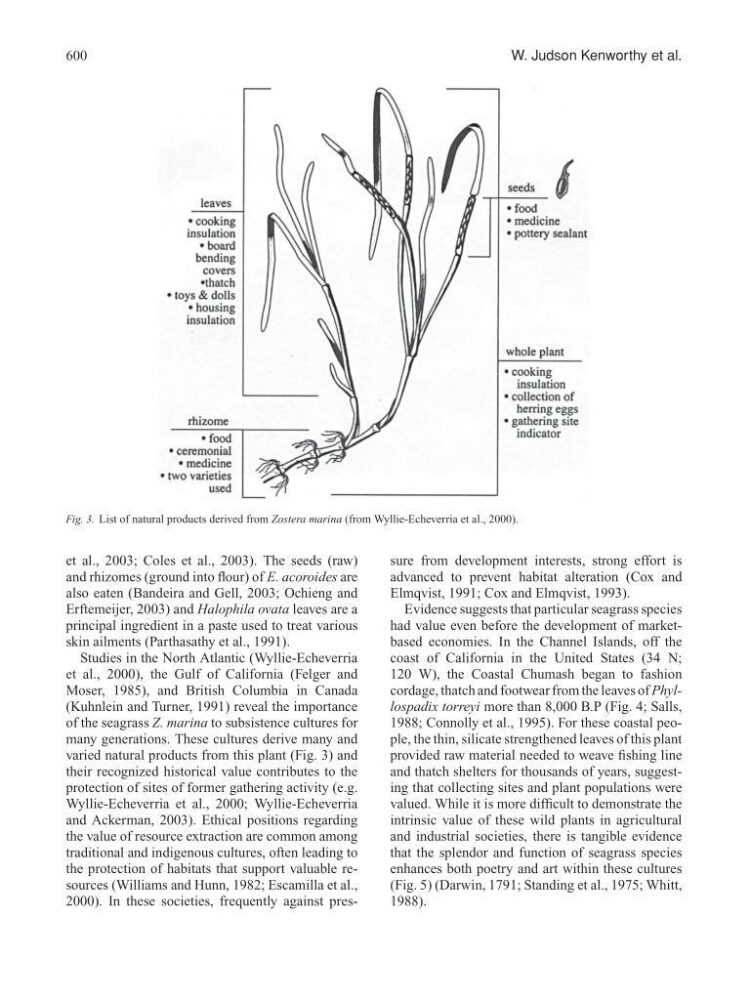
Fig. 3. List of natural products derived from Zostera marina (from Wyllie-Echeverria et al., 2000).
et al., 2003; Coles et al., 2003). The seeds (raw)
and rhizomes (ground into flour) of E. acoroides are
also eaten (Bandeira and Gell, 2003; Ochieng and
Erftemeijer, 2003) and Halophila ovata leaves are a
principal ingredient in a paste used to treat various
skin ailments (Parthasathy et al., 1991).
Studies in the North Atlantic (Wyllie-Echeverria
et al., 2000), the Gulf of California (Felger and
Moser, 1985), and British Columbia in Canada
(Kuhnlein and Turner, 1991) reveal the importance
of the seagrass Z. marina to subsistence cultures for
many generations. These cultures derive many and
varied natural products from this plant (Fig. 3) and
their recognized historical value contributes to the
protection of sites of former gathering activity (e.g.
Wyllie-Echeverria et al., 2000; Wyllie-Echeverria
and Ackerman, 2003). Ethical positions regarding
the value of resource extraction are common among
traditional and indigenous cultures, often leading to
the protection of habitats that support valuable resources (Williams and Hunn, 1982; Escamilla et al.,
2000). In these societies, frequently against pressure from development interests, strong effort is
advanced to prevent habitat alteration (Cox and
Elmqvist, 1991; Cox and Elmqvist, 1993).
Evidence suggests that particular seagrass species
had value even before the development of marketbased economies. In the Channel Islands, off the
coast of California in the United States (34 N;
120 W), the Coastal Chumash began to fashion
cordage, thatch and footwear from the leaves of Phyllospadix torreyi more than 8,000 B.P (Fig. 4; Salls,
1988; Connolly et al., 1995). For these coastal people, the thin, silicate strengthened leaves of this plant
provided raw material needed to weave fishing line
and thatch shelters for thousands of years, suggesting that collecting sites and plant populations were
valued. While it is more difficult to demonstrate the
intrinsic value of these wild plants in agricultural
and industrial societies, there is tangible evidence
that the splendor and function of seagrass species
enhances both poetry and art within these cultures
(Fig. 5) (Darwin, 1791; Standing et al., 1975; Whitt,
1988).