

598
W. Judson Kenworthy et al.
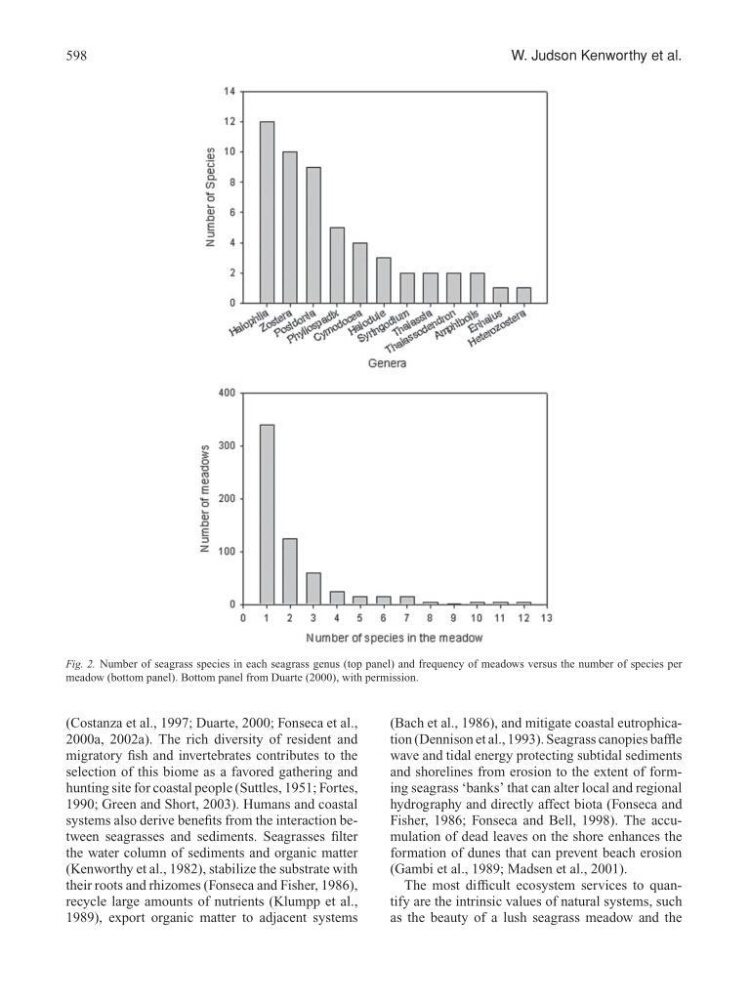
Fig. 2. Number of seagrass species in each seagrass genus (top panel) and frequency of meadows versus the number of species per
meadow (bottom panel). Bottom panel from Duarte (2000), with permission.
(Costanza et al., 1997; Duarte, 2000; Fonseca et al.,
2000a, 2002a). The rich diversity of resident and
migratory fish and invertebrates contributes to the
selection of this biome as a favored gathering and
hunting site for coastal people (Suttles, 1951; Fortes,
1990; Green and Short, 2003). Humans and coastal
systems also derive benefits from the interaction between seagrasses and sediments. Seagrasses filter
the water column of sediments and organic matter
(Kenworthy et al., 1982), stabilize the substrate with
their roots and rhizomes (Fonseca and Fisher, 1986),
recycle large amounts of nutrients (Klumpp et al.,
1989), export organic matter to adjacent systems
(Bach et al., 1986), and mitigate coastal eutrophication (Dennison et al., 1993). Seagrass canopies baffle
wave and tidal energy protecting subtidal sediments
and shorelines from erosion to the extent of forming seagrass ‘banks’ that can alter local and regional
hydrography and directly affect biota (Fonseca and
Fisher, 1986; Fonseca and Bell, 1998). The accumulation of dead leaves on the shore enhances the
formation of dunes that can prevent beach erosion
(Gambi et al., 1989; Madsen et al., 2001).
The most difficult ecosystem services to quantify are the intrinsic values of natural systems, such
as the beauty of a lush seagrass meadow and the