

596
W. Judson Kenworthy et al.
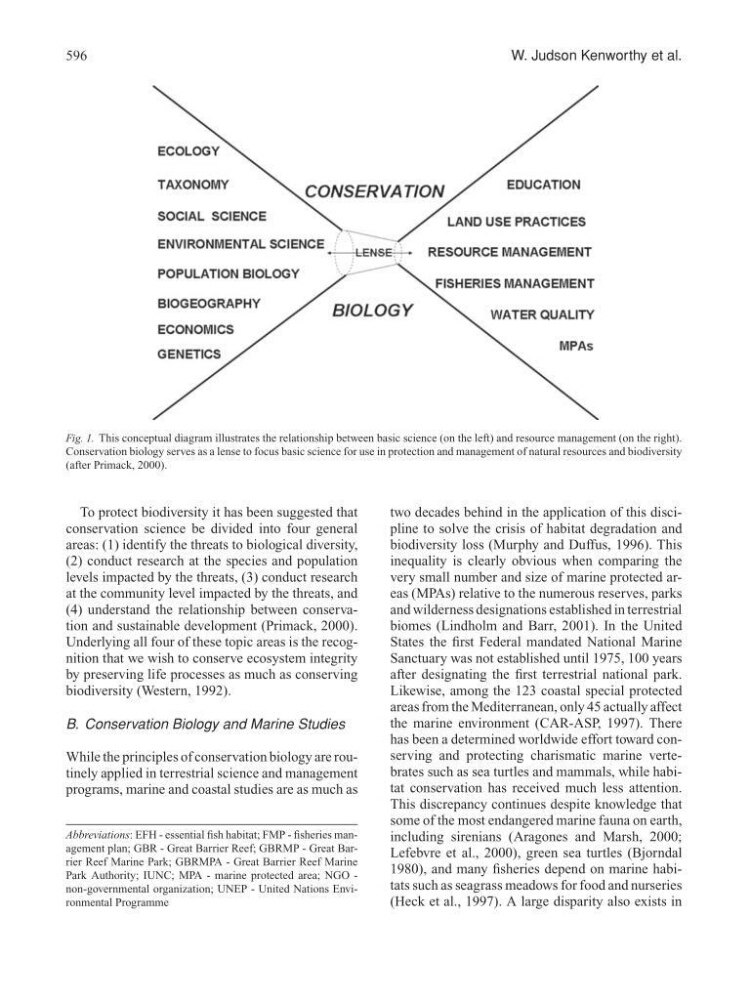
Fig. 1. This conceptual diagram illustrates the relationship between basic science (on the left) and resource management (on the right).
Conservation biology serves as a lense to focus basic science for use in protection and management of natural resources and biodiversity
(after Primack, 2000).
To protect biodiversity it has been suggested that
conservation science be divided into four general
areas: (1) identify the threats to biological diversity,
(2) conduct research at the species and population
levels impacted by the threats, (3) conduct research
at the community level impacted by the threats, and
(4) understand the relationship between conservation and sustainable development (Primack, 2000).
Underlying all four of these topic areas is the recognition that we wish to conserve ecosystem integrity
by preserving life processes as much as conserving
biodiversity (Western, 1992).
B. Conservation Biology and Marine Studies
While the principles of conservation biology are routinely applied in terrestrial science and management
programs, marine and coastal studies are as much as
Abbreviations: EFH - essential fish habitat; FMP - fisheries management plan; GBR - Great Barrier Reef; GBRMP - Great Barrier Reef Marine Park; GBRMPA - Great Barrier Reef Marine
Park Authority; IUNC; MPA - marine protected area; NGO -
non-governmental organization; UNEP - United Nations Environmental Programme
two decades behind in the application of this discipline to solve the crisis of habitat degradation and
biodiversity loss (Murphy and Duffus, 1996). This
inequality is clearly obvious when comparing the
very small number and size of marine protected areas (MPAs) relative to the numerous reserves, parks
and wilderness designations established in terrestrial
biomes (Lindholm and Barr, 2001). In the United
States the first Federal mandated National Marine
Sanctuary was not established until 1975, 100 years
after designating the first terrestrial national park.
Likewise, among the 123 coastal special protected
areas from the Mediterranean, only 45 actually affect
the marine environment (CAR-ASP, 1997). There
has been a determined worldwide effort toward conserving and protecting charismatic marine vertebrates such as sea turtles and mammals, while habitat conservation has received much less attention.
This discrepancy continues despite knowledge that
some of the most endangered marine fauna on earth,
including sirenians (Aragones and Marsh, 2000;
Lefebvre et al., 2000), green sea turtles (Bjorndal
1980), and many fisheries depend on marine habitats such as seagrass meadows for food and nurseries
(Heck et al., 1997). A large disparity also exists in