

538
K. L. Heck and R. J. Orth
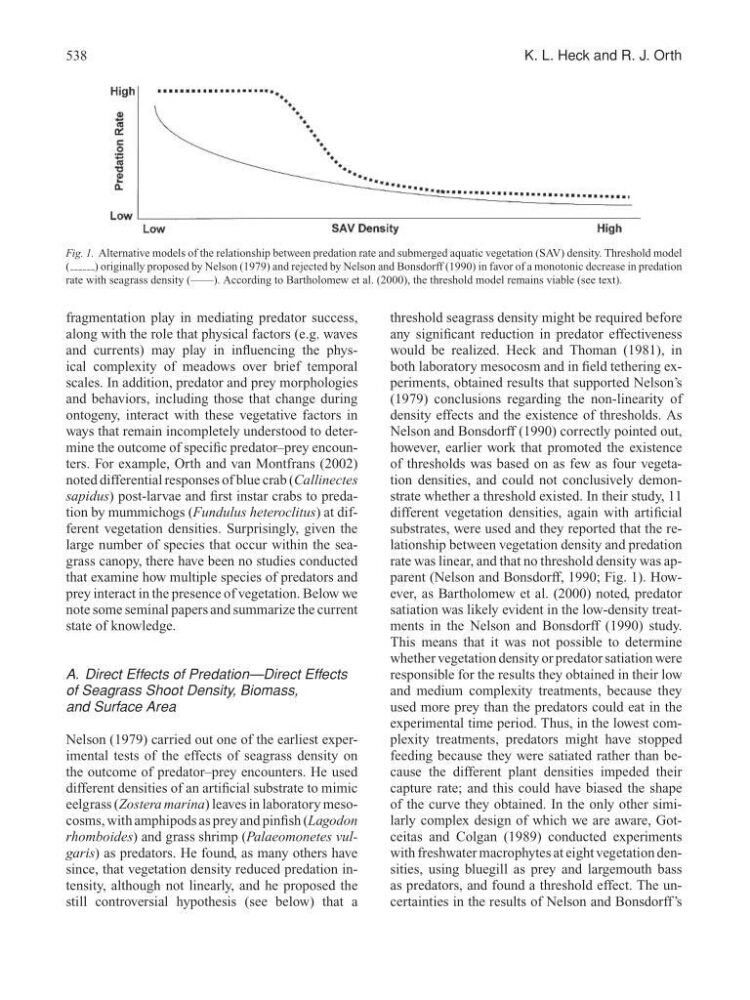
Fig. 1. Alternative models of the relationship between predation rate and submerged aquatic vegetation (SAV) density. Threshold model
(
) originally proposed by Nelson (1979) and rejected by Nelson and Bonsdorff (1990) in favor of a monotonic decrease in predation
rate with seagrass density (——). According to Bartholomew et al. (2000), the threshold model remains viable (see text).
fragmentation play in mediating predator success,
along with the role that physical factors (e.g. waves
and currents) may play in influencing the physical complexity of meadows over brief temporal
scales. In addition, predator and prey morphologies
and behaviors, including those that change during
ontogeny, interact with these vegetative factors in
ways that remain incompletely understood to determine the outcome of specific predator–prey encounters. For example, Orth and van Montfrans (2002)
noted differential responses of blue crab (Callinectes
sapidus) post-larvae and first instar crabs to predation by mummichogs (Fundulus heteroclitus) at different vegetation densities. Surprisingly, given the
large number of species that occur within the seagrass canopy, there have been no studies conducted
that examine how multiple species of predators and
prey interact in the presence of vegetation. Below we
note some seminal papers and summarize the current
state of knowledge.
A. Direct Effects of Predation—Direct Effects
of Seagrass Shoot Density, Biomass,
and Surface Area
Nelson (1979) carried out one of the earliest experimental tests of the effects of seagrass density on
the outcome of predator–prey encounters. He used
different densities of an artificial substrate to mimic
eelgrass (Zostera marina) leaves in laboratory mesocosms, with amphipods as prey and pinfish (Lagodon
rhomboides) and grass shrimp (Palaeomonetes vulgaris) as predators. He found, as many others have
since, that vegetation density reduced predation intensity, although not linearly, and he proposed the
still controversial hypothesis (see below) that a
threshold seagrass density might be required before
any significant reduction in predator effectiveness
would be realized. Heck and Thoman (1981), in
both laboratory mesocosm and in field tethering experiments, obtained results that supported Nelson’s
(1979) conclusions regarding the non-linearity of
density effects and the existence of thresholds. As
Nelson and Bonsdorff (1990) correctly pointed out,
however, earlier work that promoted the existence
of thresholds was based on as few as four vegetation densities, and could not conclusively demonstrate whether a threshold existed. In their study, 11
different vegetation densities, again with artificial
substrates, were used and they reported that the relationship between vegetation density and predation
rate was linear, and that no threshold density was apparent (Nelson and Bonsdorff, 1990; Fig. 1). However, as Bartholomew et al. (2000) noted, predator
satiation was likely evident in the low-density treatments in the Nelson and Bonsdorff (1990) study.
This means that it was not possible to determine
whether vegetation density or predator satiation were
responsible for the results they obtained in their low
and medium complexity treatments, because they
used more prey than the predators could eat in the
experimental time period. Thus, in the lowest complexity treatments, predators might have stopped
feeding because they were satiated rather than because the different plant densities impeded their
capture rate; and this could have biased the shape
of the curve they obtained. In the only other similarly complex design of which we are aware, Gotceitas and Colgan (1989) conducted experiments
with freshwater macrophytes at eight vegetation densities, using bluegill as prey and largemouth bass
as predators, and found a threshold effect. The uncertainties in the results of Nelson and Bonsdorff ’s
K. L. Heck and R. J. Orth
Fig. 1. Alternative models of the relationship between predation rate and submerged aquatic vegetation (SAV) density. Threshold model
(
) originally proposed by Nelson (1979) and rejected by Nelson and Bonsdorff (1990) in favor of a monotonic decrease in predation
rate with seagrass density (——). According to Bartholomew et al. (2000), the threshold model remains viable (see text).
fragmentation play in mediating predator success,
along with the role that physical factors (e.g. waves
and currents) may play in influencing the physical complexity of meadows over brief temporal
scales. In addition, predator and prey morphologies
and behaviors, including those that change during
ontogeny, interact with these vegetative factors in
ways that remain incompletely understood to determine the outcome of specific predator–prey encounters. For example, Orth and van Montfrans (2002)
noted differential responses of blue crab (Callinectes
sapidus) post-larvae and first instar crabs to predation by mummichogs (Fundulus heteroclitus) at different vegetation densities. Surprisingly, given the
large number of species that occur within the seagrass canopy, there have been no studies conducted
that examine how multiple species of predators and
prey interact in the presence of vegetation. Below we
note some seminal papers and summarize the current
state of knowledge.
A. Direct Effects of Predation—Direct Effects
of Seagrass Shoot Density, Biomass,
and Surface Area
Nelson (1979) carried out one of the earliest experimental tests of the effects of seagrass density on
the outcome of predator–prey encounters. He used
different densities of an artificial substrate to mimic
eelgrass (Zostera marina) leaves in laboratory mesocosms, with amphipods as prey and pinfish (Lagodon
rhomboides) and grass shrimp (Palaeomonetes vulgaris) as predators. He found, as many others have
since, that vegetation density reduced predation intensity, although not linearly, and he proposed the
still controversial hypothesis (see below) that a
threshold seagrass density might be required before
any significant reduction in predator effectiveness
would be realized. Heck and Thoman (1981), in
both laboratory mesocosm and in field tethering experiments, obtained results that supported Nelson’s
(1979) conclusions regarding the non-linearity of
density effects and the existence of thresholds. As
Nelson and Bonsdorff (1990) correctly pointed out,
however, earlier work that promoted the existence
of thresholds was based on as few as four vegetation densities, and could not conclusively demonstrate whether a threshold existed. In their study, 11
different vegetation densities, again with artificial
substrates, were used and they reported that the relationship between vegetation density and predation
rate was linear, and that no threshold density was apparent (Nelson and Bonsdorff, 1990; Fig. 1). However, as Bartholomew et al. (2000) noted, predator
satiation was likely evident in the low-density treatments in the Nelson and Bonsdorff (1990) study.
This means that it was not possible to determine
whether vegetation density or predator satiation were
responsible for the results they obtained in their low
and medium complexity treatments, because they
used more prey than the predators could eat in the
experimental time period. Thus, in the lowest complexity treatments, predators might have stopped
feeding because they were satiated rather than because the different plant densities impeded their
capture rate; and this could have biased the shape
of the curve they obtained. In the only other similarly complex design of which we are aware, Gotceitas and Colgan (1989) conducted experiments
with freshwater macrophytes at eight vegetation densities, using bluegill as prey and largemouth bass
as predators, and found a threshold effect. The uncertainties in the results of Nelson and Bonsdorff ’s