

516
Bronwyn M. Gillanders
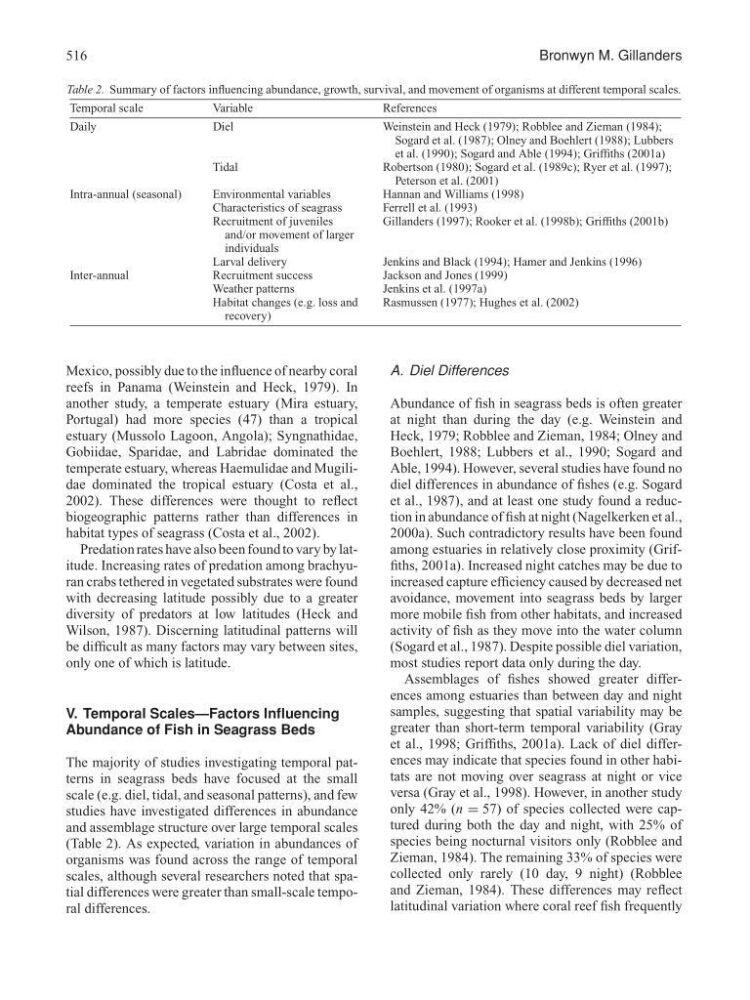
Table 2. Summary of factors influencing abundance, growth, survival, and movement of organisms at different temporal scales.
Temporal scale
Variable
References
Daily
Diel
Weinstein and Heck (1979); Robblee and Zieman (1984);
Sogard et al. (1987); Olney and Boehlert (1988); Lubbers
et al. (1990); Sogard and Able (1994); Griffiths (2001a)
Tidal
Robertson (1980); Sogard et al. (1989c); Ryer et al. (1997);
Peterson et al. (2001)
Intra-annual (seasonal)
Environmental variables
Hannan and Williams (1998)
Characteristics of seagrass
Ferrell et al. (1993)
Recruitment of juveniles
and/or movement of larger
individuals
Gillanders (1997); Rooker et al. (1998b); Griffiths (2001b)
Larval delivery
Jenkins and Black (1994); Hamer and Jenkins (1996)
Inter-annual
Recruitment success
Jackson and Jones (1999)
Weather patterns
Jenkins et al. (1997a)
Habitat changes (e.g. loss and
recovery)
Rasmussen (1977); Hughes et al. (2002)
Mexico, possibly due to the influence of nearby coral
reefs in Panama (Weinstein and Heck, 1979). In
another study, a temperate estuary (Mira estuary,
Portugal) had more species (47) than a tropical
estuary (Mussolo Lagoon, Angola); Syngnathidae,
Gobiidae, Sparidae, and Labridae dominated the
temperate estuary, whereas Haemulidae and Mugilidae dominated the tropical estuary (Costa et al.,
2002). These differences were thought to reflect
biogeographic patterns rather than differences in
habitat types of seagrass (Costa et al., 2002).
Predation rates have also been found to vary by latitude. Increasing rates of predation among brachyuran crabs tethered in vegetated substrates were found
with decreasing latitude possibly due to a greater
diversity of predators at low latitudes (Heck and
Wilson, 1987). Discerning latitudinal patterns will
be difficult as many factors may vary between sites,
only one of which is latitude.
V. Temporal Scales—Factors Influencing
Abundance of Fish in Seagrass Beds
The majority of studies investigating temporal patterns in seagrass beds have focused at the small
scale (e.g. diel, tidal, and seasonal patterns), and few
studies have investigated differences in abundance
and assemblage structure over large temporal scales
(Table 2). As expected, variation in abundances of
organisms was found across the range of temporal
scales, although several researchers noted that spatial differences were greater than small-scale temporal differences.
A. Diel Differences
Abundance of fish in seagrass beds is often greater
at night than during the day (e.g. Weinstein and
Heck, 1979; Robblee and Zieman, 1984; Olney and
Boehlert, 1988; Lubbers et al., 1990; Sogard and
Able, 1994). However, several studies have found no
diel differences in abundance of fishes (e.g. Sogard
et al., 1987), and at least one study found a reduction in abundance of fish at night (Nagelkerken et al.,
2000a). Such contradictory results have been found
among estuaries in relatively close proximity (Griffiths, 2001a). Increased night catches may be due to
increased capture efficiency caused by decreased net
avoidance, movement into seagrass beds by larger
more mobile fish from other habitats, and increased
activity of fish as they move into the water column
(Sogard et al., 1987). Despite possible diel variation,
most studies report data only during the day.
Assemblages of fishes showed greater differences among estuaries than between day and night
samples, suggesting that spatial variability may be
greater than short-term temporal variability (Gray
et al., 1998; Griffiths, 2001a). Lack of diel differences may indicate that species found in other habitats are not moving over seagrass at night or vice
versa (Gray et al., 1998). However, in another study
only 42% (n = 57) of species collected were captured during both the day and night, with 25% of
species being nocturnal visitors only (Robblee and
Zieman, 1984). The remaining 33% of species were
collected only rarely (10 day, 9 night) (Robblee
and Zieman, 1984). These differences may reflect
latitudinal variation where coral reef fish frequently
Bronwyn M. Gillanders
Table 2. Summary of factors influencing abundance, growth, survival, and movement of organisms at different temporal scales.
Temporal scale
Variable
References
Daily
Diel
Weinstein and Heck (1979); Robblee and Zieman (1984);
Sogard et al. (1987); Olney and Boehlert (1988); Lubbers
et al. (1990); Sogard and Able (1994); Griffiths (2001a)
Tidal
Robertson (1980); Sogard et al. (1989c); Ryer et al. (1997);
Peterson et al. (2001)
Intra-annual (seasonal)
Environmental variables
Hannan and Williams (1998)
Characteristics of seagrass
Ferrell et al. (1993)
Recruitment of juveniles
and/or movement of larger
individuals
Gillanders (1997); Rooker et al. (1998b); Griffiths (2001b)
Larval delivery
Jenkins and Black (1994); Hamer and Jenkins (1996)
Inter-annual
Recruitment success
Jackson and Jones (1999)
Weather patterns
Jenkins et al. (1997a)
Habitat changes (e.g. loss and
recovery)
Rasmussen (1977); Hughes et al. (2002)
Mexico, possibly due to the influence of nearby coral
reefs in Panama (Weinstein and Heck, 1979). In
another study, a temperate estuary (Mira estuary,
Portugal) had more species (47) than a tropical
estuary (Mussolo Lagoon, Angola); Syngnathidae,
Gobiidae, Sparidae, and Labridae dominated the
temperate estuary, whereas Haemulidae and Mugilidae dominated the tropical estuary (Costa et al.,
2002). These differences were thought to reflect
biogeographic patterns rather than differences in
habitat types of seagrass (Costa et al., 2002).
Predation rates have also been found to vary by latitude. Increasing rates of predation among brachyuran crabs tethered in vegetated substrates were found
with decreasing latitude possibly due to a greater
diversity of predators at low latitudes (Heck and
Wilson, 1987). Discerning latitudinal patterns will
be difficult as many factors may vary between sites,
only one of which is latitude.
V. Temporal Scales—Factors Influencing
Abundance of Fish in Seagrass Beds
The majority of studies investigating temporal patterns in seagrass beds have focused at the small
scale (e.g. diel, tidal, and seasonal patterns), and few
studies have investigated differences in abundance
and assemblage structure over large temporal scales
(Table 2). As expected, variation in abundances of
organisms was found across the range of temporal
scales, although several researchers noted that spatial differences were greater than small-scale temporal differences.
A. Diel Differences
Abundance of fish in seagrass beds is often greater
at night than during the day (e.g. Weinstein and
Heck, 1979; Robblee and Zieman, 1984; Olney and
Boehlert, 1988; Lubbers et al., 1990; Sogard and
Able, 1994). However, several studies have found no
diel differences in abundance of fishes (e.g. Sogard
et al., 1987), and at least one study found a reduction in abundance of fish at night (Nagelkerken et al.,
2000a). Such contradictory results have been found
among estuaries in relatively close proximity (Griffiths, 2001a). Increased night catches may be due to
increased capture efficiency caused by decreased net
avoidance, movement into seagrass beds by larger
more mobile fish from other habitats, and increased
activity of fish as they move into the water column
(Sogard et al., 1987). Despite possible diel variation,
most studies report data only during the day.
Assemblages of fishes showed greater differences among estuaries than between day and night
samples, suggesting that spatial variability may be
greater than short-term temporal variability (Gray
et al., 1998; Griffiths, 2001a). Lack of diel differences may indicate that species found in other habitats are not moving over seagrass at night or vice
versa (Gray et al., 1998). However, in another study
only 42% (n = 57) of species collected were captured during both the day and night, with 25% of
species being nocturnal visitors only (Robblee and
Zieman, 1984). The remaining 33% of species were
collected only rarely (10 day, 9 night) (Robblee
and Zieman, 1984). These differences may reflect
latitudinal variation where coral reef fish frequently