

514
Bronwyn M. Gillanders
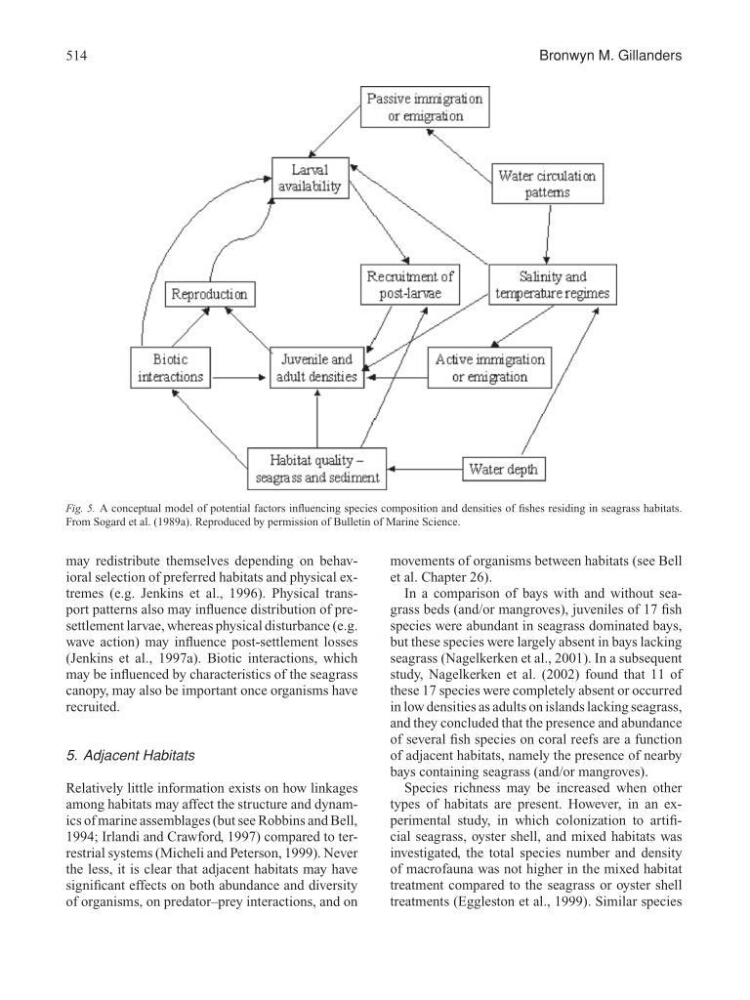
Fig. 5. A conceptual model of potential factors influencing species composition and densities of fishes residing in seagrass habitats.
From Sogard et al. (1989a). Reproduced by permission of Bulletin of Marine Science.
may redistribute themselves depending on behavioral selection of preferred habitats and physical extremes (e.g. Jenkins et al., 1996). Physical transport patterns also may influence distribution of presettlement larvae, whereas physical disturbance (e.g.
wave action) may influence post-settlement losses
(Jenkins et al., 1997a). Biotic interactions, which
may be influenced by characteristics of the seagrass
canopy, may also be important once organisms have
recruited.
5. Adjacent Habitats
Relatively little information exists on how linkages
among habitats may affect the structure and dynamics of marine assemblages (but see Robbins and Bell,
1994; Irlandi and Crawford, 1997) compared to terrestrial systems (Micheli and Peterson, 1999). Never
the less, it is clear that adjacent habitats may have
significant effects on both abundance and diversity
of organisms, on predator–prey interactions, and on
movements of organisms between habitats (see Bell
et al. Chapter 26).
In a comparison of bays with and without seagrass beds (and/or mangroves), juveniles of 17 fish
species were abundant in seagrass dominated bays,
but these species were largely absent in bays lacking
seagrass (Nagelkerken et al., 2001). In a subsequent
study, Nagelkerken et al. (2002) found that 11 of
these 17 species were completely absent or occurred
in low densities as adults on islands lacking seagrass,
and they concluded that the presence and abundance
of several fish species on coral reefs are a function
of adjacent habitats, namely the presence of nearby
bays containing seagrass (and/or mangroves).
Species richness may be increased when other
types of habitats are present. However, in an experimental study, in which colonization to artificial seagrass, oyster shell, and mixed habitats was
investigated, the total species number and density
of macrofauna was not higher in the mixed habitat
treatment compared to the seagrass or oyster shell
treatments (Eggleston et al., 1999). Similar species
Bronwyn M. Gillanders
Fig. 5. A conceptual model of potential factors influencing species composition and densities of fishes residing in seagrass habitats.
From Sogard et al. (1989a). Reproduced by permission of Bulletin of Marine Science.
may redistribute themselves depending on behavioral selection of preferred habitats and physical extremes (e.g. Jenkins et al., 1996). Physical transport patterns also may influence distribution of presettlement larvae, whereas physical disturbance (e.g.
wave action) may influence post-settlement losses
(Jenkins et al., 1997a). Biotic interactions, which
may be influenced by characteristics of the seagrass
canopy, may also be important once organisms have
recruited.
5. Adjacent Habitats
Relatively little information exists on how linkages
among habitats may affect the structure and dynamics of marine assemblages (but see Robbins and Bell,
1994; Irlandi and Crawford, 1997) compared to terrestrial systems (Micheli and Peterson, 1999). Never
the less, it is clear that adjacent habitats may have
significant effects on both abundance and diversity
of organisms, on predator–prey interactions, and on
movements of organisms between habitats (see Bell
et al. Chapter 26).
In a comparison of bays with and without seagrass beds (and/or mangroves), juveniles of 17 fish
species were abundant in seagrass dominated bays,
but these species were largely absent in bays lacking
seagrass (Nagelkerken et al., 2001). In a subsequent
study, Nagelkerken et al. (2002) found that 11 of
these 17 species were completely absent or occurred
in low densities as adults on islands lacking seagrass,
and they concluded that the presence and abundance
of several fish species on coral reefs are a function
of adjacent habitats, namely the presence of nearby
bays containing seagrass (and/or mangroves).
Species richness may be increased when other
types of habitats are present. However, in an experimental study, in which colonization to artificial seagrass, oyster shell, and mixed habitats was
investigated, the total species number and density
of macrofauna was not higher in the mixed habitat
treatment compared to the seagrass or oyster shell
treatments (Eggleston et al., 1999). Similar species