

488
John F. Valentine and J. Emmett Duffy
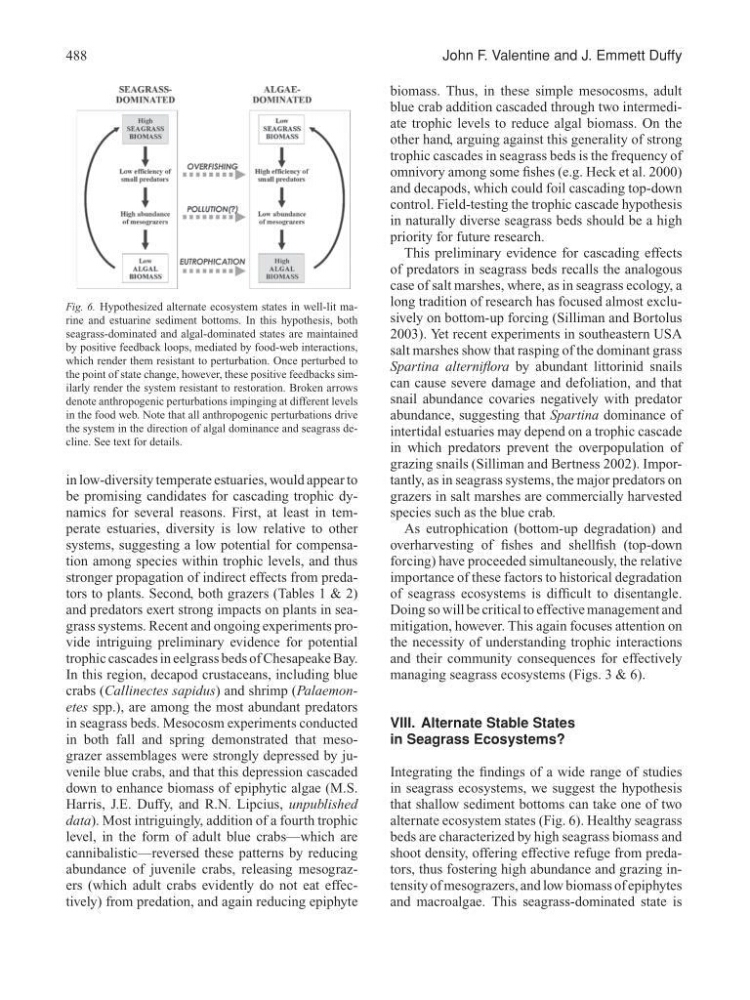
Fig. 6. Hypothesized alternate ecosystem states in well-lit marine and estuarine sediment bottoms. In this hypothesis, both
seagrass-dominated and algal-dominated states are maintained
by positive feedback loops, mediated by food-web interactions,
which render them resistant to perturbation. Once perturbed to
the point of state change, however, these positive feedbacks similarly render the system resistant to restoration. Broken arrows
denote anthropogenic perturbations impinging at different levels
in the food web. Note that all anthropogenic perturbations drive
the system in the direction of algal dominance and seagrass decline. See text for details.
in low-diversity temperate estuaries, would appear to
be promising candidates for cascading trophic dynamics for several reasons. First, at least in temperate estuaries, diversity is low relative to other
systems, suggesting a low potential for compensation among species within trophic levels, and thus
stronger propagation of indirect effects from predators to plants. Second, both grazers (Tables 1 & 2)
and predators exert strong impacts on plants in seagrass systems. Recent and ongoing experiments provide intriguing preliminary evidence for potential
trophic cascades in eelgrass beds of Chesapeake Bay.
In this region, decapod crustaceans, including blue
crabs (Callinectes sapidus) and shrimp (Palaemonetes spp.), are among the most abundant predators
in seagrass beds. Mesocosm experiments conducted
in both fall and spring demonstrated that mesograzer assemblages were strongly depressed by juvenile blue crabs, and that this depression cascaded
down to enhance biomass of epiphytic algae (M.S.
Harris, J.E. Duffy, and R.N. Lipcius, unpublished
data). Most intriguingly, addition of a fourth trophic
level, in the form of adult blue crabs—which are
cannibalistic—reversed these patterns by reducing
abundance of juvenile crabs, releasing mesograzers (which adult crabs evidently do not eat effectively) from predation, and again reducing epiphyte
biomass. Thus, in these simple mesocosms, adult
blue crab addition cascaded through two intermediate trophic levels to reduce algal biomass. On the
other hand, arguing against this generality of strong
trophic cascades in seagrass beds is the frequency of
omnivory among some fishes (e.g. Heck et al. 2000)
and decapods, which could foil cascading top-down
control. Field-testing the trophic cascade hypothesis
in naturally diverse seagrass beds should be a high
priority for future research.
This preliminary evidence for cascading effects
of predators in seagrass beds recalls the analogous
case of salt marshes, where, as in seagrass ecology, a
long tradition of research has focused almost exclusively on bottom-up forcing (Silliman and Bortolus
2003). Yet recent experiments in southeastern USA
salt marshes show that rasping of the dominant grass
Spartina alterniflora by abundant littorinid snails
can cause severe damage and defoliation, and that
snail abundance covaries negatively with predator
abundance, suggesting that Spartina dominance of
intertidal estuaries may depend on a trophic cascade
in which predators prevent the overpopulation of
grazing snails (Silliman and Bertness 2002). Importantly, as in seagrass systems, the major predators on
grazers in salt marshes are commercially harvested
species such as the blue crab.
As eutrophication (bottom-up degradation) and
overharvesting of fishes and shellfish (top-down
forcing) have proceeded simultaneously, the relative
importance of these factors to historical degradation
of seagrass ecosystems is difficult to disentangle.
Doing so will be critical to effective management and
mitigation, however. This again focuses attention on
the necessity of understanding trophic interactions
and their community consequences for effectively
managing seagrass ecosystems (Figs. 3 & 6).
VIII. Alternate Stable States
in Seagrass Ecosystems?
Integrating the findings of a wide range of studies
in seagrass ecosystems, we suggest the hypothesis
that shallow sediment bottoms can take one of two
alternate ecosystem states (Fig. 6). Healthy seagrass
beds are characterized by high seagrass biomass and
shoot density, offering effective refuge from predators, thus fostering high abundance and grazing intensity of mesograzers, and low biomass of epiphytes
and macroalgae. This seagrass-dominated state is
John F. Valentine and J. Emmett Duffy
Fig. 6. Hypothesized alternate ecosystem states in well-lit marine and estuarine sediment bottoms. In this hypothesis, both
seagrass-dominated and algal-dominated states are maintained
by positive feedback loops, mediated by food-web interactions,
which render them resistant to perturbation. Once perturbed to
the point of state change, however, these positive feedbacks similarly render the system resistant to restoration. Broken arrows
denote anthropogenic perturbations impinging at different levels
in the food web. Note that all anthropogenic perturbations drive
the system in the direction of algal dominance and seagrass decline. See text for details.
in low-diversity temperate estuaries, would appear to
be promising candidates for cascading trophic dynamics for several reasons. First, at least in temperate estuaries, diversity is low relative to other
systems, suggesting a low potential for compensation among species within trophic levels, and thus
stronger propagation of indirect effects from predators to plants. Second, both grazers (Tables 1 & 2)
and predators exert strong impacts on plants in seagrass systems. Recent and ongoing experiments provide intriguing preliminary evidence for potential
trophic cascades in eelgrass beds of Chesapeake Bay.
In this region, decapod crustaceans, including blue
crabs (Callinectes sapidus) and shrimp (Palaemonetes spp.), are among the most abundant predators
in seagrass beds. Mesocosm experiments conducted
in both fall and spring demonstrated that mesograzer assemblages were strongly depressed by juvenile blue crabs, and that this depression cascaded
down to enhance biomass of epiphytic algae (M.S.
Harris, J.E. Duffy, and R.N. Lipcius, unpublished
data). Most intriguingly, addition of a fourth trophic
level, in the form of adult blue crabs—which are
cannibalistic—reversed these patterns by reducing
abundance of juvenile crabs, releasing mesograzers (which adult crabs evidently do not eat effectively) from predation, and again reducing epiphyte
biomass. Thus, in these simple mesocosms, adult
blue crab addition cascaded through two intermediate trophic levels to reduce algal biomass. On the
other hand, arguing against this generality of strong
trophic cascades in seagrass beds is the frequency of
omnivory among some fishes (e.g. Heck et al. 2000)
and decapods, which could foil cascading top-down
control. Field-testing the trophic cascade hypothesis
in naturally diverse seagrass beds should be a high
priority for future research.
This preliminary evidence for cascading effects
of predators in seagrass beds recalls the analogous
case of salt marshes, where, as in seagrass ecology, a
long tradition of research has focused almost exclusively on bottom-up forcing (Silliman and Bortolus
2003). Yet recent experiments in southeastern USA
salt marshes show that rasping of the dominant grass
Spartina alterniflora by abundant littorinid snails
can cause severe damage and defoliation, and that
snail abundance covaries negatively with predator
abundance, suggesting that Spartina dominance of
intertidal estuaries may depend on a trophic cascade
in which predators prevent the overpopulation of
grazing snails (Silliman and Bertness 2002). Importantly, as in seagrass systems, the major predators on
grazers in salt marshes are commercially harvested
species such as the blue crab.
As eutrophication (bottom-up degradation) and
overharvesting of fishes and shellfish (top-down
forcing) have proceeded simultaneously, the relative
importance of these factors to historical degradation
of seagrass ecosystems is difficult to disentangle.
Doing so will be critical to effective management and
mitigation, however. This again focuses attention on
the necessity of understanding trophic interactions
and their community consequences for effectively
managing seagrass ecosystems (Figs. 3 & 6).
VIII. Alternate Stable States
in Seagrass Ecosystems?
Integrating the findings of a wide range of studies
in seagrass ecosystems, we suggest the hypothesis
that shallow sediment bottoms can take one of two
alternate ecosystem states (Fig. 6). Healthy seagrass
beds are characterized by high seagrass biomass and
shoot density, offering effective refuge from predators, thus fostering high abundance and grazing intensity of mesograzers, and low biomass of epiphytes
and macroalgae. This seagrass-dominated state is