

280
Carlos M. Duarte, James W. Fourqurean, Dorte Krause-Jensen, and Birgit Olesen
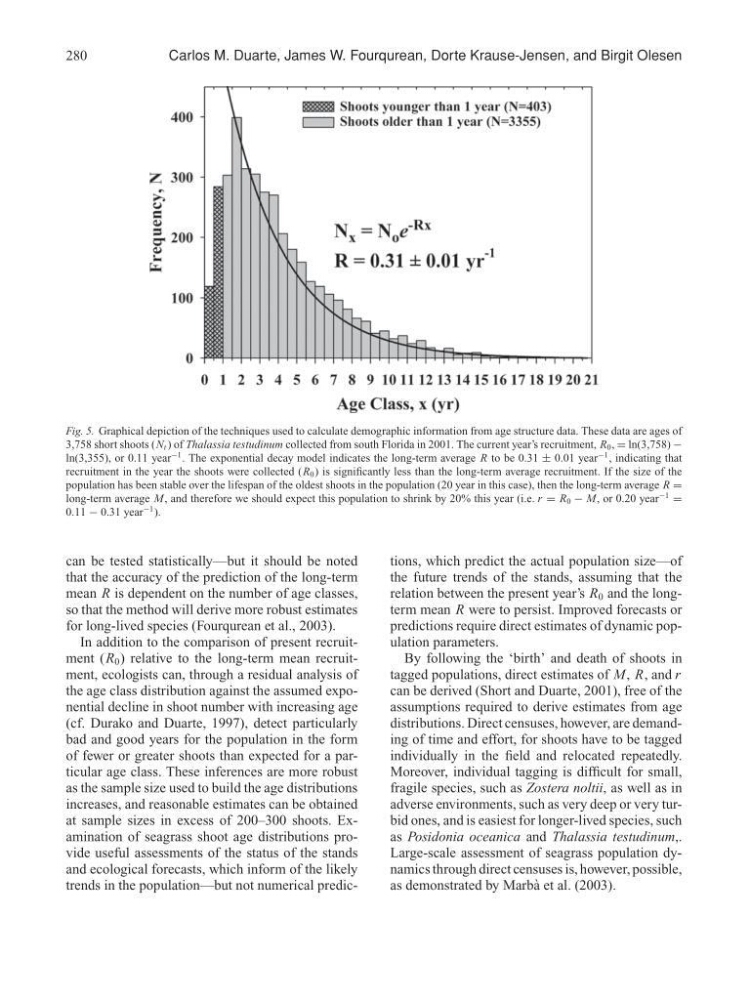
Fig. 5. Graphical depiction of the techniques used to calculate demographic information from age structure data. These data are ages of
3,758 short shoots (N t ) of Thalassia testudinum collected from south Florida in 2001. The current year’s recruitment, R 0 , = ln(3,758) −
ln(3,355), or 0.11 year
−1 . The exponential decay model indicates the long-term average R to be 0.31 ± 0.01 year
−1 , indicating that
recruitment in the year the shoots were collected (R 0 ) is significantly less than the long-term average recruitment. If the size of the
population has been stable over the lifespan of the oldest shoots in the population (20 year in this case), then the long-term average R =
long-term average M, and therefore we should expect this population to shrink by 20% this year (i.e. r = R 0 − M, or 0.20 year
−1 =
0.11 − 0.31 year
−1 ).
can be tested statistically—but it should be noted
that the accuracy of the prediction of the long-term
mean R is dependent on the number of age classes,
so that the method will derive more robust estimates
for long-lived species (Fourqurean et al., 2003).
In addition to the comparison of present recruitment (R 0 ) relative to the long-term mean recruitment, ecologists can, through a residual analysis of
the age class distribution against the assumed exponential decline in shoot number with increasing age
(cf. Durako and Duarte, 1997), detect particularly
bad and good years for the population in the form
of fewer or greater shoots than expected for a particular age class. These inferences are more robust
as the sample size used to build the age distributions
increases, and reasonable estimates can be obtained
at sample sizes in excess of 200–300 shoots. Examination of seagrass shoot age distributions provide useful assessments of the status of the stands
and ecological forecasts, which inform of the likely
trends in the population—but not numerical predictions, which predict the actual population size—of
the future trends of the stands, assuming that the
relation between the present year’s R 0 and the longterm mean R were to persist. Improved forecasts or
predictions require direct estimates of dynamic population parameters.
By following the ‘birth’ and death of shoots in
tagged populations, direct estimates of M, R, and r
can be derived (Short and Duarte, 2001), free of the
assumptions required to derive estimates from age
distributions. Direct censuses, however, are demanding of time and effort, for shoots have to be tagged
individually in the field and relocated repeatedly.
Moreover, individual tagging is difficult for small,
fragile species, such as Zostera noltii, as well as in
adverse environments, such as very deep or very turbid ones, and is easiest for longer-lived species, such
as Posidonia oceanica and Thalassia testudinum,.
Large-scale assessment of seagrass population dynamics through direct censuses is, however, possible,
as demonstrated by Marb` a et al. (2003).
Carlos M. Duarte, James W. Fourqurean, Dorte Krause-Jensen, and Birgit Olesen
Fig. 5. Graphical depiction of the techniques used to calculate demographic information from age structure data. These data are ages of
3,758 short shoots (N t ) of Thalassia testudinum collected from south Florida in 2001. The current year’s recruitment, R 0 , = ln(3,758) −
ln(3,355), or 0.11 year
−1 . The exponential decay model indicates the long-term average R to be 0.31 ± 0.01 year
−1 , indicating that
recruitment in the year the shoots were collected (R 0 ) is significantly less than the long-term average recruitment. If the size of the
population has been stable over the lifespan of the oldest shoots in the population (20 year in this case), then the long-term average R =
long-term average M, and therefore we should expect this population to shrink by 20% this year (i.e. r = R 0 − M, or 0.20 year
−1 =
0.11 − 0.31 year
−1 ).
can be tested statistically—but it should be noted
that the accuracy of the prediction of the long-term
mean R is dependent on the number of age classes,
so that the method will derive more robust estimates
for long-lived species (Fourqurean et al., 2003).
In addition to the comparison of present recruitment (R 0 ) relative to the long-term mean recruitment, ecologists can, through a residual analysis of
the age class distribution against the assumed exponential decline in shoot number with increasing age
(cf. Durako and Duarte, 1997), detect particularly
bad and good years for the population in the form
of fewer or greater shoots than expected for a particular age class. These inferences are more robust
as the sample size used to build the age distributions
increases, and reasonable estimates can be obtained
at sample sizes in excess of 200–300 shoots. Examination of seagrass shoot age distributions provide useful assessments of the status of the stands
and ecological forecasts, which inform of the likely
trends in the population—but not numerical predictions, which predict the actual population size—of
the future trends of the stands, assuming that the
relation between the present year’s R 0 and the longterm mean R were to persist. Improved forecasts or
predictions require direct estimates of dynamic population parameters.
By following the ‘birth’ and death of shoots in
tagged populations, direct estimates of M, R, and r
can be derived (Short and Duarte, 2001), free of the
assumptions required to derive estimates from age
distributions. Direct censuses, however, are demanding of time and effort, for shoots have to be tagged
individually in the field and relocated repeatedly.
Moreover, individual tagging is difficult for small,
fragile species, such as Zostera noltii, as well as in
adverse environments, such as very deep or very turbid ones, and is easiest for longer-lived species, such
as Posidonia oceanica and Thalassia testudinum,.
Large-scale assessment of seagrass population dynamics through direct censuses is, however, possible,
as demonstrated by Marb` a et al. (2003).