

244
J. Romero, K.-S. Lee, M. P ´
erez, M. A. Mateo, and T. Alcoverro
demonstrating that seagrasses growing in terrigenous sediment were nitrogen-limited, due to the
generally high denitrification rates found in these
environments (but see Section III E in this chapter),
while seagrasses growing in biogenic carbonate sediments were often phosphorus-limited due to binding of phosphate in the carbonate sediments (Short
et al., 1990; Fourqurean et al., 1992), and nitrogen
is readily available, e.g. in many tropical ecosystems, through nitrogen fixation. This hypothesis is
attractive, since it links seagrass features to the general biogeochemical cycle of nutrients (see preceding sections in this chapter, and Marb` a et al., Chapter
6). However, nitrogen limitation of seagrass growth
has also been demonstrated in carbonate sediments
(Udy et al., 1999), P limitation has been evidenced in
sediments with less than 30% of carbonate content
(P´ erez et al., 1991), and phosphorus deficiency was
not found to be linked to carbonate sediment content,
at least across a relatively limited geographical area
(Invers et al., 1995). These findings indicate that, besides the general nutrient cycle, nutrient limitation in
seagrasses is strongly dependent on, at least, specific
plant features and local conditions.
Nevertheless, absence of response to nutrient additions is also frequent, even in oligotrophic waters.
It has been considered sometimes as an ‘experimental failure’ and even not worthy of publication (but
see Erftemeijer et al., 1994; Romero et al., 1998;
Worm and Reusch, 2000, among others). However,
if nutrient addition has been performed adequately,
such a negative result indicates that nutrient availability is in excess of seagrass nutrient demands. Of
course, any explanation based on a sufficiency of
nutrient supply must take into account that several
of the non-responding seagrasses were growing in
oligotrophic waters, bearing in mind the following
two observations. First, it has to be acknowledged
that seagrasses seem to be adapted for growing in
nutrient-poor environments. Not only the mechanisms described in the firsts sections of this chapter (nutrient resorption, use of pore water nutrients,
storage, etc.) allows these plants to better use nutrients, but also it has to be considered that seagrasses
require approximately 8–50 times less nitrogen and
1.5–100 times less phosphorus for daily growth than
macroalgae or phytoplankton, respectively (Duarte,
1995). Second it has to be taken into account that
nutrient additions not only modify the plant nutrient
availability, but also the ecosystem interaction network, in a kind of cascading of hierarchical effects
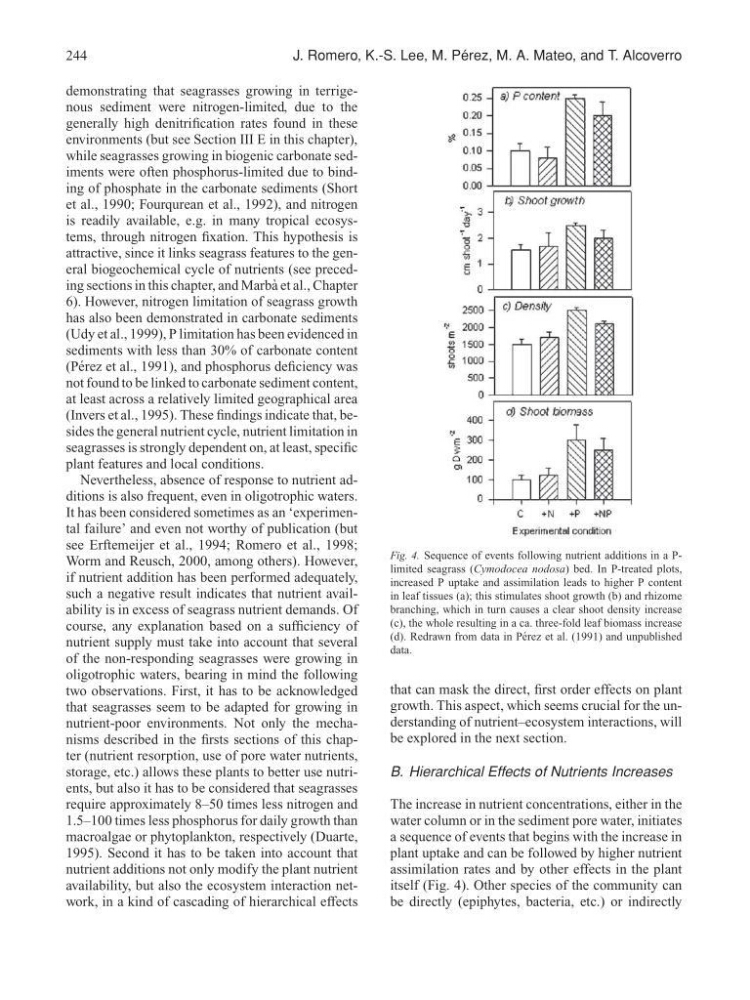
Fig. 4. Sequence of events following nutrient additions in a Plimited seagrass (Cymodocea nodosa) bed. In P-treated plots,
increased P uptake and assimilation leads to higher P content
in leaf tissues (a); this stimulates shoot growth (b) and rhizome
branching, which in turn causes a clear shoot density increase
(c), the whole resulting in a ca. three-fold leaf biomass increase
(d). Redrawn from data in P´ erez et al. (1991) and unpublished
data.
that can mask the direct, first order effects on plant
growth. This aspect, which seems crucial for the understanding of nutrient–ecosystem interactions, will
be explored in the next section.
B. Hierarchical Effects of Nutrients Increases
The increase in nutrient concentrations, either in the
water column or in the sediment pore water, initiates
a sequence of events that begins with the increase in
plant uptake and can be followed by higher nutrient
assimilation rates and by other effects in the plant
itself (Fig. 4). Other species of the community can
be directly (epiphytes, bacteria, etc.) or indirectly
J. Romero, K.-S. Lee, M. P ´
erez, M. A. Mateo, and T. Alcoverro
demonstrating that seagrasses growing in terrigenous sediment were nitrogen-limited, due to the
generally high denitrification rates found in these
environments (but see Section III E in this chapter),
while seagrasses growing in biogenic carbonate sediments were often phosphorus-limited due to binding of phosphate in the carbonate sediments (Short
et al., 1990; Fourqurean et al., 1992), and nitrogen
is readily available, e.g. in many tropical ecosystems, through nitrogen fixation. This hypothesis is
attractive, since it links seagrass features to the general biogeochemical cycle of nutrients (see preceding sections in this chapter, and Marb` a et al., Chapter
6). However, nitrogen limitation of seagrass growth
has also been demonstrated in carbonate sediments
(Udy et al., 1999), P limitation has been evidenced in
sediments with less than 30% of carbonate content
(P´ erez et al., 1991), and phosphorus deficiency was
not found to be linked to carbonate sediment content,
at least across a relatively limited geographical area
(Invers et al., 1995). These findings indicate that, besides the general nutrient cycle, nutrient limitation in
seagrasses is strongly dependent on, at least, specific
plant features and local conditions.
Nevertheless, absence of response to nutrient additions is also frequent, even in oligotrophic waters.
It has been considered sometimes as an ‘experimental failure’ and even not worthy of publication (but
see Erftemeijer et al., 1994; Romero et al., 1998;
Worm and Reusch, 2000, among others). However,
if nutrient addition has been performed adequately,
such a negative result indicates that nutrient availability is in excess of seagrass nutrient demands. Of
course, any explanation based on a sufficiency of
nutrient supply must take into account that several
of the non-responding seagrasses were growing in
oligotrophic waters, bearing in mind the following
two observations. First, it has to be acknowledged
that seagrasses seem to be adapted for growing in
nutrient-poor environments. Not only the mechanisms described in the firsts sections of this chapter (nutrient resorption, use of pore water nutrients,
storage, etc.) allows these plants to better use nutrients, but also it has to be considered that seagrasses
require approximately 8–50 times less nitrogen and
1.5–100 times less phosphorus for daily growth than
macroalgae or phytoplankton, respectively (Duarte,
1995). Second it has to be taken into account that
nutrient additions not only modify the plant nutrient
availability, but also the ecosystem interaction network, in a kind of cascading of hierarchical effects
Fig. 4. Sequence of events following nutrient additions in a Plimited seagrass (Cymodocea nodosa) bed. In P-treated plots,
increased P uptake and assimilation leads to higher P content
in leaf tissues (a); this stimulates shoot growth (b) and rhizome
branching, which in turn causes a clear shoot density increase
(c), the whole resulting in a ca. three-fold leaf biomass increase
(d). Redrawn from data in P´ erez et al. (1991) and unpublished
data.
that can mask the direct, first order effects on plant
growth. This aspect, which seems crucial for the understanding of nutrient–ecosystem interactions, will
be explored in the next section.
B. Hierarchical Effects of Nutrients Increases
The increase in nutrient concentrations, either in the
water column or in the sediment pore water, initiates
a sequence of events that begins with the increase in
plant uptake and can be followed by higher nutrient
assimilation rates and by other effects in the plant
itself (Fig. 4). Other species of the community can
be directly (epiphytes, bacteria, etc.) or indirectly