

142
N. Marb `
a, M. Holmer, and E. Gacia
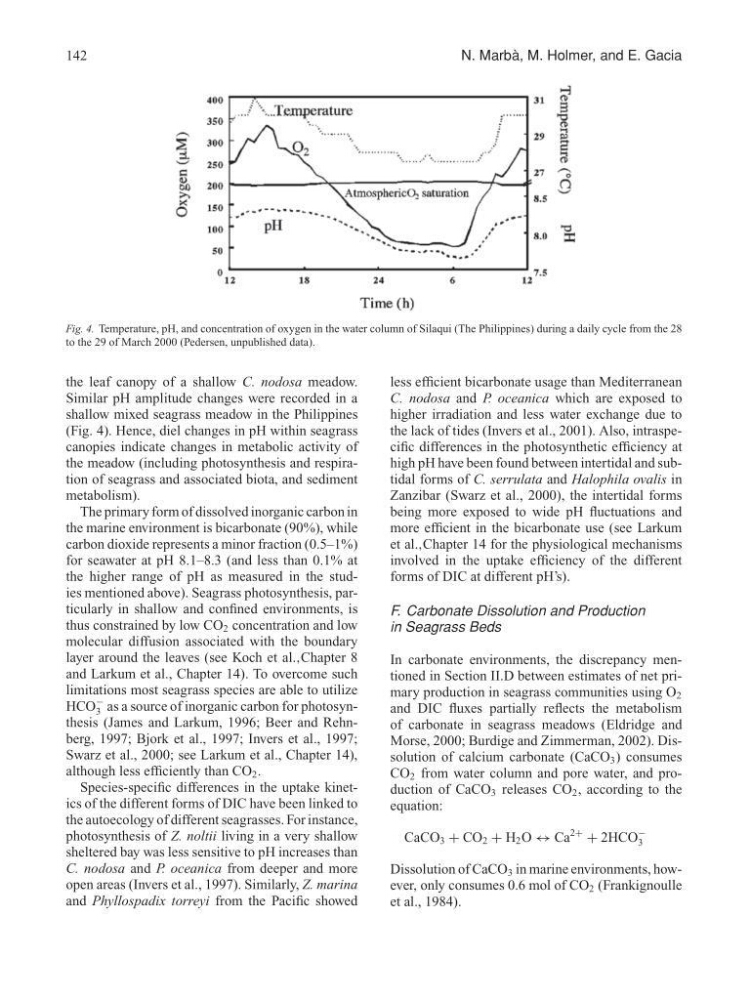
Fig. 4. Temperature, pH, and concentration of oxygen in the water column of Silaqui (The Philippines) during a daily cycle from the 28
to the 29 of March 2000 (Pedersen, unpublished data).
the leaf canopy of a shallow C. nodosa meadow.
Similar pH amplitude changes were recorded in a
shallow mixed seagrass meadow in the Philippines
(Fig. 4). Hence, diel changes in pH within seagrass
canopies indicate changes in metabolic activity of
the meadow (including photosynthesis and respiration of seagrass and associated biota, and sediment
metabolism).
The primary form of dissolved inorganic carbon in
the marine environment is bicarbonate (90%), while
carbon dioxide represents a minor fraction (0.5–1%)
for seawater at pH 8.1–8.3 (and less than 0.1% at
the higher range of pH as measured in the studies mentioned above). Seagrass photosynthesis, particularly in shallow and confined environments, is
thus constrained by low CO 2 concentration and low
molecular diffusion associated with the boundary
layer around the leaves (see Koch et al.,Chapter 8
and Larkum et al., Chapter 14). To overcome such
limitations most seagrass species are able to utilize
HCO
−
3 as a source of inorganic carbon for photosynthesis (James and Larkum, 1996; Beer and Rehnberg, 1997; Bjork et al., 1997; Invers et al., 1997;
Swarz et al., 2000; see Larkum et al., Chapter 14),
although less efficiently than CO 2 .
Species-specific differences in the uptake kinetics of the different forms of DIC have been linked to
the autoecology of different seagrasses. For instance,
photosynthesis of Z. noltii living in a very shallow
sheltered bay was less sensitive to pH increases than
C. nodosa and P. oceanica from deeper and more
open areas (Invers et al., 1997). Similarly, Z. marina
and Phyllospadix torreyi from the Pacific showed
less efficient bicarbonate usage than Mediterranean
C. nodosa and P. oceanica which are exposed to
higher irradiation and less water exchange due to
the lack of tides (Invers et al., 2001). Also, intraspecific differences in the photosynthetic efficiency at
high pH have been found between intertidal and subtidal forms of C. serrulata and Halophila ovalis in
Zanzibar (Swarz et al., 2000), the intertidal forms
being more exposed to wide pH fluctuations and
more efficient in the bicarbonate use (see Larkum
et al.,Chapter 14 for the physiological mechanisms
involved in the uptake efficiency of the different
forms of DIC at different pH’s).
F. Carbonate Dissolution and Production
in Seagrass Beds
In carbonate environments, the discrepancy mentioned in Section II.D between estimates of net primary production in seagrass communities using O 2
and DIC fluxes partially reflects the metabolism
of carbonate in seagrass meadows (Eldridge and
Morse, 2000; Burdige and Zimmerman, 2002). Dissolution of calcium carbonate (CaCO 3 ) consumes
CO 2 from water column and pore water, and production of CaCO 3 releases CO 2 , according to the
equation:
CaCO 3 + CO 2 + H 2 O ↔ Ca
2+
+ 2HCO
−
3
Dissolution of CaCO 3 in marine environments, however, only consumes 0.6 mol of CO 2 (Frankignoulle
et al., 1984).
N. Marb `
a, M. Holmer, and E. Gacia
Fig. 4. Temperature, pH, and concentration of oxygen in the water column of Silaqui (The Philippines) during a daily cycle from the 28
to the 29 of March 2000 (Pedersen, unpublished data).
the leaf canopy of a shallow C. nodosa meadow.
Similar pH amplitude changes were recorded in a
shallow mixed seagrass meadow in the Philippines
(Fig. 4). Hence, diel changes in pH within seagrass
canopies indicate changes in metabolic activity of
the meadow (including photosynthesis and respiration of seagrass and associated biota, and sediment
metabolism).
The primary form of dissolved inorganic carbon in
the marine environment is bicarbonate (90%), while
carbon dioxide represents a minor fraction (0.5–1%)
for seawater at pH 8.1–8.3 (and less than 0.1% at
the higher range of pH as measured in the studies mentioned above). Seagrass photosynthesis, particularly in shallow and confined environments, is
thus constrained by low CO 2 concentration and low
molecular diffusion associated with the boundary
layer around the leaves (see Koch et al.,Chapter 8
and Larkum et al., Chapter 14). To overcome such
limitations most seagrass species are able to utilize
HCO
−
3 as a source of inorganic carbon for photosynthesis (James and Larkum, 1996; Beer and Rehnberg, 1997; Bjork et al., 1997; Invers et al., 1997;
Swarz et al., 2000; see Larkum et al., Chapter 14),
although less efficiently than CO 2 .
Species-specific differences in the uptake kinetics of the different forms of DIC have been linked to
the autoecology of different seagrasses. For instance,
photosynthesis of Z. noltii living in a very shallow
sheltered bay was less sensitive to pH increases than
C. nodosa and P. oceanica from deeper and more
open areas (Invers et al., 1997). Similarly, Z. marina
and Phyllospadix torreyi from the Pacific showed
less efficient bicarbonate usage than Mediterranean
C. nodosa and P. oceanica which are exposed to
higher irradiation and less water exchange due to
the lack of tides (Invers et al., 2001). Also, intraspecific differences in the photosynthetic efficiency at
high pH have been found between intertidal and subtidal forms of C. serrulata and Halophila ovalis in
Zanzibar (Swarz et al., 2000), the intertidal forms
being more exposed to wide pH fluctuations and
more efficient in the bicarbonate use (see Larkum
et al.,Chapter 14 for the physiological mechanisms
involved in the uptake efficiency of the different
forms of DIC at different pH’s).
F. Carbonate Dissolution and Production
in Seagrass Beds
In carbonate environments, the discrepancy mentioned in Section II.D between estimates of net primary production in seagrass communities using O 2
and DIC fluxes partially reflects the metabolism
of carbonate in seagrass meadows (Eldridge and
Morse, 2000; Burdige and Zimmerman, 2002). Dissolution of calcium carbonate (CaCO 3 ) consumes
CO 2 from water column and pore water, and production of CaCO 3 releases CO 2 , according to the
equation:
CaCO 3 + CO 2 + H 2 O ↔ Ca
2+
+ 2HCO
−
3
Dissolution of CaCO 3 in marine environments, however, only consumes 0.6 mol of CO 2 (Frankignoulle
et al., 1984).