

138
N. Marb `
a, M. Holmer, and E. Gacia
-8
-4
0
4
8
Zm1 Zm2 Zm3 Zm4
Zn1 Zn2
Cr
Th
Difference in isotopic signal
between OM sou rce and bacteria
Seagrass
Macroalgae
Sediment
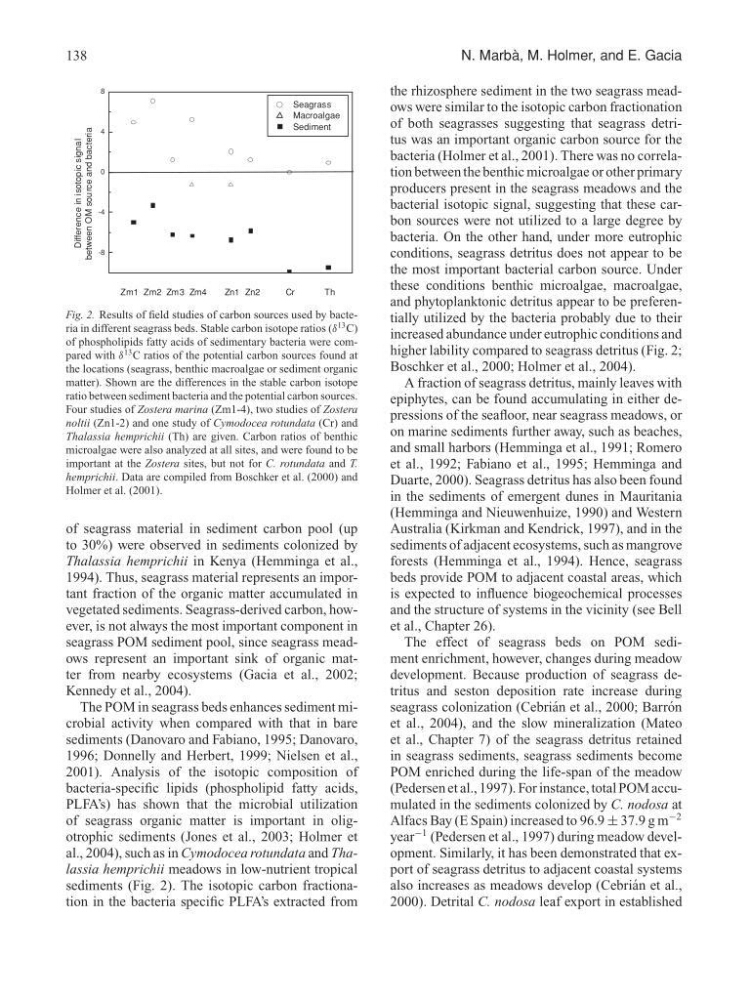
Fig. 2. Results of field studies of carbon sources used by bacteria in different seagrass beds. Stable carbon isotope ratios (δ
13 C)
of phospholipids fatty acids of sedimentary bacteria were compared with δ
13 C ratios of the potential carbon sources found at
the locations (seagrass, benthic macroalgae or sediment organic
matter). Shown are the differences in the stable carbon isotope
ratio between sediment bacteria and the potential carbon sources.
Four studies of Zostera marina (Zm1-4), two studies of Zostera
noltii (Zn1-2) and one study of Cymodocea rotundata (Cr) and
Thalassia hemprichii (Th) are given. Carbon ratios of benthic
microalgae were also analyzed at all sites, and were found to be
important at the Zostera sites, but not for C. rotundata and T.
hemprichii. Data are compiled from Boschker et al. (2000) and
Holmer et al. (2001).
of seagrass material in sediment carbon pool (up
to 30%) were observed in sediments colonized by
Thalassia hemprichii in Kenya (Hemminga et al.,
1994). Thus, seagrass material represents an important fraction of the organic matter accumulated in
vegetated sediments. Seagrass-derived carbon, however, is not always the most important component in
seagrass POM sediment pool, since seagrass meadows represent an important sink of organic matter from nearby ecosystems (Gacia et al., 2002;
Kennedy et al., 2004).
The POM in seagrass beds enhances sediment microbial activity when compared with that in bare
sediments (Danovaro and Fabiano, 1995; Danovaro,
1996; Donnelly and Herbert, 1999; Nielsen et al.,
2001). Analysis of the isotopic composition of
bacteria-specific lipids (phospholipid fatty acids,
PLFA’s) has shown that the microbial utilization
of seagrass organic matter is important in oligotrophic sediments (Jones et al., 2003; Holmer et
al., 2004), such as in Cymodocea rotundata and Thalassia hemprichii meadows in low-nutrient tropical
sediments (Fig. 2). The isotopic carbon fractionation in the bacteria specific PLFA’s extracted from
the rhizosphere sediment in the two seagrass meadows were similar to the isotopic carbon fractionation
of both seagrasses suggesting that seagrass detritus was an important organic carbon source for the
bacteria (Holmer et al., 2001). There was no correlation between the benthic microalgae or other primary
producers present in the seagrass meadows and the
bacterial isotopic signal, suggesting that these carbon sources were not utilized to a large degree by
bacteria. On the other hand, under more eutrophic
conditions, seagrass detritus does not appear to be
the most important bacterial carbon source. Under
these conditions benthic microalgae, macroalgae,
and phytoplanktonic detritus appear to be preferentially utilized by the bacteria probably due to their
increased abundance under eutrophic conditions and
higher lability compared to seagrass detritus (Fig. 2;
Boschker et al., 2000; Holmer et al., 2004).
A fraction of seagrass detritus, mainly leaves with
epiphytes, can be found accumulating in either depressions of the seafloor, near seagrass meadows, or
on marine sediments further away, such as beaches,
and small harbors (Hemminga et al., 1991; Romero
et al., 1992; Fabiano et al., 1995; Hemminga and
Duarte, 2000). Seagrass detritus has also been found
in the sediments of emergent dunes in Mauritania
(Hemminga and Nieuwenhuize, 1990) and Western
Australia (Kirkman and Kendrick, 1997), and in the
sediments of adjacent ecosystems, such as mangrove
forests (Hemminga et al., 1994). Hence, seagrass
beds provide POM to adjacent coastal areas, which
is expected to influence biogeochemical processes
and the structure of systems in the vicinity (see Bell
et al., Chapter 26).
The effect of seagrass beds on POM sediment enrichment, however, changes during meadow
development. Because production of seagrass detritus and seston deposition rate increase during
seagrass colonization (Cebri´ an et al., 2000; Barr´ on
et al., 2004), and the slow mineralization (Mateo
et al., Chapter 7) of the seagrass detritus retained
in seagrass sediments, seagrass sediments become
POM enriched during the life-span of the meadow
(Pedersen et al., 1997). For instance, total POM accumulated in the sediments colonized by C. nodosa at
Alfacs Bay (E Spain) increased to 96.9 ± 37.9 g m
−2
year
−1 (Pedersen et al., 1997) during meadow development. Similarly, it has been demonstrated that export of seagrass detritus to adjacent coastal systems
also increases as meadows develop (Cebri´ an et al.,
2000). Detrital C. nodosa leaf export in established
N. Marb `
a, M. Holmer, and E. Gacia
-8
-4
0
4
8
Zm1 Zm2 Zm3 Zm4
Zn1 Zn2
Cr
Th
Difference in isotopic signal
between OM sou rce and bacteria
Seagrass
Macroalgae
Sediment
Fig. 2. Results of field studies of carbon sources used by bacteria in different seagrass beds. Stable carbon isotope ratios (δ
13 C)
of phospholipids fatty acids of sedimentary bacteria were compared with δ
13 C ratios of the potential carbon sources found at
the locations (seagrass, benthic macroalgae or sediment organic
matter). Shown are the differences in the stable carbon isotope
ratio between sediment bacteria and the potential carbon sources.
Four studies of Zostera marina (Zm1-4), two studies of Zostera
noltii (Zn1-2) and one study of Cymodocea rotundata (Cr) and
Thalassia hemprichii (Th) are given. Carbon ratios of benthic
microalgae were also analyzed at all sites, and were found to be
important at the Zostera sites, but not for C. rotundata and T.
hemprichii. Data are compiled from Boschker et al. (2000) and
Holmer et al. (2001).
of seagrass material in sediment carbon pool (up
to 30%) were observed in sediments colonized by
Thalassia hemprichii in Kenya (Hemminga et al.,
1994). Thus, seagrass material represents an important fraction of the organic matter accumulated in
vegetated sediments. Seagrass-derived carbon, however, is not always the most important component in
seagrass POM sediment pool, since seagrass meadows represent an important sink of organic matter from nearby ecosystems (Gacia et al., 2002;
Kennedy et al., 2004).
The POM in seagrass beds enhances sediment microbial activity when compared with that in bare
sediments (Danovaro and Fabiano, 1995; Danovaro,
1996; Donnelly and Herbert, 1999; Nielsen et al.,
2001). Analysis of the isotopic composition of
bacteria-specific lipids (phospholipid fatty acids,
PLFA’s) has shown that the microbial utilization
of seagrass organic matter is important in oligotrophic sediments (Jones et al., 2003; Holmer et
al., 2004), such as in Cymodocea rotundata and Thalassia hemprichii meadows in low-nutrient tropical
sediments (Fig. 2). The isotopic carbon fractionation in the bacteria specific PLFA’s extracted from
the rhizosphere sediment in the two seagrass meadows were similar to the isotopic carbon fractionation
of both seagrasses suggesting that seagrass detritus was an important organic carbon source for the
bacteria (Holmer et al., 2001). There was no correlation between the benthic microalgae or other primary
producers present in the seagrass meadows and the
bacterial isotopic signal, suggesting that these carbon sources were not utilized to a large degree by
bacteria. On the other hand, under more eutrophic
conditions, seagrass detritus does not appear to be
the most important bacterial carbon source. Under
these conditions benthic microalgae, macroalgae,
and phytoplanktonic detritus appear to be preferentially utilized by the bacteria probably due to their
increased abundance under eutrophic conditions and
higher lability compared to seagrass detritus (Fig. 2;
Boschker et al., 2000; Holmer et al., 2004).
A fraction of seagrass detritus, mainly leaves with
epiphytes, can be found accumulating in either depressions of the seafloor, near seagrass meadows, or
on marine sediments further away, such as beaches,
and small harbors (Hemminga et al., 1991; Romero
et al., 1992; Fabiano et al., 1995; Hemminga and
Duarte, 2000). Seagrass detritus has also been found
in the sediments of emergent dunes in Mauritania
(Hemminga and Nieuwenhuize, 1990) and Western
Australia (Kirkman and Kendrick, 1997), and in the
sediments of adjacent ecosystems, such as mangrove
forests (Hemminga et al., 1994). Hence, seagrass
beds provide POM to adjacent coastal areas, which
is expected to influence biogeochemical processes
and the structure of systems in the vicinity (see Bell
et al., Chapter 26).
The effect of seagrass beds on POM sediment enrichment, however, changes during meadow
development. Because production of seagrass detritus and seston deposition rate increase during
seagrass colonization (Cebri´ an et al., 2000; Barr´ on
et al., 2004), and the slow mineralization (Mateo
et al., Chapter 7) of the seagrass detritus retained
in seagrass sediments, seagrass sediments become
POM enriched during the life-span of the meadow
(Pedersen et al., 1997). For instance, total POM accumulated in the sediments colonized by C. nodosa at
Alfacs Bay (E Spain) increased to 96.9 ± 37.9 g m
−2
year
−1 (Pedersen et al., 1997) during meadow development. Similarly, it has been demonstrated that export of seagrass detritus to adjacent coastal systems
also increases as meadows develop (Cebri´ an et al.,
2000). Detrital C. nodosa leaf export in established