

Chapter 5 Seagrass Seeds and Dispersal Strategies
119
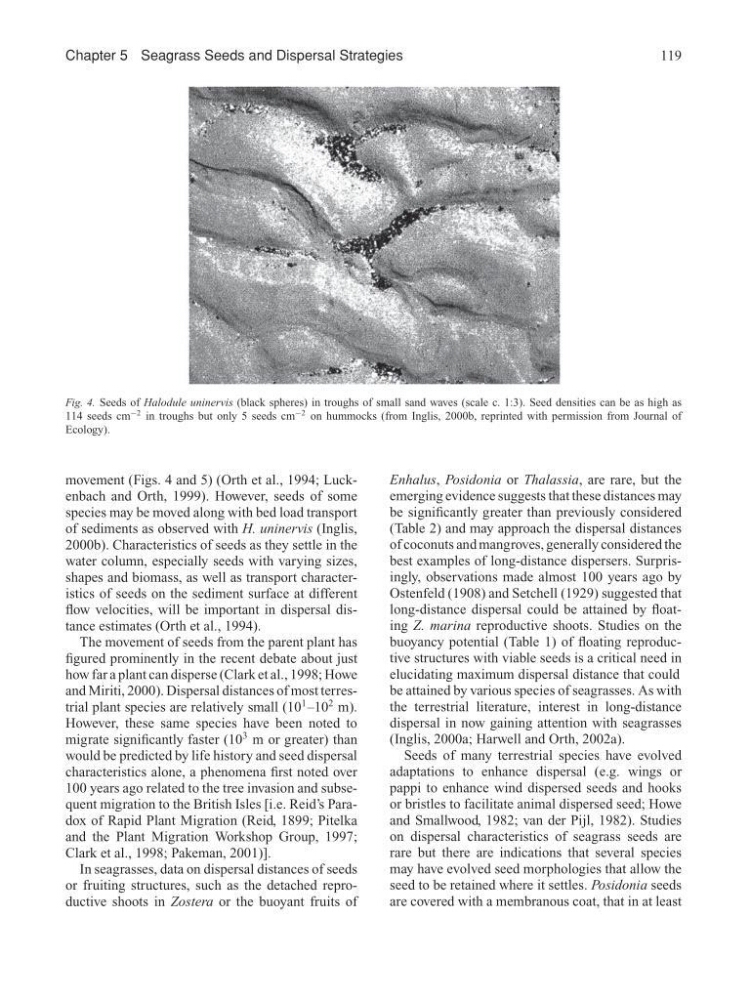
Fig. 4. Seeds of Halodule uninervis (black spheres) in troughs of small sand waves (scale c. 1:3). Seed densities can be as high as
114 seeds cm
−2 in troughs but only 5 seeds cm
−2 on hummocks (from Inglis, 2000b, reprinted with permission from Journal of
Ecology).
movement (Figs. 4 and 5) (Orth et al., 1994; Luckenbach and Orth, 1999). However, seeds of some
species may be moved along with bed load transport
of sediments as observed with H. uninervis (Inglis,
2000b). Characteristics of seeds as they settle in the
water column, especially seeds with varying sizes,
shapes and biomass, as well as transport characteristics of seeds on the sediment surface at different
flow velocities, will be important in dispersal distance estimates (Orth et al., 1994).
The movement of seeds from the parent plant has
figured prominently in the recent debate about just
how far a plant can disperse (Clark et al., 1998; Howe
and Miriti, 2000). Dispersal distances of most terrestrial plant species are relatively small (10
1 –10
2 m).
However, these same species have been noted to
migrate significantly faster (10
3 m or greater) than
would be predicted by life history and seed dispersal
characteristics alone, a phenomena first noted over
100 years ago related to the tree invasion and subsequent migration to the British Isles [i.e. Reid’s Paradox of Rapid Plant Migration (Reid, 1899; Pitelka
and the Plant Migration Workshop Group, 1997;
Clark et al., 1998; Pakeman, 2001)].
In seagrasses, data on dispersal distances of seeds
or fruiting structures, such as the detached reproductive shoots in Zostera or the buoyant fruits of
Enhalus, Posidonia or Thalassia, are rare, but the
emerging evidence suggests that these distances may
be significantly greater than previously considered
(Table 2) and may approach the dispersal distances
of coconuts and mangroves, generally considered the
best examples of long-distance dispersers. Surprisingly, observations made almost 100 years ago by
Ostenfeld (1908) and Setchell (1929) suggested that
long-distance dispersal could be attained by floating Z. marina reproductive shoots. Studies on the
buoyancy potential (Table 1) of floating reproductive structures with viable seeds is a critical need in
elucidating maximum dispersal distance that could
be attained by various species of seagrasses. As with
the terrestrial literature, interest in long-distance
dispersal in now gaining attention with seagrasses
(Inglis, 2000a; Harwell and Orth, 2002a).
Seeds of many terrestrial species have evolved
adaptations to enhance dispersal (e.g. wings or
pappi to enhance wind dispersed seeds and hooks
or bristles to facilitate animal dispersed seed; Howe
and Smallwood, 1982; van der Pijl, 1982). Studies
on dispersal characteristics of seagrass seeds are
rare but there are indications that several species
may have evolved seed morphologies that allow the
seed to be retained where it settles. Posidonia seeds
are covered with a membranous coat, that in at least
119
Fig. 4. Seeds of Halodule uninervis (black spheres) in troughs of small sand waves (scale c. 1:3). Seed densities can be as high as
114 seeds cm
−2 in troughs but only 5 seeds cm
−2 on hummocks (from Inglis, 2000b, reprinted with permission from Journal of
Ecology).
movement (Figs. 4 and 5) (Orth et al., 1994; Luckenbach and Orth, 1999). However, seeds of some
species may be moved along with bed load transport
of sediments as observed with H. uninervis (Inglis,
2000b). Characteristics of seeds as they settle in the
water column, especially seeds with varying sizes,
shapes and biomass, as well as transport characteristics of seeds on the sediment surface at different
flow velocities, will be important in dispersal distance estimates (Orth et al., 1994).
The movement of seeds from the parent plant has
figured prominently in the recent debate about just
how far a plant can disperse (Clark et al., 1998; Howe
and Miriti, 2000). Dispersal distances of most terrestrial plant species are relatively small (10
1 –10
2 m).
However, these same species have been noted to
migrate significantly faster (10
3 m or greater) than
would be predicted by life history and seed dispersal
characteristics alone, a phenomena first noted over
100 years ago related to the tree invasion and subsequent migration to the British Isles [i.e. Reid’s Paradox of Rapid Plant Migration (Reid, 1899; Pitelka
and the Plant Migration Workshop Group, 1997;
Clark et al., 1998; Pakeman, 2001)].
In seagrasses, data on dispersal distances of seeds
or fruiting structures, such as the detached reproductive shoots in Zostera or the buoyant fruits of
Enhalus, Posidonia or Thalassia, are rare, but the
emerging evidence suggests that these distances may
be significantly greater than previously considered
(Table 2) and may approach the dispersal distances
of coconuts and mangroves, generally considered the
best examples of long-distance dispersers. Surprisingly, observations made almost 100 years ago by
Ostenfeld (1908) and Setchell (1929) suggested that
long-distance dispersal could be attained by floating Z. marina reproductive shoots. Studies on the
buoyancy potential (Table 1) of floating reproductive structures with viable seeds is a critical need in
elucidating maximum dispersal distance that could
be attained by various species of seagrasses. As with
the terrestrial literature, interest in long-distance
dispersal in now gaining attention with seagrasses
(Inglis, 2000a; Harwell and Orth, 2002a).
Seeds of many terrestrial species have evolved
adaptations to enhance dispersal (e.g. wings or
pappi to enhance wind dispersed seeds and hooks
or bristles to facilitate animal dispersed seed; Howe
and Smallwood, 1982; van der Pijl, 1982). Studies
on dispersal characteristics of seagrass seeds are
rare but there are indications that several species
may have evolved seed morphologies that allow the
seed to be retained where it settles. Posidonia seeds
are covered with a membranous coat, that in at least