

112
R. J. Orth, M. C. Harwell and G. J. Inglis
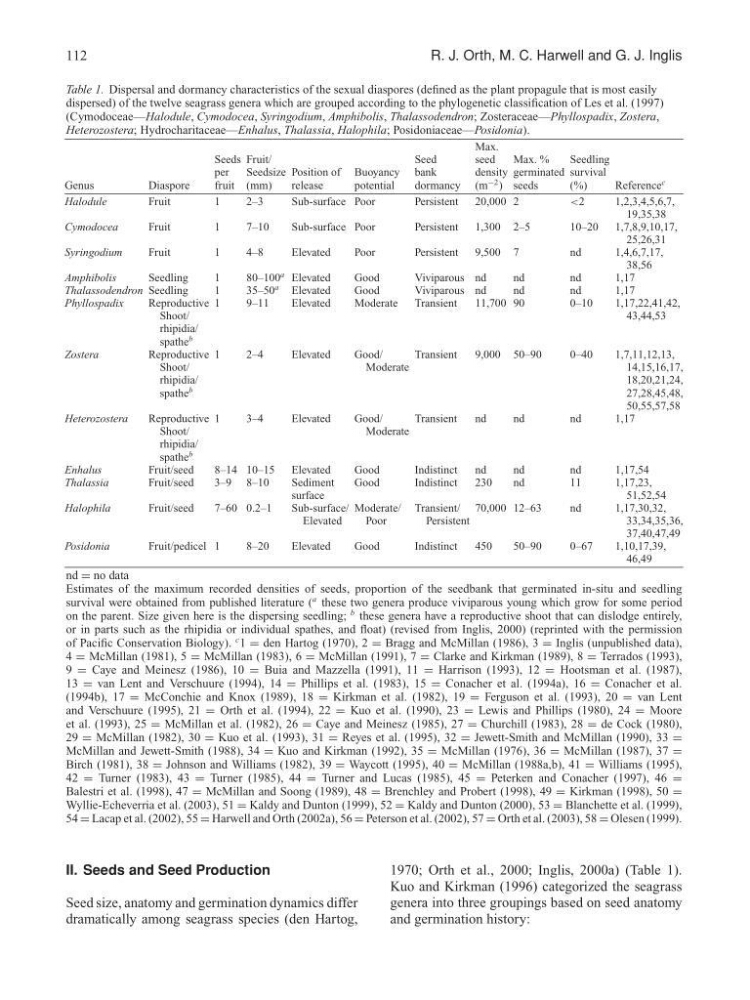
Table 1. Dispersal and dormancy characteristics of the sexual diaspores (defined as the plant propagule that is most easily
dispersed) of the twelve seagrass genera which are grouped according to the phylogenetic classification of Les et al. (1997)
(Cymodoceae—Halodule, Cymodocea, Syringodium, Amphibolis, Thalassodendron; Zosteraceae—Phyllospadix, Zostera,
Heterozostera; Hydrocharitaceae—Enhalus, Thalassia, Halophila; Posidoniaceae—Posidonia).
Max.
Seeds Fruit/
Seed
seed
Max. %
Seedling
per
Seedsize Position of Buoyancy bank
density germinated survival
Genus
Diaspore
fruit (mm)
release
potential
dormancy (m
−2 ) seeds
(%)
Reference
c
Halodule
Fruit
1
2–3
Sub-surface Poor
Persistent 20,000 2
<2
1,2,3,4,5,6,7,
19,35,38
Cymodocea
Fruit
1
7–10
Sub-surface Poor
Persistent 1,300 2–5
10–20 1,7,8,9,10,17,
25,26,31
Syringodium
Fruit
1
4–8
Elevated
Poor
Persistent 9,500 7
nd
1,4,6,7,17,
38,56
Amphibolis
Seedling
1
80–100
a Elevated
Good
Viviparous nd
nd
nd
1,17
Thalassodendron Seedling
1
35–50
a
Elevated
Good
Viviparous nd
nd
nd
1,17
Phyllospadix
Reproductive 1
9–11
Elevated
Moderate Transient
11,700 90
0–10
1,17,22,41,42,
Shoot/
43,44,53
rhipidia/
spathe
b
Zostera
Reproductive 1
2–4
Elevated
Good/
Transient
9,000 50–90
0–40
1,7,11,12,13,
Shoot/
Moderate
14,15,16,17,
rhipidia/
18,20,21,24,
spathe
b
27,28,45,48,
50,55,57,58
Heterozostera
Reproductive 1
3–4
Elevated
Good/
Transient
nd
nd
nd
1,17
Shoot/
Moderate
rhipidia/
spathe
b
Enhalus
Fruit/seed
8–14 10–15 Elevated
Good
Indistinct
nd
nd
nd
1,17,54
Thalassia
Fruit/seed
3–9 8–10
Sediment
Good
Indistinct
230
nd
11
1,17,23,
surface
51,52,54
Halophila
Fruit/seed
7–60 0.2–1
Sub-surface/ Moderate/ Transient/ 70,000 12–63
nd
1,17,30,32,
Elevated
Poor
Persistent
33,34,35,36,
37,40,47,49
Posidonia
Fruit/pedicel 1
8–20
Elevated
Good
Indistinct
450
50–90
0–67
1,10,17,39,
46,49
nd = no data
Estimates of the maximum recorded densities of seeds, proportion of the seedbank that germinated in-situ and seedling
survival were obtained from published literature (
a these two genera produce viviparous young which grow for some period
on the parent. Size given here is the dispersing seedling;
b these genera have a reproductive shoot that can dislodge entirely,
or in parts such as the rhipidia or individual spathes, and float) (revised from Inglis, 2000) (reprinted with the permission
of Pacific Conservation Biology).
c 1 = den Hartog (1970), 2 = Bragg and McMillan (1986), 3 = Inglis (unpublished data),
4 = McMillan (1981), 5 = McMillan (1983), 6 = McMillan (1991), 7 = Clarke and Kirkman (1989), 8 = Terrados (1993),
9 = Caye and Meinesz (1986), 10 = Buia and Mazzella (1991), 11 = Harrison (1993), 12 = Hootsman et al. (1987),
13 = van Lent and Verschuure (1994), 14 = Phillips et al. (1983), 15 = Conacher et al. (1994a), 16 = Conacher et al.
(1994b), 17 = McConchie and Knox (1989), 18 = Kirkman et al. (1982), 19 = Ferguson et al. (1993), 20 = van Lent
and Verschuure (1995), 21 = Orth et al. (1994), 22 = Kuo et al. (1990), 23 = Lewis and Phillips (1980), 24 = Moore
et al. (1993), 25 = McMillan et al. (1982), 26 = Caye and Meinesz (1985), 27 = Churchill (1983), 28 = de Cock (1980),
29 = McMillan (1982), 30 = Kuo et al. (1993), 31 = Reyes et al. (1995), 32 = Jewett-Smith and McMillan (1990), 33 =
McMillan and Jewett-Smith (1988), 34 = Kuo and Kirkman (1992), 35 = McMillan (1976), 36 = McMillan (1987), 37 =
Birch (1981), 38 = Johnson and Williams (1982), 39 = Waycott (1995), 40 = McMillan (1988a,b), 41 = Williams (1995),
42 = Turner (1983), 43 = Turner (1985), 44 = Turner and Lucas (1985), 45 = Peterken and Conacher (1997), 46 =
Balestri et al. (1998), 47 = McMillan and Soong (1989), 48 = Brenchley and Probert (1998), 49 = Kirkman (1998), 50 =
Wyllie-Echeverria et al. (2003), 51 = Kaldy and Dunton (1999), 52 = Kaldy and Dunton (2000), 53 = Blanchette et al. (1999),
54 = Lacap et al. (2002), 55 = Harwell and Orth (2002a), 56 = Peterson et al. (2002), 57 = Orth et al. (2003), 58 = Olesen (1999).
II. Seeds and Seed Production
Seed size, anatomy and germination dynamics differ
dramatically among seagrass species (den Hartog,
1970; Orth et al., 2000; Inglis, 2000a) (Table 1).
Kuo and Kirkman (1996) categorized the seagrass
genera into three groupings based on seed anatomy
and germination history:
R. J. Orth, M. C. Harwell and G. J. Inglis
Table 1. Dispersal and dormancy characteristics of the sexual diaspores (defined as the plant propagule that is most easily
dispersed) of the twelve seagrass genera which are grouped according to the phylogenetic classification of Les et al. (1997)
(Cymodoceae—Halodule, Cymodocea, Syringodium, Amphibolis, Thalassodendron; Zosteraceae—Phyllospadix, Zostera,
Heterozostera; Hydrocharitaceae—Enhalus, Thalassia, Halophila; Posidoniaceae—Posidonia).
Max.
Seeds Fruit/
Seed
seed
Max. %
Seedling
per
Seedsize Position of Buoyancy bank
density germinated survival
Genus
Diaspore
fruit (mm)
release
potential
dormancy (m
−2 ) seeds
(%)
Reference
c
Halodule
Fruit
1
2–3
Sub-surface Poor
Persistent 20,000 2
<2
1,2,3,4,5,6,7,
19,35,38
Cymodocea
Fruit
1
7–10
Sub-surface Poor
Persistent 1,300 2–5
10–20 1,7,8,9,10,17,
25,26,31
Syringodium
Fruit
1
4–8
Elevated
Poor
Persistent 9,500 7
nd
1,4,6,7,17,
38,56
Amphibolis
Seedling
1
80–100
a Elevated
Good
Viviparous nd
nd
nd
1,17
Thalassodendron Seedling
1
35–50
a
Elevated
Good
Viviparous nd
nd
nd
1,17
Phyllospadix
Reproductive 1
9–11
Elevated
Moderate Transient
11,700 90
0–10
1,17,22,41,42,
Shoot/
43,44,53
rhipidia/
spathe
b
Zostera
Reproductive 1
2–4
Elevated
Good/
Transient
9,000 50–90
0–40
1,7,11,12,13,
Shoot/
Moderate
14,15,16,17,
rhipidia/
18,20,21,24,
spathe
b
27,28,45,48,
50,55,57,58
Heterozostera
Reproductive 1
3–4
Elevated
Good/
Transient
nd
nd
nd
1,17
Shoot/
Moderate
rhipidia/
spathe
b
Enhalus
Fruit/seed
8–14 10–15 Elevated
Good
Indistinct
nd
nd
nd
1,17,54
Thalassia
Fruit/seed
3–9 8–10
Sediment
Good
Indistinct
230
nd
11
1,17,23,
surface
51,52,54
Halophila
Fruit/seed
7–60 0.2–1
Sub-surface/ Moderate/ Transient/ 70,000 12–63
nd
1,17,30,32,
Elevated
Poor
Persistent
33,34,35,36,
37,40,47,49
Posidonia
Fruit/pedicel 1
8–20
Elevated
Good
Indistinct
450
50–90
0–67
1,10,17,39,
46,49
nd = no data
Estimates of the maximum recorded densities of seeds, proportion of the seedbank that germinated in-situ and seedling
survival were obtained from published literature (
a these two genera produce viviparous young which grow for some period
on the parent. Size given here is the dispersing seedling;
b these genera have a reproductive shoot that can dislodge entirely,
or in parts such as the rhipidia or individual spathes, and float) (revised from Inglis, 2000) (reprinted with the permission
of Pacific Conservation Biology).
c 1 = den Hartog (1970), 2 = Bragg and McMillan (1986), 3 = Inglis (unpublished data),
4 = McMillan (1981), 5 = McMillan (1983), 6 = McMillan (1991), 7 = Clarke and Kirkman (1989), 8 = Terrados (1993),
9 = Caye and Meinesz (1986), 10 = Buia and Mazzella (1991), 11 = Harrison (1993), 12 = Hootsman et al. (1987),
13 = van Lent and Verschuure (1994), 14 = Phillips et al. (1983), 15 = Conacher et al. (1994a), 16 = Conacher et al.
(1994b), 17 = McConchie and Knox (1989), 18 = Kirkman et al. (1982), 19 = Ferguson et al. (1993), 20 = van Lent
and Verschuure (1995), 21 = Orth et al. (1994), 22 = Kuo et al. (1990), 23 = Lewis and Phillips (1980), 24 = Moore
et al. (1993), 25 = McMillan et al. (1982), 26 = Caye and Meinesz (1985), 27 = Churchill (1983), 28 = de Cock (1980),
29 = McMillan (1982), 30 = Kuo et al. (1993), 31 = Reyes et al. (1995), 32 = Jewett-Smith and McMillan (1990), 33 =
McMillan and Jewett-Smith (1988), 34 = Kuo and Kirkman (1992), 35 = McMillan (1976), 36 = McMillan (1987), 37 =
Birch (1981), 38 = Johnson and Williams (1982), 39 = Waycott (1995), 40 = McMillan (1988a,b), 41 = Williams (1995),
42 = Turner (1983), 43 = Turner (1985), 44 = Turner and Lucas (1985), 45 = Peterken and Conacher (1997), 46 =
Balestri et al. (1998), 47 = McMillan and Soong (1989), 48 = Brenchley and Probert (1998), 49 = Kirkman (1998), 50 =
Wyllie-Echeverria et al. (2003), 51 = Kaldy and Dunton (1999), 52 = Kaldy and Dunton (2000), 53 = Blanchette et al. (1999),
54 = Lacap et al. (2002), 55 = Harwell and Orth (2002a), 56 = Peterson et al. (2002), 57 = Orth et al. (2003), 58 = Olesen (1999).
II. Seeds and Seed Production
Seed size, anatomy and germination dynamics differ
dramatically among seagrass species (den Hartog,
1970; Orth et al., 2000; Inglis, 2000a) (Table 1).
Kuo and Kirkman (1996) categorized the seagrass
genera into three groupings based on seed anatomy
and germination history: