

444
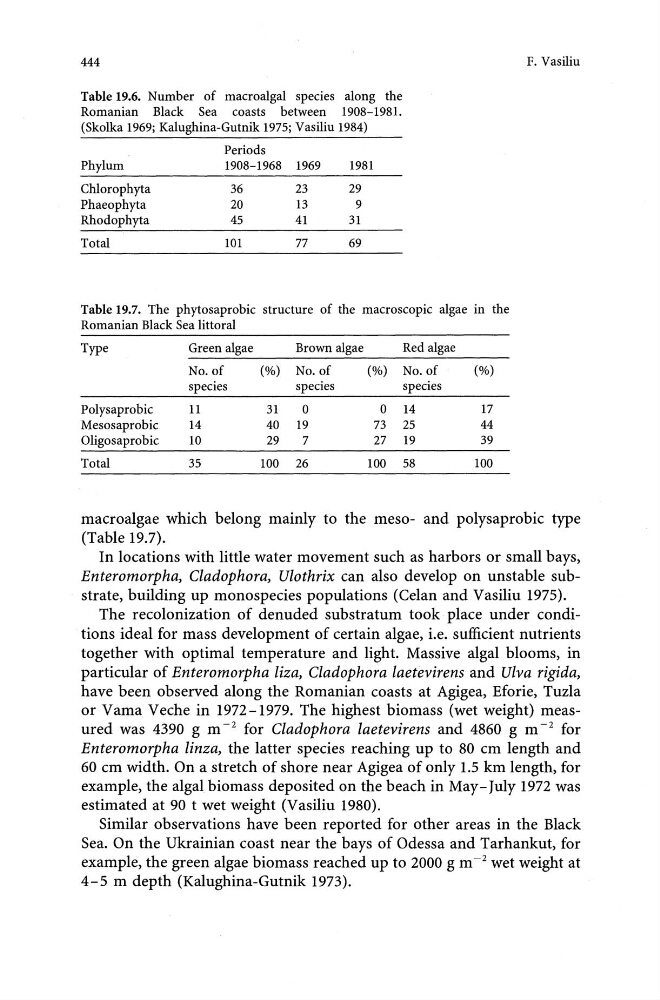
Table 19.6. Number of macroalgal species along the
Romanian Black Sea coasts between 1908-1981.
(Skolka 1969; Kalughina-Gutnik 1975; Vasiliu 1984)
Periods
Phylum
1908-1968 1969
1981
Chlorophyta
36
23
29
Phaeophyta
20
13
9
Rhodophyta
45
41
31
Total
101
77
69
Table 19.7. The phytosaprobic structure of the macroscopic algae in the
Romanian Black Sea littoral
Type
Green algae
Brown algae
Red algae
No. of
(%) No. of
(%) No. of
(%)
species
species
species
Polysaprobic
11
31
0
0 14
17
Mesosaprobic
14
40 19
73 25
44
Oligosaprobic
10
29
7
27 19
39
Total
35
100 26
100 58
100
F. Vasiliu
macroalgae which belong mainly to the meso- and polysaprobic type
(Table 19.7).
In locations with little water movement such as harbors or small bays,
Enteromorpha, Cladophora, Ulothrix can also develop on unstable substrate, building up mono species populations (Celan and Vasiliu 1975).
The recolonization of denuded substratum took place under conditions ideal for mass development of certain algae, i.e. sufficient nutrients
together with optimal temperature and light. Massive algal blooms, in
particular of Enteromorpha liza, Cladophora laetevirens and Ulva rigida,
have been observed along the Romanian coasts at Agigea, Eforie, Tuzla
or Varna Veche in 1972-1979. The highest biomass (wet weight) measured was 4390 g m -2 for Cladophora laetevirens and 4860 g m -2 for
Enteromorpha linza, the latter species reaching up to 80 em length and
60 em width. On a stretch of shore near Agigea of only 1.5 km length, for
example, the algal biomass deposited on the beach in May- July 1972 was
estimated at 90 t wet weight (Vasiliu 1980).
Similar observations have been reported for other areas in the Black
Sea. On the Ukrainian coast near the bays of Odessa and Tarhankut, for
example, the green algae biomass reached up to 2000 g m -2 wet weight at
4-5 m depth (Kalughina-Gutnik 1973).
Table 19.6. Number of macroalgal species along the
Romanian Black Sea coasts between 1908-1981.
(Skolka 1969; Kalughina-Gutnik 1975; Vasiliu 1984)
Periods
Phylum
1908-1968 1969
1981
Chlorophyta
36
23
29
Phaeophyta
20
13
9
Rhodophyta
45
41
31
Total
101
77
69
Table 19.7. The phytosaprobic structure of the macroscopic algae in the
Romanian Black Sea littoral
Type
Green algae
Brown algae
Red algae
No. of
(%) No. of
(%) No. of
(%)
species
species
species
Polysaprobic
11
31
0
0 14
17
Mesosaprobic
14
40 19
73 25
44
Oligosaprobic
10
29
7
27 19
39
Total
35
100 26
100 58
100
F. Vasiliu
macroalgae which belong mainly to the meso- and polysaprobic type
(Table 19.7).
In locations with little water movement such as harbors or small bays,
Enteromorpha, Cladophora, Ulothrix can also develop on unstable substrate, building up mono species populations (Celan and Vasiliu 1975).
The recolonization of denuded substratum took place under conditions ideal for mass development of certain algae, i.e. sufficient nutrients
together with optimal temperature and light. Massive algal blooms, in
particular of Enteromorpha liza, Cladophora laetevirens and Ulva rigida,
have been observed along the Romanian coasts at Agigea, Eforie, Tuzla
or Varna Veche in 1972-1979. The highest biomass (wet weight) measured was 4390 g m -2 for Cladophora laetevirens and 4860 g m -2 for
Enteromorpha linza, the latter species reaching up to 80 em length and
60 em width. On a stretch of shore near Agigea of only 1.5 km length, for
example, the algal biomass deposited on the beach in May- July 1972 was
estimated at 90 t wet weight (Vasiliu 1980).
Similar observations have been reported for other areas in the Black
Sea. On the Ukrainian coast near the bays of Odessa and Tarhankut, for
example, the green algae biomass reached up to 2000 g m -2 wet weight at
4-5 m depth (Kalughina-Gutnik 1973).