

326
M.-L. De Casabianca
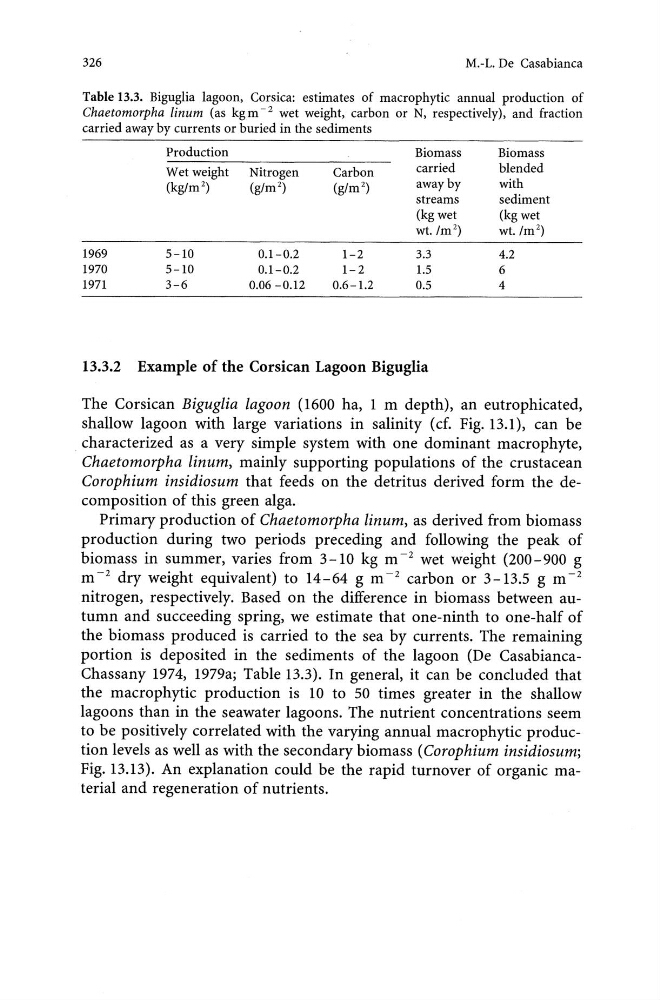
Table 13.3. Biguglia lagoon, Corsica: estimates of macrophytic annual production of
Chaetornorpha linurn (as kgm- Z wet weight, carbon or N, respectively), and fraction
carried away by currents or buried in the sediments
1969
1970
1971
Production
Wet weight
(kg/m2)
5-10
5-10
3-6
Nitrogen
(g/m2)
0.1-0.2
0.1-0.2
0.06 -0.12
Carbon
(g/m2)
1-2
1- 2
0.6-1.2
Biomass
carried
away by
streams
(kg wet
wt./m 2 )
3.3
1.5
0.5
13.3.2 Example of the Corsican Lagoon Biguglia
Biomass
blended
with
sediment
(kg wet
wt./m 2 )
4.2
6
4
The Corsican Biguglia lagoon (1600 ha, 1 m depth), an eutrophicated,
shallow lagoon with large variations in salinity (cf. Fig. 13.1), can be
characterized as a very simple system with one dominant macrophyte,
Chaetomorpha linum, mainly supporting populations of the crustacean
Corophium insidiosum that feeds on the detritus derived form the decomposition of this green alga.
Primary production of Chaetomorpha linum, as derived from biomass
production during two periods preceding and following the peak of
biomass in summer, varies from 3-10 kg m -2 wet weight (200-900 g
m- 2 dry weight equivalent) to 14-64 g m- 2 carbon or 3-13.5 g m- 2
nitrogen, respectively. Based on the difference in biomass between autumn and succeeding spring, we estimate that one-ninth to one-half of
the biomass produced is carried to the sea by currents. The remaining
portion is deposited in the sediments of the lagoon (De CasabiancaChassany 1974, 1979a; Table 13.3). In general, it can be concluded that
the macrophytic production is 10 to 50 times greater in the shallow
lagoons than in the seawater lagoons. The nutrient concentrations seem
to be positively correlated with the varying annual macrophytic production levels as well as with the secondary biomass (Corophium insidiosum;
Fig. 13.13). An explanation could be the rapid turnover of organic material and regeneration of nutrients.
M.-L. De Casabianca
Table 13.3. Biguglia lagoon, Corsica: estimates of macrophytic annual production of
Chaetornorpha linurn (as kgm- Z wet weight, carbon or N, respectively), and fraction
carried away by currents or buried in the sediments
1969
1970
1971
Production
Wet weight
(kg/m2)
5-10
5-10
3-6
Nitrogen
(g/m2)
0.1-0.2
0.1-0.2
0.06 -0.12
Carbon
(g/m2)
1-2
1- 2
0.6-1.2
Biomass
carried
away by
streams
(kg wet
wt./m 2 )
3.3
1.5
0.5
13.3.2 Example of the Corsican Lagoon Biguglia
Biomass
blended
with
sediment
(kg wet
wt./m 2 )
4.2
6
4
The Corsican Biguglia lagoon (1600 ha, 1 m depth), an eutrophicated,
shallow lagoon with large variations in salinity (cf. Fig. 13.1), can be
characterized as a very simple system with one dominant macrophyte,
Chaetomorpha linum, mainly supporting populations of the crustacean
Corophium insidiosum that feeds on the detritus derived form the decomposition of this green alga.
Primary production of Chaetomorpha linum, as derived from biomass
production during two periods preceding and following the peak of
biomass in summer, varies from 3-10 kg m -2 wet weight (200-900 g
m- 2 dry weight equivalent) to 14-64 g m- 2 carbon or 3-13.5 g m- 2
nitrogen, respectively. Based on the difference in biomass between autumn and succeeding spring, we estimate that one-ninth to one-half of
the biomass produced is carried to the sea by currents. The remaining
portion is deposited in the sediments of the lagoon (De CasabiancaChassany 1974, 1979a; Table 13.3). In general, it can be concluded that
the macrophytic production is 10 to 50 times greater in the shallow
lagoons than in the seawater lagoons. The nutrient concentrations seem
to be positively correlated with the varying annual macrophytic production levels as well as with the secondary biomass (Corophium insidiosum;
Fig. 13.13). An explanation could be the rapid turnover of organic material and regeneration of nutrients.