

France - The Mediterranean Lagoons
323
Mediterranean Sea
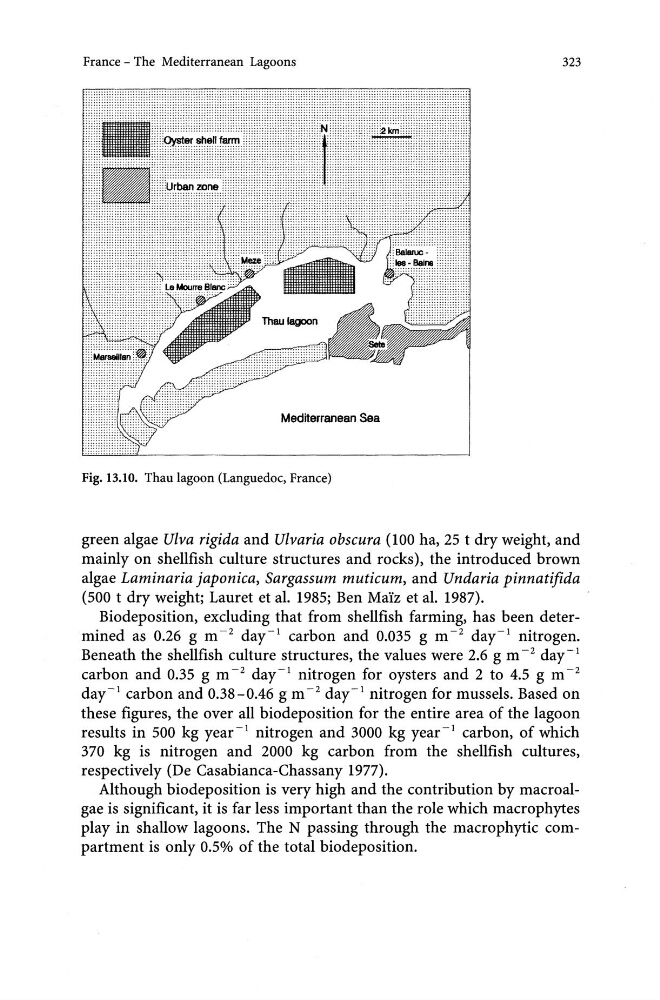
Fig. 13.10. Thau lagoon (Languedoc, France)
green algae Ulva rigida and Ulvaria obscura (100 ha, 25 t dry weight, and
mainly on shellfish culture structures and rocks), the introduced brown
algae Laminaria japonica, Sargassum muticum, and Undaria pinnatifida
(500 t dry weight; Lauret et al. 1985; Ben Malz et al. 1987).
Biodeposition, excluding that from shellfish farming, has been determined as 0.26 g m- 2 day-I carbon and 0.035 g m- 2 day-I nitrogen.
Beneath the shellfish culture structures, the values were 2.6 g m- 2 day-I
carbon and 0.35 g m - 2 day -I nitrogen for oysters and 2 to 4.5 g m - 2
day-I carbon and 0.38-0.46 g m -2 day-I nitrogen for mussels. Based on
these figures, the over all biodeposition for the entire area of the lagoon
results in 500 kg year -I nitrogen and 3000 kg year -I carbon, of which
370 kg is nitrogen and 2000 kg carbon from the shellfish cultures,
respectively (De Casabianca-Chassany 1977).
Although biodeposition is very high and the contribution by macro algae is significant, it is far less important than the role which macrophytes
play in shallow lagoons. The N passing through the macrophytic compartment is only 0.5% of the total biodeposition.
323
Mediterranean Sea
Fig. 13.10. Thau lagoon (Languedoc, France)
green algae Ulva rigida and Ulvaria obscura (100 ha, 25 t dry weight, and
mainly on shellfish culture structures and rocks), the introduced brown
algae Laminaria japonica, Sargassum muticum, and Undaria pinnatifida
(500 t dry weight; Lauret et al. 1985; Ben Malz et al. 1987).
Biodeposition, excluding that from shellfish farming, has been determined as 0.26 g m- 2 day-I carbon and 0.035 g m- 2 day-I nitrogen.
Beneath the shellfish culture structures, the values were 2.6 g m- 2 day-I
carbon and 0.35 g m - 2 day -I nitrogen for oysters and 2 to 4.5 g m - 2
day-I carbon and 0.38-0.46 g m -2 day-I nitrogen for mussels. Based on
these figures, the over all biodeposition for the entire area of the lagoon
results in 500 kg year -I nitrogen and 3000 kg year -I carbon, of which
370 kg is nitrogen and 2000 kg carbon from the shellfish cultures,
respectively (De Casabianca-Chassany 1977).
Although biodeposition is very high and the contribution by macro algae is significant, it is far less important than the role which macrophytes
play in shallow lagoons. The N passing through the macrophytic compartment is only 0.5% of the total biodeposition.