

98
1. De Vries et al.
FLUXES
60~ _ _ _ _ _ _ _ ----,
60,--_ _ _ _ _ _ _ - - ,
of Z 0>
Gv •.....•.•....•..•.....•.....••..•.••
MAC
PHY
MIC
MAC
PHY
MIC
MAC
PHY
MIC
POOLS
15~ _ _ _ _ _ _ _ ~
15,--_ _ _ _ _ _ _ --,
15,--_ _ _ _ _ _ _ ---,
........................... ····································1
12
1 0> v •...................•...................•...•...
MAC
PHY
MIC
DIN
MAC
PHY
MIC
DIN
MAC
PHY
MIC
DIN
MAC = MACROPHYTES
PHY = PHYTOPLANKTON
MIC = MICROPHYTOBENTHOS DIN = DIN IN WINTER
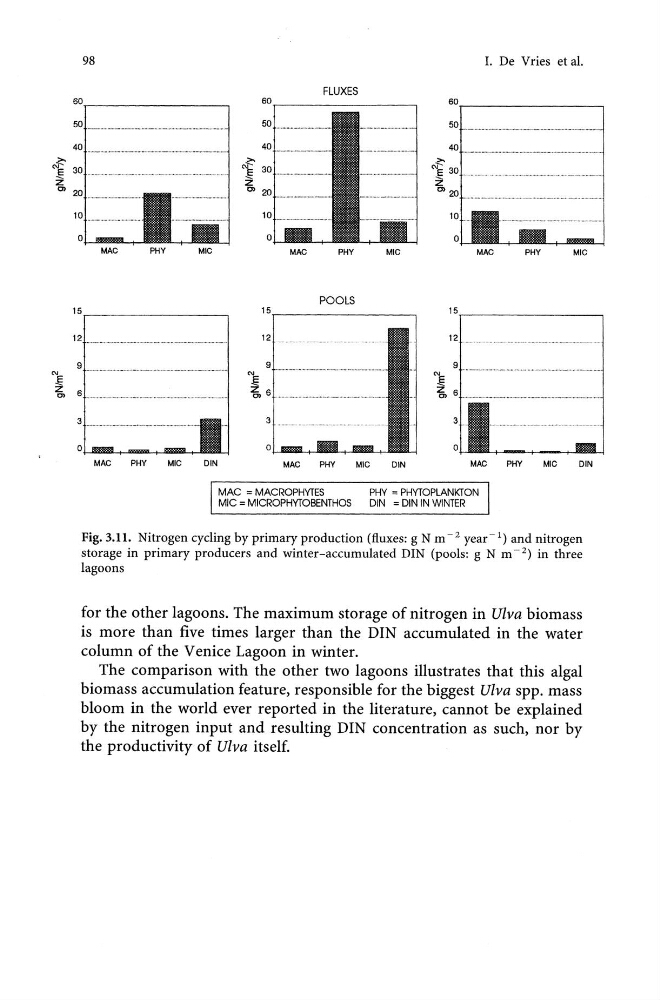
Fig. 3.11. Nitrogen cycling by primary production (fluxes: g N m - 2 year- 1 ) and nitrogen
storage in primary producers and winter-accumulated DIN (pools: g N m- 2 ) in three
lagoons
for the other lagoons. The maximum storage of nitrogen in Ulva biomass
is more than five times larger than the DIN accumulated in the water
column of the Venice Lagoon in winter.
The comparison with the other two lagoons illustrates that this algal
biomass accumulation feature, responsible for the biggest Ulva spp. mass
bloom in the world ever reported in the literature, cannot be explained
by the nitrogen input and resulting DIN concentration as such, nor by
the productivity of Ulva itself.
1. De Vries et al.
FLUXES
60~ _ _ _ _ _ _ _ ----,
60,--_ _ _ _ _ _ _ - - ,
of Z 0>
Gv •.....•.•....•..•.....•.....••..•.••
MAC
PHY
MIC
MAC
PHY
MIC
MAC
PHY
MIC
POOLS
15~ _ _ _ _ _ _ _ ~
15,--_ _ _ _ _ _ _ --,
15,--_ _ _ _ _ _ _ ---,
........................... ····································1
12
1 0> v •...................•...................•...•...
MAC
PHY
MIC
DIN
MAC
PHY
MIC
DIN
MAC
PHY
MIC
DIN
MAC = MACROPHYTES
PHY = PHYTOPLANKTON
MIC = MICROPHYTOBENTHOS DIN = DIN IN WINTER
Fig. 3.11. Nitrogen cycling by primary production (fluxes: g N m - 2 year- 1 ) and nitrogen
storage in primary producers and winter-accumulated DIN (pools: g N m- 2 ) in three
lagoons
for the other lagoons. The maximum storage of nitrogen in Ulva biomass
is more than five times larger than the DIN accumulated in the water
column of the Venice Lagoon in winter.
The comparison with the other two lagoons illustrates that this algal
biomass accumulation feature, responsible for the biggest Ulva spp. mass
bloom in the world ever reported in the literature, cannot be explained
by the nitrogen input and resulting DIN concentration as such, nor by
the productivity of Ulva itself.