

tract of man. The virus that can infect and multiply in the
intestines are enteric* viruses. Some enteric viruses can also
replicate in other organs such as the liver, heart, eyes, etc.
Enteric viruses often have a high host specificity. During
infection, many virus particles are produced and released by
feces (10
8
–10
12 particles per gram) and then transported by the
sewer. These sewer networks provide a reservoir of viruses in
the environment. Data on the behavior of viruses in the environment are very scarce, particularly regarding their ability to
survive in water, soil, and sediments.
15.2.1.1 Enteroviruses
These viruses were the first viruses isolated from sewage
and water systems and therefore the most studied. The most
common are the poliovirus (3 types), coxsackievirus (30
types), and echovirus (34 types). They can cause a variety
of human diseases, some of which can be very dangerous but
most are often benign. Coxsackieviruses can cause severe
diseases (meningitis, paralysis, heart disease). For the latter,
the ID 50 (infectious dose which means the dose of
microorganisms required to cause infection in 50 % of the
experimental animals) is low (15–20 infectious units). This
dose is often not known for other viruses.
15.2.1.2 The Hepatitis A Virus (HAV)
and Hepatitis E (HEV)
The HAV and HEV are transported by water or food
contaminated with feces. Both forms of hepatitis are very
common in developing countries. The hepatitis A virus is
ubiquitous, and its prevalence* varies among countries.
It is very resistant in the environment and is often found in
sewage, seafood, bathing water, or irrigation water. This
virus is often related to enteroviruses although it does not
belong to this family. Today there are fewer than 10 cases
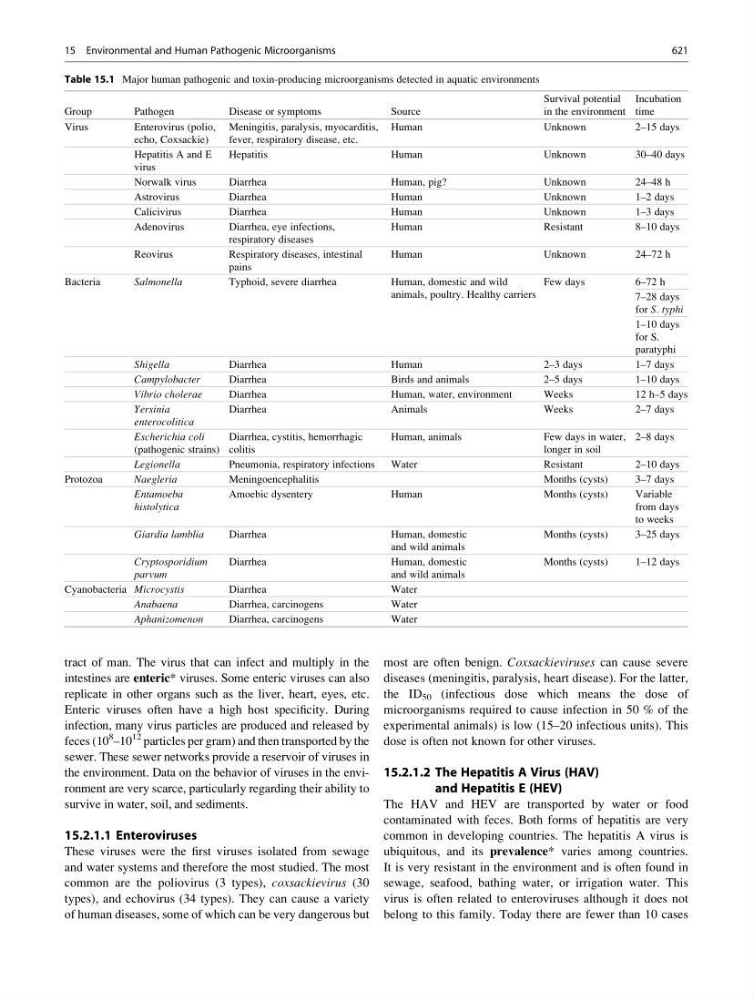
Table 15.1 Major human pathogenic and toxin-producing microorganisms detected in aquatic environments
Group
Pathogen
Disease or symptoms
Source
Survival potential
in the environment
Incubation
time
Virus
Enterovirus (polio,
echo, Coxsackie)
Meningitis, paralysis, myocarditis,
fever, respiratory disease, etc.
Human
Unknown
2–15 days
Hepatitis A and E
virus
Hepatitis
Human
Unknown
30–40 days
Norwalk virus
Diarrhea
Human, pig?
Unknown
24–48 h
Astrovirus
Diarrhea
Human
Unknown
1–2 days
Calicivirus
Diarrhea
Human
Unknown
1–3 days
Adenovirus
Diarrhea, eye infections,
respiratory diseases
Human
Resistant
8–10 days
Reovirus
Respiratory diseases, intestinal
pains
Human
Unknown
24–72 h
Bacteria
Salmonella
Typhoid, severe diarrhea
Human, domestic and wild
animals, poultry. Healthy carriers
Few days
6–72 h
7–28 days
for S. typhi
1–10 days
for S.
paratyphi
Shigella
Diarrhea
Human
2–3 days
1–7 days
Campylobacter
Diarrhea
Birds and animals
2–5 days
1–10 days
Vibrio cholerae
Diarrhea
Human, water, environment
Weeks
12 h–5 days
Yersinia
enterocolitica
Diarrhea
Animals
Weeks
2–7 days
Escherichia coli
(pathogenic strains)
Diarrhea, cystitis, hemorrhagic
colitis
Human, animals
Few days in water,
longer in soil
2–8 days
Legionella
Pneumonia, respiratory infections
Water
Resistant
2–10 days
Protozoa
Naegleria
Meningoencephalitis
Months (cysts)
3–7 days
Entamoeba
histolytica
Amoebic dysentery
Human
Months (cysts)
Variable
from days
to weeks
Giardia lamblia
Diarrhea
Human, domestic
and wild animals
Months (cysts)
3–25 days
Cryptosporidium
parvum
Diarrhea
Human, domestic
and wild animals
Months (cysts)
1–12 days
Cyanobacteria Microcystis
Diarrhea
Water
Anabaena
Diarrhea, carcinogens
Water
Aphanizomenon
Diarrhea, carcinogens
Water
15 Environmental and Human Pathogenic Microorganisms
621