

products will allow chemotropism toward the phytoparasite.
Physical contact between fungi will trigger external colonization and then penetration of the phytoparasite by
Trichoderma. Trichoderma and Gliocladium may also
antagonize phytoparasites through the production of antimicrobial secondary compounds (Harman et al. 2004). Finally,
competition for trophic resources can be a major mode of
action, as in nonpathogenic F. oxysporum (Alabouvette et al.
2006). Overall, as for PGPR, phytobeneficial fungi often
display a combination of different modes of action.
11.3.6 Significance for the Plant
Plant–microbe interactions have a major impact on plant
functioning and plant community ecology. At the scale of a
given plant, negative effects of parasitic microorganisms are
usually easy to identify, based on observation of disease
symptoms. Many other plant-associated microorganisms
have positive effects on plant growth or development, but
these effects are often more difficult to visualize.
Phytobeneficial microorganisms promote plant development
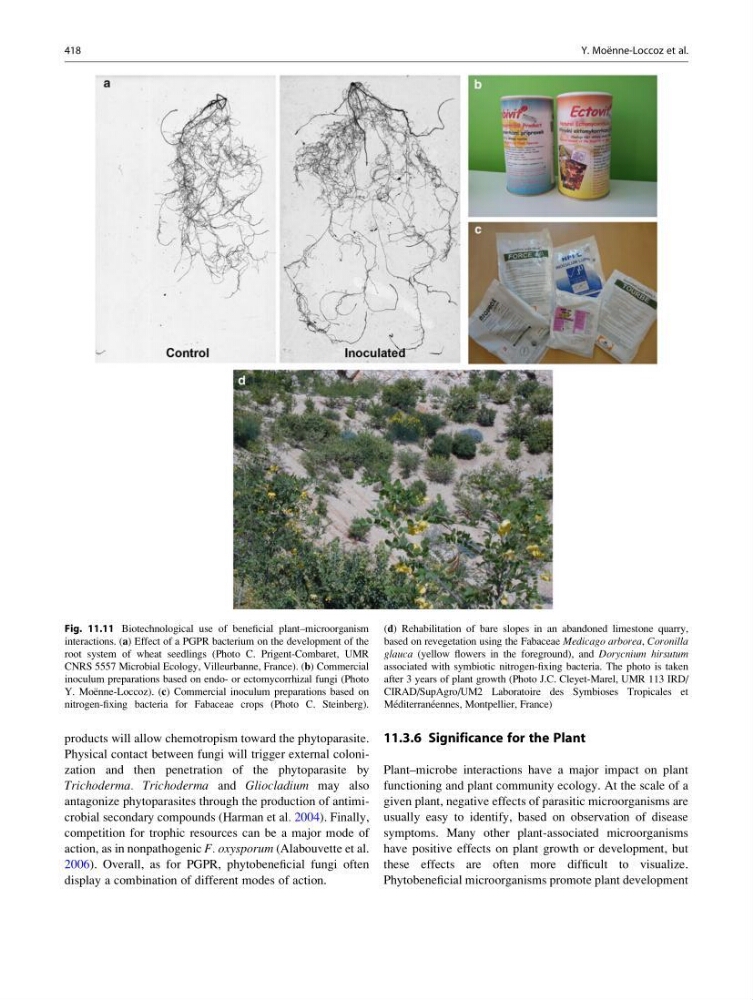
Fig. 11.11 Biotechnological use of beneficial plant–microorganism
interactions. (a) Effect of a PGPR bacterium on the development of the
root system of wheat seedlings (Photo C. Prigent-Combaret, UMR
CNRS 5557 Microbial Ecology, Villeurbanne, France). (b) Commercial
inoculum preparations based on endo- or ectomycorrhizal fungi (Photo
Y. Moe ¨nne-Loccoz). (c) Commercial inoculum preparations based on
nitrogen-fixing bacteria for Fabaceae crops (Photo C. Steinberg).
(d) Rehabilitation of bare slopes in an abandoned limestone quarry,
based on revegetation using the Fabaceae Medicago arborea, Coronilla
glauca (yellow flowers in the foreground), and Dorycnium hirsutum
associated with symbiotic nitrogen-fixing bacteria. The photo is taken
after 3 years of plant growth (Photo J.C. Cleyet-Marel, UMR 113 IRD/
CIRAD/SupAgro/UM2 Laboratoire des Symbioses Tropicales et
Me ´diterrane ´ennes, Montpellier, France)
418
Y. Moe ¨nne-Loccoz et al.
Physical contact between fungi will trigger external colonization and then penetration of the phytoparasite by
Trichoderma. Trichoderma and Gliocladium may also
antagonize phytoparasites through the production of antimicrobial secondary compounds (Harman et al. 2004). Finally,
competition for trophic resources can be a major mode of
action, as in nonpathogenic F. oxysporum (Alabouvette et al.
2006). Overall, as for PGPR, phytobeneficial fungi often
display a combination of different modes of action.
11.3.6 Significance for the Plant
Plant–microbe interactions have a major impact on plant
functioning and plant community ecology. At the scale of a
given plant, negative effects of parasitic microorganisms are
usually easy to identify, based on observation of disease
symptoms. Many other plant-associated microorganisms
have positive effects on plant growth or development, but
these effects are often more difficult to visualize.
Phytobeneficial microorganisms promote plant development
Fig. 11.11 Biotechnological use of beneficial plant–microorganism
interactions. (a) Effect of a PGPR bacterium on the development of the
root system of wheat seedlings (Photo C. Prigent-Combaret, UMR
CNRS 5557 Microbial Ecology, Villeurbanne, France). (b) Commercial
inoculum preparations based on endo- or ectomycorrhizal fungi (Photo
Y. Moe ¨nne-Loccoz). (c) Commercial inoculum preparations based on
nitrogen-fixing bacteria for Fabaceae crops (Photo C. Steinberg).
(d) Rehabilitation of bare slopes in an abandoned limestone quarry,
based on revegetation using the Fabaceae Medicago arborea, Coronilla
glauca (yellow flowers in the foreground), and Dorycnium hirsutum
associated with symbiotic nitrogen-fixing bacteria. The photo is taken
after 3 years of plant growth (Photo J.C. Cleyet-Marel, UMR 113 IRD/
CIRAD/SupAgro/UM2 Laboratoire des Symbioses Tropicales et
Me ´diterrane ´ennes, Montpellier, France)
418
Y. Moe ¨nne-Loccoz et al.