

and oomycetes) (Dodds and Rathjen 2010). These intracellular effectors often act to suppress PTI. However, many
effectors are recognized by intracellular nucleotide-binding
(NB)-LRR receptors; these sentry proteins are present at
various levels in the plant (wall, cytoplasm, nucleus, cell
membrane), and they allow a rapid response upon pathogen
intrusion by inducing effector-triggered immunity (ETI). The
gene-for-gene interaction takes place in that context
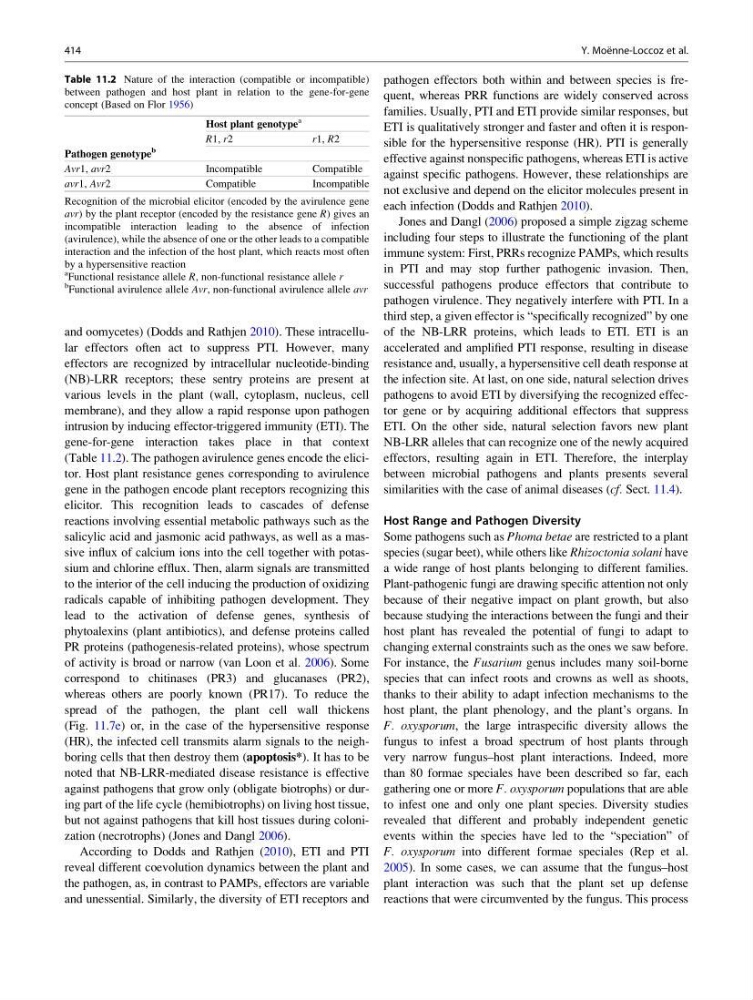
(Table 11.2). The pathogen avirulence genes encode the elicitor. Host plant resistance genes corresponding to avirulence
gene in the pathogen encode plant receptors recognizing this
elicitor. This recognition leads to cascades of defense
reactions involving essential metabolic pathways such as the
salicylic acid and jasmonic acid pathways, as well as a massive influx of calcium ions into the cell together with potassium and chlorine efflux. Then, alarm signals are transmitted
to the interior of the cell inducing the production of oxidizing
radicals capable of inhibiting pathogen development. They
lead to the activation of defense genes, synthesis of
phytoalexins (plant antibiotics), and defense proteins called
PR proteins (pathogenesis-related proteins), whose spectrum
of activity is broad or narrow (van Loon et al. 2006). Some
correspond to chitinases (PR3) and glucanases (PR2),
whereas others are poorly known (PR17). To reduce the
spread of the pathogen, the plant cell wall thickens
(Fig. 11.7e) or, in the case of the hypersensitive response
(HR), the infected cell transmits alarm signals to the neighboring cells that then destroy them (apoptosis*). It has to be
noted that NB-LRR-mediated disease resistance is effective
against pathogens that grow only (obligate biotrophs) or during part of the life cycle (hemibiotrophs) on living host tissue,
but not against pathogens that kill host tissues during colonization (necrotrophs) (Jones and Dangl 2006).
According to Dodds and Rathjen (2010), ETI and PTI
reveal different coevolution dynamics between the plant and
the pathogen, as, in contrast to PAMPs, effectors are variable
and unessential. Similarly, the diversity of ETI receptors and
pathogen effectors both within and between species is frequent, whereas PRR functions are widely conserved across
families. Usually, PTI and ETI provide similar responses, but
ETI is qualitatively stronger and faster and often it is responsible for the hypersensitive response (HR). PTI is generally
effective against nonspecific pathogens, whereas ETI is active
against specific pathogens. However, these relationships are
not exclusive and depend on the elicitor molecules present in
each infection (Dodds and Rathjen 2010).
Jones and Dangl (2006) proposed a simple zigzag scheme
including four steps to illustrate the functioning of the plant
immune system: First, PRRs recognize PAMPs, which results
in PTI and may stop further pathogenic invasion. Then,
successful pathogens produce effectors that contribute to
pathogen virulence. They negatively interfere with PTI. In a
third step, a given effector is “specifically recognized” by one
of the NB-LRR proteins, which leads to ETI. ETI is an
accelerated and amplified PTI response, resulting in disease
resistance and, usually, a hypersensitive cell death response at
the infection site. At last, on one side, natural selection drives
pathogens to avoid ETI by diversifying the recognized effector gene or by acquiring additional effectors that suppress
ETI. On the other side, natural selection favors new plant
NB-LRR alleles that can recognize one of the newly acquired
effectors, resulting again in ETI. Therefore, the interplay
between microbial pathogens and plants presents several
similarities with the case of animal diseases (cf. Sect. 11.4).
Host Range and Pathogen Diversity
Some pathogens such as Phoma betae are restricted to a plant
species (sugar beet), while others like Rhizoctonia solani have
a wide range of host plants belonging to different families.
Plant-pathogenic fungi are drawing specific attention not only
because of their negative impact on plant growth, but also
because studying the interactions between the fungi and their
host plant has revealed the potential of fungi to adapt to
changing external constraints such as the ones we saw before.
For instance, the Fusarium genus includes many soil-borne
species that can infect roots and crowns as well as shoots,
thanks to their ability to adapt infection mechanisms to the
host plant, the plant phenology, and the plant’s organs. In
F. oxysporum, the large intraspecific diversity allows the
fungus to infest a broad spectrum of host plants through
very narrow fungus–host plant interactions. Indeed, more
than 80 formae speciales have been described so far, each
gathering one or more F. oxysporum populations that are able
to infest one and only one plant species. Diversity studies
revealed that different and probably independent genetic
events within the species have led to the “speciation” of
F. oxysporum into different formae speciales (Rep et al.
2005). In some cases, we can assume that the fungus–host
plant interaction was such that the plant set up defense
reactions that were circumvented by the fungus. This process
Table 11.2 Nature of the interaction (compatible or incompatible)
between pathogen and host plant in relation to the gene-for-gene
concept (Based on Flor 1956)
Host plant genotype
a
R1, r2
r1, R2
Pathogen genotype
b
Avr1, avr2
Incompatible
Compatible
avr1, Avr2
Compatible
Incompatible
Recognition of the microbial elicitor (encoded by the avirulence gene
avr) by the plant receptor (encoded by the resistance gene R) gives an
incompatible interaction leading to the absence of infection
(avirulence), while the absence of one or the other leads to a compatible
interaction and the infection of the host plant, which reacts most often
by a hypersensitive reaction
a
Functional resistance allele R, non-functional resistance allele r
b
Functional avirulence allele Avr, non-functional avirulence allele avr
414
Y. Moe ¨nne-Loccoz et al.
effectors are recognized by intracellular nucleotide-binding
(NB)-LRR receptors; these sentry proteins are present at
various levels in the plant (wall, cytoplasm, nucleus, cell
membrane), and they allow a rapid response upon pathogen
intrusion by inducing effector-triggered immunity (ETI). The
gene-for-gene interaction takes place in that context
(Table 11.2). The pathogen avirulence genes encode the elicitor. Host plant resistance genes corresponding to avirulence
gene in the pathogen encode plant receptors recognizing this
elicitor. This recognition leads to cascades of defense
reactions involving essential metabolic pathways such as the
salicylic acid and jasmonic acid pathways, as well as a massive influx of calcium ions into the cell together with potassium and chlorine efflux. Then, alarm signals are transmitted
to the interior of the cell inducing the production of oxidizing
radicals capable of inhibiting pathogen development. They
lead to the activation of defense genes, synthesis of
phytoalexins (plant antibiotics), and defense proteins called
PR proteins (pathogenesis-related proteins), whose spectrum
of activity is broad or narrow (van Loon et al. 2006). Some
correspond to chitinases (PR3) and glucanases (PR2),
whereas others are poorly known (PR17). To reduce the
spread of the pathogen, the plant cell wall thickens
(Fig. 11.7e) or, in the case of the hypersensitive response
(HR), the infected cell transmits alarm signals to the neighboring cells that then destroy them (apoptosis*). It has to be
noted that NB-LRR-mediated disease resistance is effective
against pathogens that grow only (obligate biotrophs) or during part of the life cycle (hemibiotrophs) on living host tissue,
but not against pathogens that kill host tissues during colonization (necrotrophs) (Jones and Dangl 2006).
According to Dodds and Rathjen (2010), ETI and PTI
reveal different coevolution dynamics between the plant and
the pathogen, as, in contrast to PAMPs, effectors are variable
and unessential. Similarly, the diversity of ETI receptors and
pathogen effectors both within and between species is frequent, whereas PRR functions are widely conserved across
families. Usually, PTI and ETI provide similar responses, but
ETI is qualitatively stronger and faster and often it is responsible for the hypersensitive response (HR). PTI is generally
effective against nonspecific pathogens, whereas ETI is active
against specific pathogens. However, these relationships are
not exclusive and depend on the elicitor molecules present in
each infection (Dodds and Rathjen 2010).
Jones and Dangl (2006) proposed a simple zigzag scheme
including four steps to illustrate the functioning of the plant
immune system: First, PRRs recognize PAMPs, which results
in PTI and may stop further pathogenic invasion. Then,
successful pathogens produce effectors that contribute to
pathogen virulence. They negatively interfere with PTI. In a
third step, a given effector is “specifically recognized” by one
of the NB-LRR proteins, which leads to ETI. ETI is an
accelerated and amplified PTI response, resulting in disease
resistance and, usually, a hypersensitive cell death response at
the infection site. At last, on one side, natural selection drives
pathogens to avoid ETI by diversifying the recognized effector gene or by acquiring additional effectors that suppress
ETI. On the other side, natural selection favors new plant
NB-LRR alleles that can recognize one of the newly acquired
effectors, resulting again in ETI. Therefore, the interplay
between microbial pathogens and plants presents several
similarities with the case of animal diseases (cf. Sect. 11.4).
Host Range and Pathogen Diversity
Some pathogens such as Phoma betae are restricted to a plant
species (sugar beet), while others like Rhizoctonia solani have
a wide range of host plants belonging to different families.
Plant-pathogenic fungi are drawing specific attention not only
because of their negative impact on plant growth, but also
because studying the interactions between the fungi and their
host plant has revealed the potential of fungi to adapt to
changing external constraints such as the ones we saw before.
For instance, the Fusarium genus includes many soil-borne
species that can infect roots and crowns as well as shoots,
thanks to their ability to adapt infection mechanisms to the
host plant, the plant phenology, and the plant’s organs. In
F. oxysporum, the large intraspecific diversity allows the
fungus to infest a broad spectrum of host plants through
very narrow fungus–host plant interactions. Indeed, more
than 80 formae speciales have been described so far, each
gathering one or more F. oxysporum populations that are able
to infest one and only one plant species. Diversity studies
revealed that different and probably independent genetic
events within the species have led to the “speciation” of
F. oxysporum into different formae speciales (Rep et al.
2005). In some cases, we can assume that the fungus–host
plant interaction was such that the plant set up defense
reactions that were circumvented by the fungus. This process
Table 11.2 Nature of the interaction (compatible or incompatible)
between pathogen and host plant in relation to the gene-for-gene
concept (Based on Flor 1956)
Host plant genotype
a
R1, r2
r1, R2
Pathogen genotype
b
Avr1, avr2
Incompatible
Compatible
avr1, Avr2
Compatible
Incompatible
Recognition of the microbial elicitor (encoded by the avirulence gene
avr) by the plant receptor (encoded by the resistance gene R) gives an
incompatible interaction leading to the absence of infection
(avirulence), while the absence of one or the other leads to a compatible
interaction and the infection of the host plant, which reacts most often
by a hypersensitive reaction
a
Functional resistance allele R, non-functional resistance allele r
b
Functional avirulence allele Avr, non-functional avirulence allele avr
414
Y. Moe ¨nne-Loccoz et al.