

Thermoplasmatales include one of the most acidophilic
known thermophiles. Species of the genus Thermoplasma
are lacking cell wall organisms, chemoorganotrophs, and
facultative anaerobes that use S
as terminal electron acceptor. They colonize acidic hot habitats as coal-refuse pile and
terrestrial hot springs. Species of the genus Picrophilus that
were isolated from acidic solfatara are certainly the most
acidophilic species described being able to grow at
extremely low pH (<1). Recently the first member of the
group DHVE2 (deep-sea hydrothermal vent Euryarchaeota)
that was only known from environmental sequences was
isolated and named “Aciduliprofundum boonei.” It is the
first thermoacidophilic species isolated from marine
environments (Flores et al. 2012).
Species from the order Thermococcales belongs to three
genera: Thermococcus, Pyrococcus, and Palaeococcus.
They are all hyperthermophilic organisms that were isolated
from deep hydrothermal and swallow hot springs but also
from oil reservoir waters. They were first described as
forming a homogenous metabolic group being chemoorganotrophs growing quickly on complex proteinaceous
substrates or sugar and reducing elemental sulfur into hydrogen sulfide. Recently it was shown that some species from
the genus Thermococcus are able to grow on carbon monoxide and that some species are able to perform iron reduction.
They are (with the Thermotogales, domain Bacteria) within
the most extensively studied hyperthermophilic species in
terms of their physiology and metabolism, and many whole
genome sequences are now available. Some species within
this order are piezophiles (cf. Sect. 10.5).
Within the order Archaeoglobales, species of the
Archaeoglobus are the sole sulfate reducers within the
Archaea while Geoglobus and Ferroglobus are organisms
involved in iron reduction (cf. Sect. 14.5).
10.3.3.4 Hyperthermophilic Crenarchaeota
Within the Crenarchaeota, Thermoproteales and
Sulfolobales seem to be specific of terrestrial hot habitats
while organisms from the order Desulfurococcales seem to
colonize marine volcanic habitats.
Within the Sulfolobales, species of the genera Sulfolobus
and Acidianus were isolated from various terrestrial volcanic
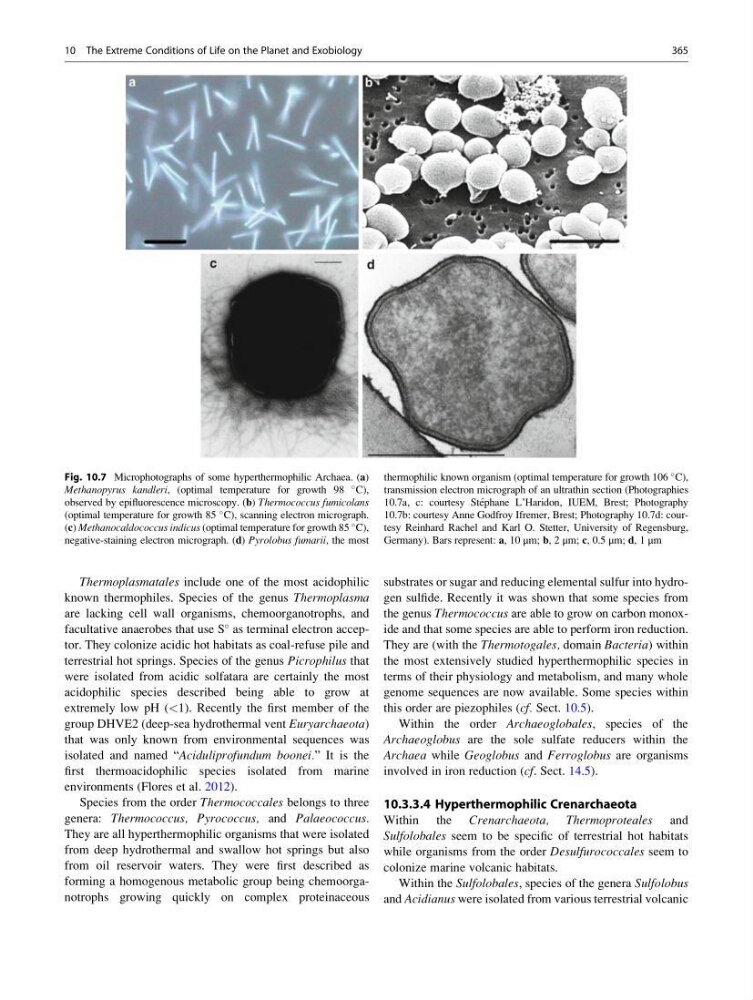
Fig. 10.7 Microphotographs of some hyperthermophilic Archaea. (a)
Methanopyrus kandleri, (optimal temperature for growth 98
C),
observed by epifluorescence microscopy. (b) Thermococcus fumicolans
(optimal temperature for growth 85
C), scanning electron micrograph.
(c) Methanocaldococcus indicus (optimal temperature for growth 85
C),
negative-staining electron micrograph. (d) Pyrolobus fumarii, the most
thermophilic known organism (optimal temperature for growth 106
C),
transmission electron micrograph of an ultrathin section (Photographies
10.7a, c: courtesy Ste ´phane L’Haridon, IUEM, Brest; Photography
10.7b: courtesy Anne Godfroy Ifremer, Brest; Photography 10.7d: courtesy Reinhard Rachel and Karl O. Stetter, University of Regensburg,
Germany). Bars represent: a, 10 μm; b, 2 μm; c, 0.5 μm; d, 1 μm
10 The Extreme Conditions of Life on the Planet and Exobiology
365
known thermophiles. Species of the genus Thermoplasma
are lacking cell wall organisms, chemoorganotrophs, and
facultative anaerobes that use S
as terminal electron acceptor. They colonize acidic hot habitats as coal-refuse pile and
terrestrial hot springs. Species of the genus Picrophilus that
were isolated from acidic solfatara are certainly the most
acidophilic species described being able to grow at
extremely low pH (<1). Recently the first member of the
group DHVE2 (deep-sea hydrothermal vent Euryarchaeota)
that was only known from environmental sequences was
isolated and named “Aciduliprofundum boonei.” It is the
first thermoacidophilic species isolated from marine
environments (Flores et al. 2012).
Species from the order Thermococcales belongs to three
genera: Thermococcus, Pyrococcus, and Palaeococcus.
They are all hyperthermophilic organisms that were isolated
from deep hydrothermal and swallow hot springs but also
from oil reservoir waters. They were first described as
forming a homogenous metabolic group being chemoorganotrophs growing quickly on complex proteinaceous
substrates or sugar and reducing elemental sulfur into hydrogen sulfide. Recently it was shown that some species from
the genus Thermococcus are able to grow on carbon monoxide and that some species are able to perform iron reduction.
They are (with the Thermotogales, domain Bacteria) within
the most extensively studied hyperthermophilic species in
terms of their physiology and metabolism, and many whole
genome sequences are now available. Some species within
this order are piezophiles (cf. Sect. 10.5).
Within the order Archaeoglobales, species of the
Archaeoglobus are the sole sulfate reducers within the
Archaea while Geoglobus and Ferroglobus are organisms
involved in iron reduction (cf. Sect. 14.5).
10.3.3.4 Hyperthermophilic Crenarchaeota
Within the Crenarchaeota, Thermoproteales and
Sulfolobales seem to be specific of terrestrial hot habitats
while organisms from the order Desulfurococcales seem to
colonize marine volcanic habitats.
Within the Sulfolobales, species of the genera Sulfolobus
and Acidianus were isolated from various terrestrial volcanic
Fig. 10.7 Microphotographs of some hyperthermophilic Archaea. (a)
Methanopyrus kandleri, (optimal temperature for growth 98
C),
observed by epifluorescence microscopy. (b) Thermococcus fumicolans
(optimal temperature for growth 85
C), scanning electron micrograph.
(c) Methanocaldococcus indicus (optimal temperature for growth 85
C),
negative-staining electron micrograph. (d) Pyrolobus fumarii, the most
thermophilic known organism (optimal temperature for growth 106
C),
transmission electron micrograph of an ultrathin section (Photographies
10.7a, c: courtesy Ste ´phane L’Haridon, IUEM, Brest; Photography
10.7b: courtesy Anne Godfroy Ifremer, Brest; Photography 10.7d: courtesy Reinhard Rachel and Karl O. Stetter, University of Regensburg,
Germany). Bars represent: a, 10 μm; b, 2 μm; c, 0.5 μm; d, 1 μm
10 The Extreme Conditions of Life on the Planet and Exobiology
365