

shellfish. Several studies have sought to predict factors
associated with blooms in general and toxin production in
particular. It is clear from this work that the main factor
limiting the production of water blooms is the amount of
phosphorus, which is in contradiction with the general principle that nitrogen is the factor most often limiting primary
production, e.g., in soil, in marine systems, and freshwater.
The debate between proponents of phosphorus and nitrogen
as responsible for blooms is not only a scientific discussion
but also an intense political debate with active lobbyings, that
of farmers that use nitrate and the producers of phosphorusbased detergent powder, who both wish to be granted a
responsibility for blooms as low as possible (Barroin 2003).
It is clear from these discussions that the addition of nitrogen
does indeed increase primary production but also the addition
of phosphate, particularly with regard to nitrogen-fixing bacteria like many cyanobacteria.
However, the problem is more complex in terms of toxin
production in the cyanobacterium Planktothrix because
toxin-producing clones coexist alongside nonproducing
clones, and one of the factors explaining the proportion
seems to be cell density (Yepremian et al. 2007). It has
also been shown that clones of Microcystis toxin producers
were disadvantaged under conditions of higher cell density
(Briand et al. 2008).
8.5.4 Sea
Regarding the oceans, many studies have focused on the
natural functioning of the carbon and nitrogen cycles and
changes induced by anthropogenic influences and also
molecular approaches for the identification of microbes present in the water column (benthic) and in the sediment
(pelagos). Multiphasic approaches coupling markers (16S
rRNA and nifH) and activity measurements (nitrogenase)
in a tropical lagoon have demonstrated daily fluctuations
and the presence of a high proportion of unknown taxa
(Bauer et al. 2008). The distribution of OTUs followed by
RISA and activity measurements in the basin of San Pedro in
Southern California seems uncorrelated with variations
related to depth (Hewson et al. 2007). Work on molecular
identification of picoplankton cells (that range from 0.2 to
3 μm) have demonstrated a large diversity compared to that
previously known but with OTUs having a worldwide distribution (Moreira and Lopez-Garcia 2002 ; Vaulot et al.
2008). Finally, work on ocean metagenomic approaches
has been initiated. This work, focused on DNA sequencing
of microbial communities in several sites of the ocean (Venter et al. 2004), has permitted to identify many unknown
sequences in particular and also permitted to see that among
photosynthetic bacteria those belonging to the genera
Prochlorococcus and Synechococcus were clearly dominant.
Regarding sediments, they have been described as the
type of habitat with the highest diversity (Torsvik et al.
2002) with 5 Â 10
10 genome equivalents per gram. This is
an often anoxic biotope, receiving a large variety of
molecules, some of which are resistant and therefore accumulate. Moreover, in that biotope are found burrowing
animals that therefore mix and homogenize the sediment
(“turbators”), contributing to the activities of associated
microflora and to microbial diversity. There are also many
uncultivated
endolithic
taxa
including
several
chemolithotrophic bacteria capable of oxidizing Fe (II)
(Edwards et al. 2003).
Finally, a relatively recent development concerns study
of viruses in the oceans. These small organisms are naturally
present in all habitats but are more difficult to analyze than
from soil, sediment, or the digestive tract. They are now
considered to be responsible for controlling the numbers of
microorganisms and also the composition of the microbial
community with a hypothesis called “phage kills the winner”
(Hoffmann et al. 2007), which would favor scarce taxa. This
hypothesis is strongly debated (Bouvier and del Giorgio
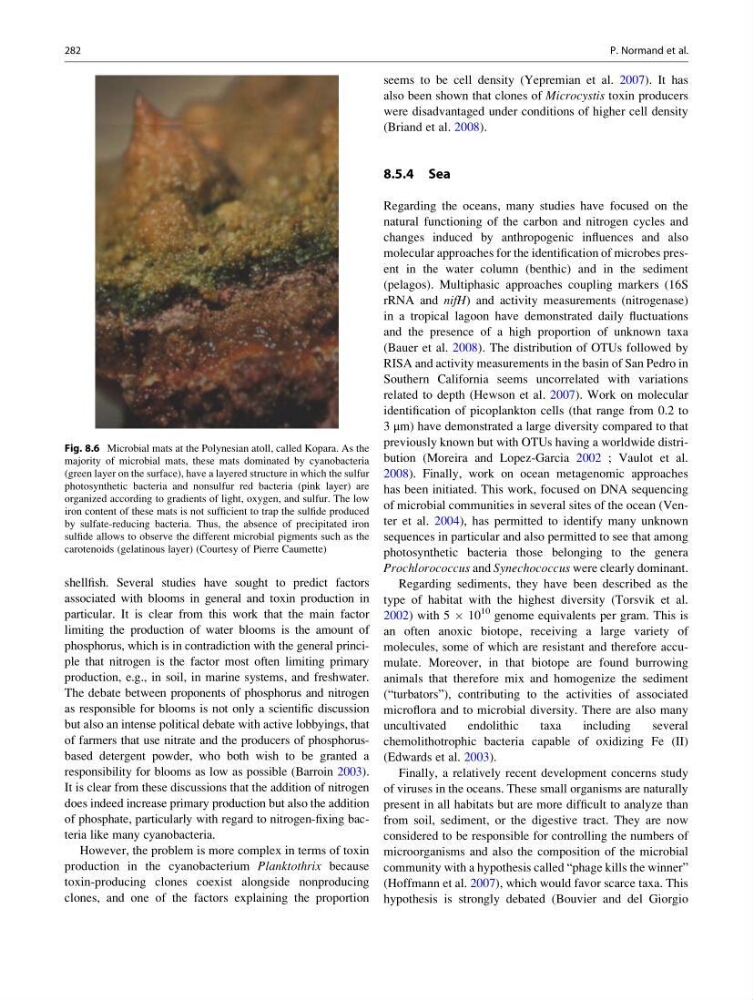
Fig. 8.6 Microbial mats at the Polynesian atoll, called Kopara. As the
majority of microbial mats, these mats dominated by cyanobacteria
(green layer on the surface), have a layered structure in which the sulfur
photosynthetic bacteria and nonsulfur red bacteria (pink layer) are
organized according to gradients of light, oxygen, and sulfur. The low
iron content of these mats is not sufficient to trap the sulfide produced
by sulfate-reducing bacteria. Thus, the absence of precipitated iron
sulfide allows to observe the different microbial pigments such as the
carotenoids (gelatinous layer) (Courtesy of Pierre Caumette)
282
P. Normand et al.
associated with blooms in general and toxin production in
particular. It is clear from this work that the main factor
limiting the production of water blooms is the amount of
phosphorus, which is in contradiction with the general principle that nitrogen is the factor most often limiting primary
production, e.g., in soil, in marine systems, and freshwater.
The debate between proponents of phosphorus and nitrogen
as responsible for blooms is not only a scientific discussion
but also an intense political debate with active lobbyings, that
of farmers that use nitrate and the producers of phosphorusbased detergent powder, who both wish to be granted a
responsibility for blooms as low as possible (Barroin 2003).
It is clear from these discussions that the addition of nitrogen
does indeed increase primary production but also the addition
of phosphate, particularly with regard to nitrogen-fixing bacteria like many cyanobacteria.
However, the problem is more complex in terms of toxin
production in the cyanobacterium Planktothrix because
toxin-producing clones coexist alongside nonproducing
clones, and one of the factors explaining the proportion
seems to be cell density (Yepremian et al. 2007). It has
also been shown that clones of Microcystis toxin producers
were disadvantaged under conditions of higher cell density
(Briand et al. 2008).
8.5.4 Sea
Regarding the oceans, many studies have focused on the
natural functioning of the carbon and nitrogen cycles and
changes induced by anthropogenic influences and also
molecular approaches for the identification of microbes present in the water column (benthic) and in the sediment
(pelagos). Multiphasic approaches coupling markers (16S
rRNA and nifH) and activity measurements (nitrogenase)
in a tropical lagoon have demonstrated daily fluctuations
and the presence of a high proportion of unknown taxa
(Bauer et al. 2008). The distribution of OTUs followed by
RISA and activity measurements in the basin of San Pedro in
Southern California seems uncorrelated with variations
related to depth (Hewson et al. 2007). Work on molecular
identification of picoplankton cells (that range from 0.2 to
3 μm) have demonstrated a large diversity compared to that
previously known but with OTUs having a worldwide distribution (Moreira and Lopez-Garcia 2002 ; Vaulot et al.
2008). Finally, work on ocean metagenomic approaches
has been initiated. This work, focused on DNA sequencing
of microbial communities in several sites of the ocean (Venter et al. 2004), has permitted to identify many unknown
sequences in particular and also permitted to see that among
photosynthetic bacteria those belonging to the genera
Prochlorococcus and Synechococcus were clearly dominant.
Regarding sediments, they have been described as the
type of habitat with the highest diversity (Torsvik et al.
2002) with 5 Â 10
10 genome equivalents per gram. This is
an often anoxic biotope, receiving a large variety of
molecules, some of which are resistant and therefore accumulate. Moreover, in that biotope are found burrowing
animals that therefore mix and homogenize the sediment
(“turbators”), contributing to the activities of associated
microflora and to microbial diversity. There are also many
uncultivated
endolithic
taxa
including
several
chemolithotrophic bacteria capable of oxidizing Fe (II)
(Edwards et al. 2003).
Finally, a relatively recent development concerns study
of viruses in the oceans. These small organisms are naturally
present in all habitats but are more difficult to analyze than
from soil, sediment, or the digestive tract. They are now
considered to be responsible for controlling the numbers of
microorganisms and also the composition of the microbial
community with a hypothesis called “phage kills the winner”
(Hoffmann et al. 2007), which would favor scarce taxa. This
hypothesis is strongly debated (Bouvier and del Giorgio
Fig. 8.6 Microbial mats at the Polynesian atoll, called Kopara. As the
majority of microbial mats, these mats dominated by cyanobacteria
(green layer on the surface), have a layered structure in which the sulfur
photosynthetic bacteria and nonsulfur red bacteria (pink layer) are
organized according to gradients of light, oxygen, and sulfur. The low
iron content of these mats is not sufficient to trap the sulfide produced
by sulfate-reducing bacteria. Thus, the absence of precipitated iron
sulfide allows to observe the different microbial pigments such as the
carotenoids (gelatinous layer) (Courtesy of Pierre Caumette)
282
P. Normand et al.