

Physical Oceanography of the Indian Ocean
35
The Antarctic intermediate water originates from the Antarctic surface water by
intense mixing and sinking along the polar front. It sinks rapidly to more than 1000 m
depth along the inclined density surface of 27.25 forming a salinity minimum between
the subtropical water above and the deep salinity maximum below (Fig. 7). This low
salinity layer is 500 and more meters thick. Below the subtropical gyre it rises slowly to
700 m depth near 10° S. Salinity and temperature in the core layer increase slowly to the
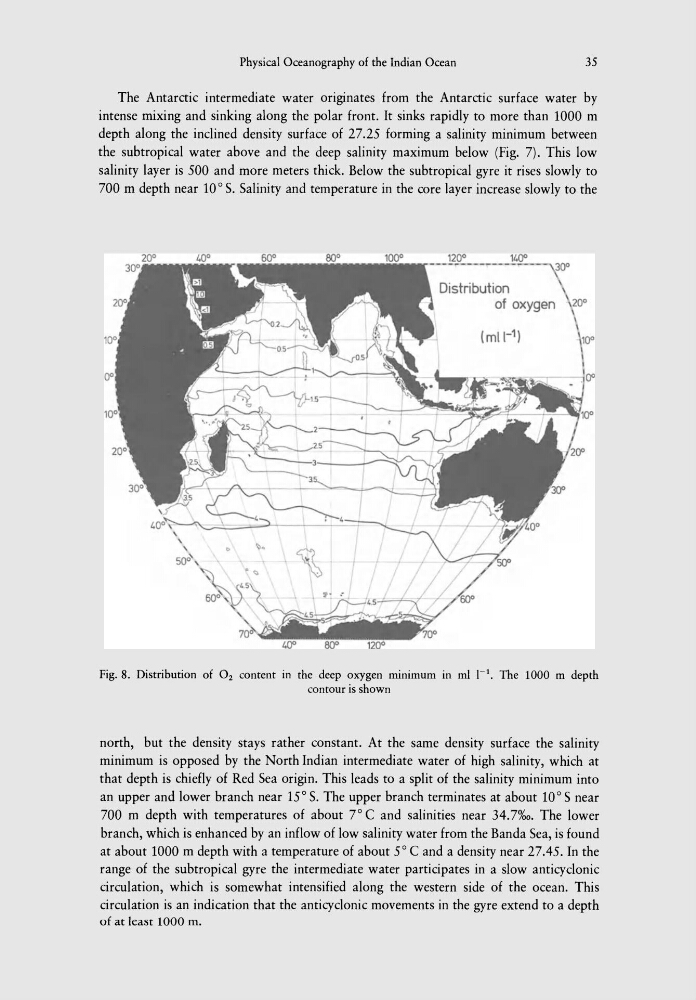
Fig. 8. Distribution of O2 content in the deep oxygen minimum in mil-i. The 1000 m depth
contour is shown
north, but the density stays rather constant. At the same density surface the salinity
minimum is opposed by the North Indian intermediate water of high salinity, which at
that depth is chiefly of Red Sea origin. This leads to a split of the salinity minimum into
an upper and lower branch near 15° S. The upper branch terminates at about 10° S near
700 m depth with temperatures of about 7° C and salinities near 34.7%0. The lower
branch, which is enhanced by an inflow of low salinity water from the Banda Sea, is found
at about 1000 m depth with a temperature of about 5° C and a density near 27.45. In the
range of the subtropical gyre the intermediate water participates in a slow anticyclonic
circulation, which is somewhat intensified along the western side of the ocean. This
circulation is an indication that the anticyclonic movements in the gyre extend to a depth
of at least 1000 Ill.
35
The Antarctic intermediate water originates from the Antarctic surface water by
intense mixing and sinking along the polar front. It sinks rapidly to more than 1000 m
depth along the inclined density surface of 27.25 forming a salinity minimum between
the subtropical water above and the deep salinity maximum below (Fig. 7). This low
salinity layer is 500 and more meters thick. Below the subtropical gyre it rises slowly to
700 m depth near 10° S. Salinity and temperature in the core layer increase slowly to the
Fig. 8. Distribution of O2 content in the deep oxygen minimum in mil-i. The 1000 m depth
contour is shown
north, but the density stays rather constant. At the same density surface the salinity
minimum is opposed by the North Indian intermediate water of high salinity, which at
that depth is chiefly of Red Sea origin. This leads to a split of the salinity minimum into
an upper and lower branch near 15° S. The upper branch terminates at about 10° S near
700 m depth with temperatures of about 7° C and salinities near 34.7%0. The lower
branch, which is enhanced by an inflow of low salinity water from the Banda Sea, is found
at about 1000 m depth with a temperature of about 5° C and a density near 27.45. In the
range of the subtropical gyre the intermediate water participates in a slow anticyclonic
circulation, which is somewhat intensified along the western side of the ocean. This
circulation is an indication that the anticyclonic movements in the gyre extend to a depth
of at least 1000 Ill.