

358
E. BRINTON and K. GOPALAKRISHNAN:
by the net. Errors in estimated abundance introduced by this assumption are considered
small in relation to the abundance intervals plotted, which differ by factors of 10.
The collection procedure appears to have been well suited for sampling euphausiids.
For most species, the full range of postnaupliar developmental stages is captured by the
IOSN. The smaller calyptopises « 2 mm length) and the larger adults (> 15 mm length)
are undoubtedly underestimated, as are the vertically-migrating forms in the daytime
collections, but we have felt justified in applying only a general correction. A comparison
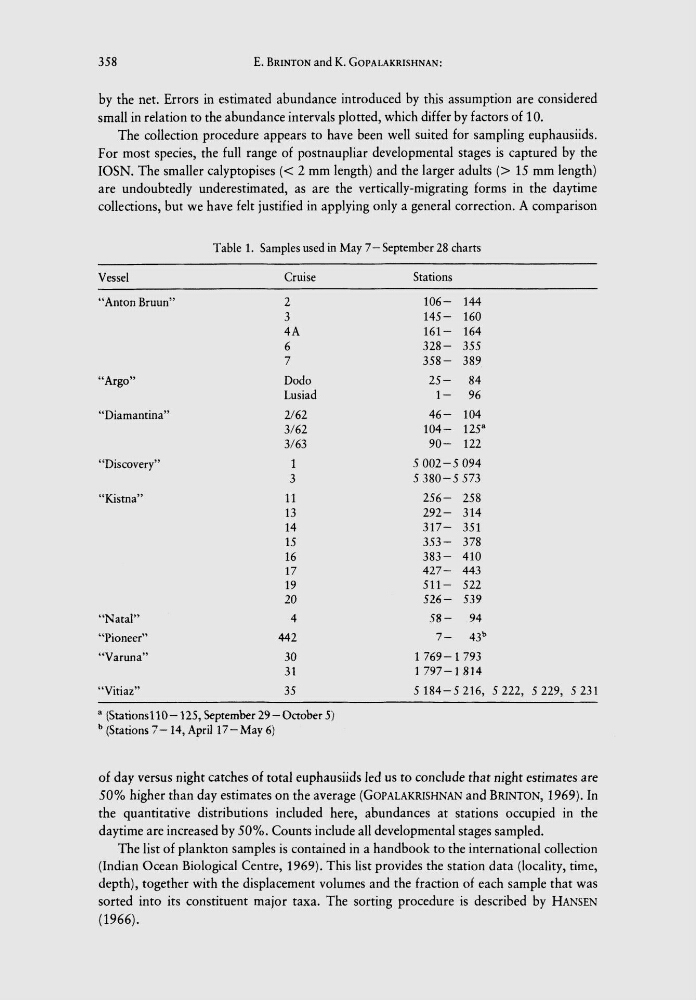
Table 1. Samples used in May 7 - September 28 charts
Vessel
Cruise
"Anton Bruun"
2
3
4A
6
7
"Argo"
Dodo
Lusiad
"Diamantina"
2/62
3/62
3/63
"Discovery"
1
3
"Kistna"
11
13
14
15
16
17
19
20
'~Natal'''
4
"'Pioneer"
442
"Varuna"
30
31
~~Vitiaz"
35
" (Stationsll0-125, September 29- October 5)
b (Stations 7 -14, Aprilli - May 6)
Stations
106- 144
145- 160
161- 164
328- 355
358- 389
25- 84
1- 96
46- 104
104- 125"
90- 122
5002-5094
5380-5573
256- 258
292- 314
317- 351
353- 378
383- 410
427- 443
511- 522
526- 539
58- 94
7- 43 b
1 769-1 793
1797-1814
5184-5216, 5222, 5229, 5231
of day versus night catches of total euphausiids led us to conclude that night estimates are
50% higher than day estimates on the average (GOPALAKRISHNAN and BRINTON, 1969). In
the quantitative distributions included here, abundances at stations occupied in the
daytime are increased by 50%. Counts include all developmental stages sampled.
The list of plankton samples is contained in a handbook to the international collection
(Indian Ocean Biological Centre, 1969). This list provides the station data (locality, time,
depth), together with the displacement volumes and the fraction of each sample that was
sorted into its constituent major taxa. The sorting procedure is described by HANSEN
(1966).
E. BRINTON and K. GOPALAKRISHNAN:
by the net. Errors in estimated abundance introduced by this assumption are considered
small in relation to the abundance intervals plotted, which differ by factors of 10.
The collection procedure appears to have been well suited for sampling euphausiids.
For most species, the full range of postnaupliar developmental stages is captured by the
IOSN. The smaller calyptopises « 2 mm length) and the larger adults (> 15 mm length)
are undoubtedly underestimated, as are the vertically-migrating forms in the daytime
collections, but we have felt justified in applying only a general correction. A comparison
Table 1. Samples used in May 7 - September 28 charts
Vessel
Cruise
"Anton Bruun"
2
3
4A
6
7
"Argo"
Dodo
Lusiad
"Diamantina"
2/62
3/62
3/63
"Discovery"
1
3
"Kistna"
11
13
14
15
16
17
19
20
'~Natal'''
4
"'Pioneer"
442
"Varuna"
30
31
~~Vitiaz"
35
" (Stationsll0-125, September 29- October 5)
b (Stations 7 -14, Aprilli - May 6)
Stations
106- 144
145- 160
161- 164
328- 355
358- 389
25- 84
1- 96
46- 104
104- 125"
90- 122
5002-5094
5380-5573
256- 258
292- 314
317- 351
353- 378
383- 410
427- 443
511- 522
526- 539
58- 94
7- 43 b
1 769-1 793
1797-1814
5184-5216, 5222, 5229, 5231
of day versus night catches of total euphausiids led us to conclude that night estimates are
50% higher than day estimates on the average (GOPALAKRISHNAN and BRINTON, 1969). In
the quantitative distributions included here, abundances at stations occupied in the
daytime are increased by 50%. Counts include all developmental stages sampled.
The list of plankton samples is contained in a handbook to the international collection
(Indian Ocean Biological Centre, 1969). This list provides the station data (locality, time,
depth), together with the displacement volumes and the fraction of each sample that was
sorted into its constituent major taxa. The sorting procedure is described by HANSEN
(1966).