

Distribution of Gaussia in the Upper 200 m in the Indian Ocean
337
located between SO-19°N and 6r-9SoE (Table 1). The Indian Ocean north of the
Equator comprises the monsoon region, characterized by seasonal reversal of the surface
currents. Most of the specimens of Gaussia were collected during the SW monsoon period.
Even typical upwelling areas have not shown the presence of the species in the upper layer.
II. Discussion
The fact that 20% of the total number of specimens was collected from the single
positive station south of the Equator may indicate that the species occurred in this
°c -5%0 15
25
35
15
25
15
~-.--.---.--,~~--,--.---.--~~ .. ~~---r--.---~-.--~
20
,
c/
t
I
. . . . d
~
JJ/7
0
o ..... 6'C
..
poe
d
...
r:f
E 180 ___ L __ 200m ____ ~-- L ___________ L
£
I
l
: ,
a.
I
I
1
~260 ?
t /
:
,
:
I
?
®
t f
@
+
3l.0 I O2
5%0:
I O2
5%ol
I
:
j
:
6
... 6
...
100
I
o
I
I
o
I
I
o
I
I
o
------r-------,
o
I
,
5%0
I
o
I
I
©
,'oC
O 2
l.20 ~0---L---:':2---L--'-l.--'---'---=-0 -'--=-2 --I...-'-l. -'----L""'0=--c.......,2=--c.......,l.L..(;-mL.. 1 07""2 1-1)
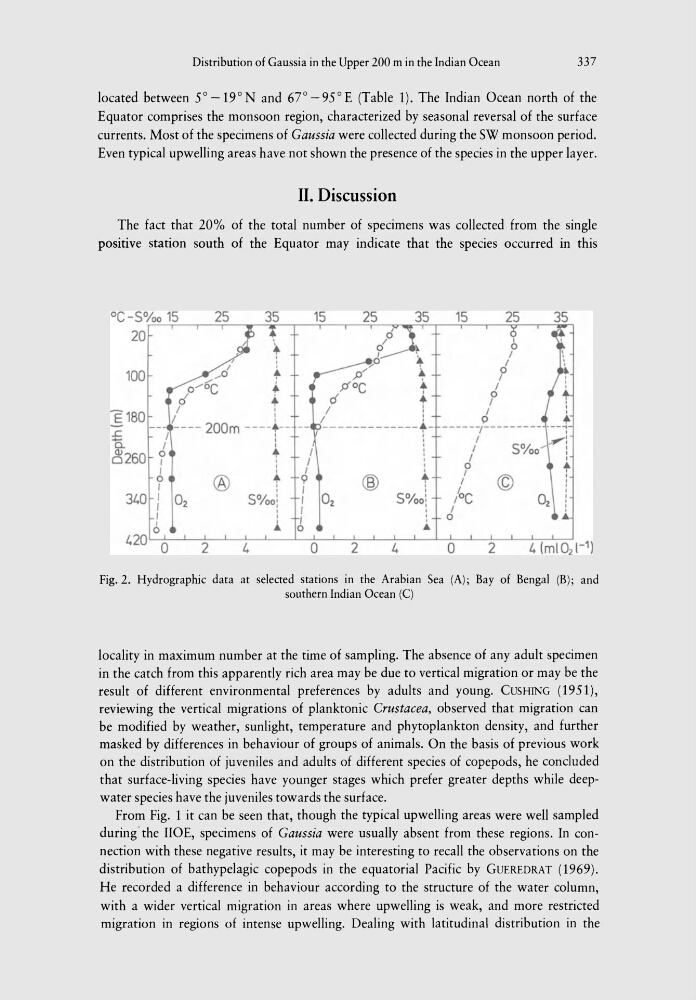
Fig. 2. Hydrographic data at selected stations in the Arabian Sea (A); Bay of Bengal (B); and
southern Indian Ocean (C)
locality in maximum number at the time of sampling. The absence of any adult specimen
in the catch from this apparently rich area may be due to vertical migration or may be the
result of different environmental preferences by adults and young. CUSHING (1951),
reviewing the vertical migrations of planktonic Crustacea, observed that migration can
be modified by weather, sunlight, temperature and phytoplankton density, and further
masked by differences in behaviour of groups of animals. On the basis of previous work
on the distribution of juveniles and adults of different species of copepods, he concluded
that surface-living species have younger stages which prefer greater depths while deepwater species have the juveniles towards the surface.
From Fig. 1 it can be seen that, though the typical upwelling areas were well sampled
during' the nOE, specimens of Gaussia were usually absent from these regions. In connection with these negative results, it may be interesting to recall the observations on the
distribution of bathypelagic copepods in the equatorial Pacific by GUEREDRAT (1969).
He recorded a difference in behaviour according to the structure of the water column,
with a wider vertical migration in areas where upwelling is weak, and more restricted
migration in regions of intense upwelling. Dealing with latitudinal distribution in the
337
located between SO-19°N and 6r-9SoE (Table 1). The Indian Ocean north of the
Equator comprises the monsoon region, characterized by seasonal reversal of the surface
currents. Most of the specimens of Gaussia were collected during the SW monsoon period.
Even typical upwelling areas have not shown the presence of the species in the upper layer.
II. Discussion
The fact that 20% of the total number of specimens was collected from the single
positive station south of the Equator may indicate that the species occurred in this
°c -5%0 15
25
35
15
25
15
~-.--.---.--,~~--,--.---.--~~ .. ~~---r--.---~-.--~
20
,
c/
t
I
. . . . d
~
JJ/7
0
o ..... 6'C
..
poe
d
...
r:f
E 180 ___ L __ 200m ____ ~-- L ___________ L
£
I
l
: ,
a.
I
I
1
~260 ?
t /
:
,
:
I
?
®
t f
@
+
3l.0 I O2
5%0:
I O2
5%ol
I
:
j
:
6
... 6
...
100
I
o
I
I
o
I
I
o
I
I
o
------r-------,
o
I
,
5%0
I
o
I
I
©
,'oC
O 2
l.20 ~0---L---:':2---L--'-l.--'---'---=-0 -'--=-2 --I...-'-l. -'----L""'0=--c.......,2=--c.......,l.L..(;-mL.. 1 07""2 1-1)
Fig. 2. Hydrographic data at selected stations in the Arabian Sea (A); Bay of Bengal (B); and
southern Indian Ocean (C)
locality in maximum number at the time of sampling. The absence of any adult specimen
in the catch from this apparently rich area may be due to vertical migration or may be the
result of different environmental preferences by adults and young. CUSHING (1951),
reviewing the vertical migrations of planktonic Crustacea, observed that migration can
be modified by weather, sunlight, temperature and phytoplankton density, and further
masked by differences in behaviour of groups of animals. On the basis of previous work
on the distribution of juveniles and adults of different species of copepods, he concluded
that surface-living species have younger stages which prefer greater depths while deepwater species have the juveniles towards the surface.
From Fig. 1 it can be seen that, though the typical upwelling areas were well sampled
during' the nOE, specimens of Gaussia were usually absent from these regions. In connection with these negative results, it may be interesting to recall the observations on the
distribution of bathypelagic copepods in the equatorial Pacific by GUEREDRAT (1969).
He recorded a difference in behaviour according to the structure of the water column,
with a wider vertical migration in areas where upwelling is weak, and more restricted
migration in regions of intense upwelling. Dealing with latitudinal distribution in the