

210
A. DE DECKER:
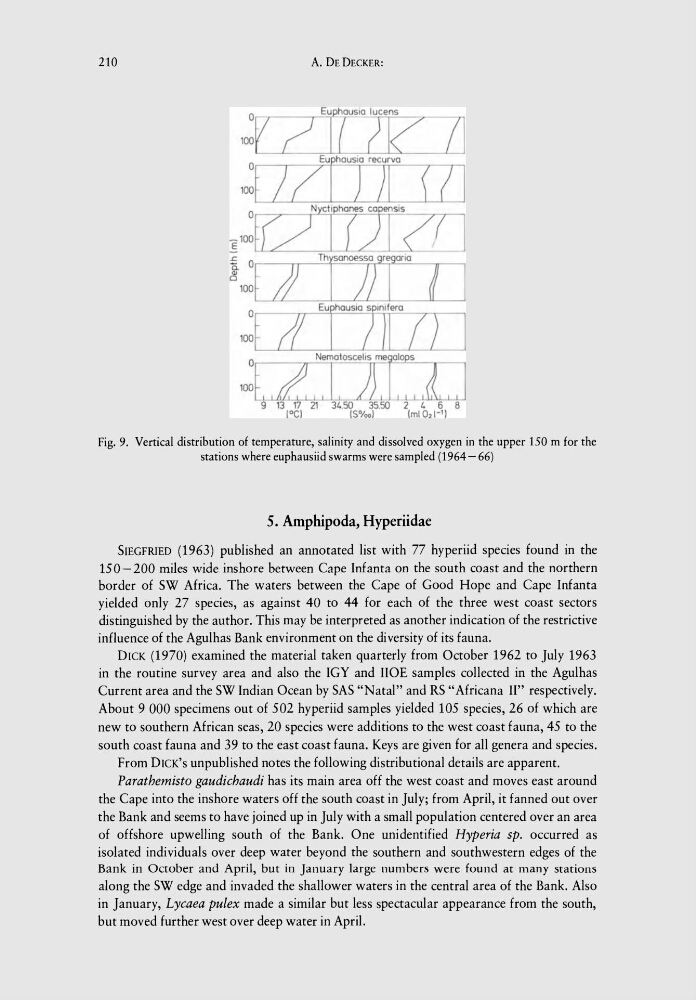
Fig. 9. Vertical distribution of temperature, salinity and dissolved oxygen in the upper 150 m for the
stations where euphausiid swarms were sampled (1964 - 66)
5. Amphipoda, Hyperiidae
SIEGFRIED (1963) published an annotated list with 77 hyperiid species found in the
150- 200 miles wide inshore between Cape Infanta on the south coast and the northern
border of SW Africa. The waters between the Cape of Good Hope and Cape Infanta
yielded only 27 species, as against 40 to 44 for each of the three west coast sectors
distinguished by the author. This may be interpreted as another indication of the restrictive
influence of the Agulhas Bank environment on the diversity of its fauna.
DICK (1970) examined the material taken quarterly from October 1962 to July 1963
in the routine survey area and also the IGY and 1I0E samples collected in the Agulhas
Current area and the SW Indian Ocean by SAS "Natal" and RS "African a II" respectively.
About 9 000 specimens out of 502 hyperiid samples yielded 105 species, 26 of which are
new to southern African seas, 20 species were additions to the west coast fauna, 45 to the
south coast fauna and 39 to the east coast fauna. Keys are given for all genera and species.
From DICK's unpublished notes the following distributional details are apparent.
Parathemisto gaudichaudi has its main area off the west coast and moves east around
the Cape into the inshore waters off the south coast in July; from April, it fanned out over
the Bank and seems to have joined up in July with a small population centered over an area
of offshore upwelling south of the Bank. One unidentified Hyperia sp. occurred as
isolated individuals over deep water beyond the southern and southwestern edges of the
Bank in October and April, bur in January large numbers were found at many stations
along the SW edge and invaded the shallower waters in the central area of the Bank. Also
in January, Lycaea pulex made a similar but less spectacular appearance from the south,
but moved further west over deep water in April.
A. DE DECKER:
Fig. 9. Vertical distribution of temperature, salinity and dissolved oxygen in the upper 150 m for the
stations where euphausiid swarms were sampled (1964 - 66)
5. Amphipoda, Hyperiidae
SIEGFRIED (1963) published an annotated list with 77 hyperiid species found in the
150- 200 miles wide inshore between Cape Infanta on the south coast and the northern
border of SW Africa. The waters between the Cape of Good Hope and Cape Infanta
yielded only 27 species, as against 40 to 44 for each of the three west coast sectors
distinguished by the author. This may be interpreted as another indication of the restrictive
influence of the Agulhas Bank environment on the diversity of its fauna.
DICK (1970) examined the material taken quarterly from October 1962 to July 1963
in the routine survey area and also the IGY and 1I0E samples collected in the Agulhas
Current area and the SW Indian Ocean by SAS "Natal" and RS "African a II" respectively.
About 9 000 specimens out of 502 hyperiid samples yielded 105 species, 26 of which are
new to southern African seas, 20 species were additions to the west coast fauna, 45 to the
south coast fauna and 39 to the east coast fauna. Keys are given for all genera and species.
From DICK's unpublished notes the following distributional details are apparent.
Parathemisto gaudichaudi has its main area off the west coast and moves east around
the Cape into the inshore waters off the south coast in July; from April, it fanned out over
the Bank and seems to have joined up in July with a small population centered over an area
of offshore upwelling south of the Bank. One unidentified Hyperia sp. occurred as
isolated individuals over deep water beyond the southern and southwestern edges of the
Bank in October and April, bur in January large numbers were found at many stations
along the SW edge and invaded the shallower waters in the central area of the Bank. Also
in January, Lycaea pulex made a similar but less spectacular appearance from the south,
but moved further west over deep water in April.