

79
determine: (1) the mechanical and compositional properties of the propterygium
and (2) whether these properties correlate with punting ability.
Using fi ve batoid species of varying punting ability, scientists employed a threepoint bending test, fi nding that propterygium fl exural stiffness (33.74–180.16 Nm
2 )
was similar to values found in bone and could predict punting ability. Variation in
fl exural stiffness resulted from differences in mineral content (24.4–48.9 % dry
mass) and the second moment of area. Propterygia material stiffness (140–
2,533 MPa) approached the lower limit of bone despite having less than one-third
of its mineral content. This drastically lower mineral content is refl ected in the
radius-to-thickness ratio of the cross-section (mean ± s.e.m. = 5.5 ± 0.44), which is
comparatively much higher than bony vertebrates. This indicates that elasmobranchs may have evolved skeletal elements that increase buoyancy without sacrifi cing mechanical properties. These results highlight the functional parallels
between a cartilaginous and bony skeleton despite dramatic compositional differences, and provide insight into how environmental factors may affect cartilaginous
skeletal development (Macesic and Summers 2012 ).
2.1.2 Marine Cartilage: Tissue Engineering
Cartilage of selachian fi sh provides a useful model to study direct metaplasia of hyaline cartilage into calcifi ed cartilage (cortical mineralisation) and further on (vertebral body) into bony tissue (Egerbacher et al. 2006 ). Cartilage as typical avascular
tissue shows limited capacity for regeneration and even self-repairs. Correspondingly,
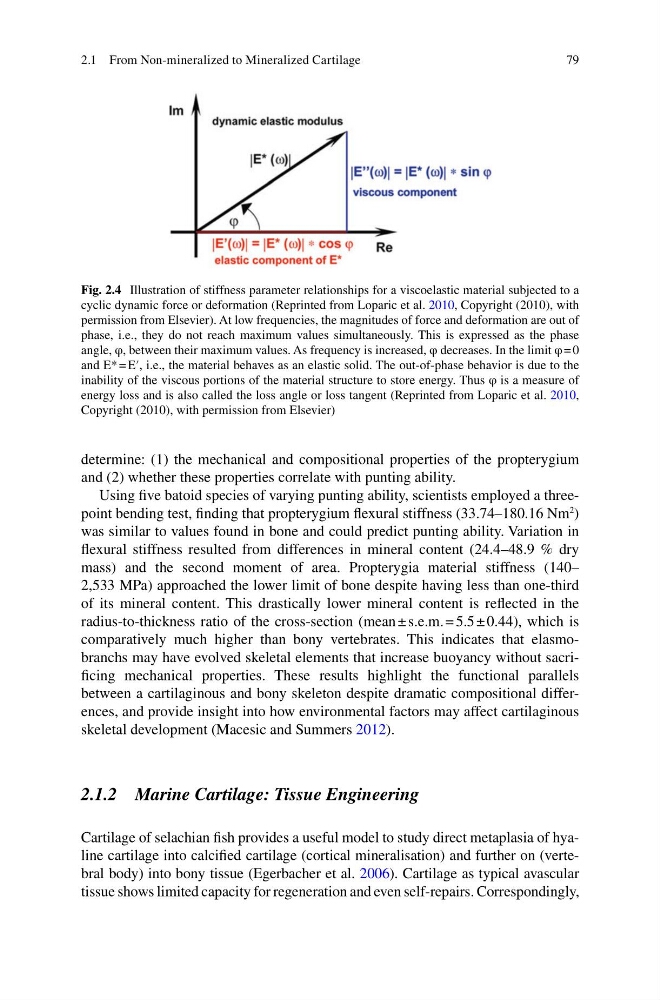
Fig. 2.4 Illustration of stiffness parameter relationships for a viscoelastic material subjected to a
cyclic dynamic force or deformation (Reprinted from Loparic et al. 2010 , Copyright (2010), with
permission from Elsevier). At low frequencies, the magnitudes of force and deformation are out of
phase, i.e., they do not reach maximum values simultaneously. This is expressed as the phase
angle, φ, between their maximum values. As frequency is increased, φ decreases. In the limit φ = 0
and E* = E′, i.e., the material behaves as an elastic solid. The out-of-phase behavior is due to the
inability of the viscous portions of the material structure to store energy. Thus φ is a measure of
energy loss and is also called the loss angle or loss tangent (Reprinted from Loparic et al. 2010 ,
Copyright (2010), with permission from Elsevier)
2.1 From Non-mineralized to Mineralized Cartilage
determine: (1) the mechanical and compositional properties of the propterygium
and (2) whether these properties correlate with punting ability.
Using fi ve batoid species of varying punting ability, scientists employed a threepoint bending test, fi nding that propterygium fl exural stiffness (33.74–180.16 Nm
2 )
was similar to values found in bone and could predict punting ability. Variation in
fl exural stiffness resulted from differences in mineral content (24.4–48.9 % dry
mass) and the second moment of area. Propterygia material stiffness (140–
2,533 MPa) approached the lower limit of bone despite having less than one-third
of its mineral content. This drastically lower mineral content is refl ected in the
radius-to-thickness ratio of the cross-section (mean ± s.e.m. = 5.5 ± 0.44), which is
comparatively much higher than bony vertebrates. This indicates that elasmobranchs may have evolved skeletal elements that increase buoyancy without sacrifi cing mechanical properties. These results highlight the functional parallels
between a cartilaginous and bony skeleton despite dramatic compositional differences, and provide insight into how environmental factors may affect cartilaginous
skeletal development (Macesic and Summers 2012 ).
2.1.2 Marine Cartilage: Tissue Engineering
Cartilage of selachian fi sh provides a useful model to study direct metaplasia of hyaline cartilage into calcifi ed cartilage (cortical mineralisation) and further on (vertebral body) into bony tissue (Egerbacher et al. 2006 ). Cartilage as typical avascular
tissue shows limited capacity for regeneration and even self-repairs. Correspondingly,
Fig. 2.4 Illustration of stiffness parameter relationships for a viscoelastic material subjected to a
cyclic dynamic force or deformation (Reprinted from Loparic et al. 2010 , Copyright (2010), with
permission from Elsevier). At low frequencies, the magnitudes of force and deformation are out of
phase, i.e., they do not reach maximum values simultaneously. This is expressed as the phase
angle, φ, between their maximum values. As frequency is increased, φ decreases. In the limit φ = 0
and E* = E′, i.e., the material behaves as an elastic solid. The out-of-phase behavior is due to the
inability of the viscous portions of the material structure to store energy. Thus φ is a measure of
energy loss and is also called the loss angle or loss tangent (Reprinted from Loparic et al. 2010 ,
Copyright (2010), with permission from Elsevier)
2.1 From Non-mineralized to Mineralized Cartilage