

279
MPF swimming can be done by different appendages, like the pectoral, dorsal or
anal fi ns, or combinations of these. Intriguingly, the marine boxfi shes (Teleostei:
Ostraciidae ) are also related to MPF swimming species and have proven useful as a
source for bioinspired designs (see for review Bartol et al. 2005 , 2008 ). Here, the
characteristic of swimming behavior of these animals made by Bartol et al. ( 2008 ):
– “Boxfi shes exhibit a unique combination of high stability and manoeuvrability.
Despite having a somewhat ungainly exterior, they exhibit some of the lowest
amplitude recoil movements during swimming thus far detected in any fi sh;
– they also have the ability to spin around with a minimal turning radius, and hold
precise control of their positions and orientations;
– boxfi shes have a rigid carapace encasing a signifi cant portion of their bodies,
requiring them to swim predominantly using coordinated movements of their fi ve
fi ns rather than relying heavily on undulatory body movements like most fi sh;
– the carapace of one boxfi sh, the smooth trunkfi sh Lactophrys triqueter , plays an
integral role in the hydrodynamic stability of swimming. The ventro-lateral keel
of this species is broadly triangular in cross-section, and produces leading edge
vortical fl ows that increase in magnitude when the carapace pitches and yaws at
greater angles. The vortices are strongest at posterior regions of the carapace, and
produce self-correcting trimming forces that probably help L. triqueter maintain
smooth swimming trajectories in turbulent environments,” (Bartol et al. 2008 ; see
also Bartol et al. 2003 ; Gordon et al. 2001 ; Hove et al. 2001 ; Walker 2000 ).
Rays swim by passing a running wave through their pectoral fi ns ( rajiform ). The
bluegill sunfi sh makes a rowing motion with its pectoral fi ns ( labriform ), some fi sh
pass running waves past their long dorsal of caudal fi ns ( amiiform ) and gymnotiform,
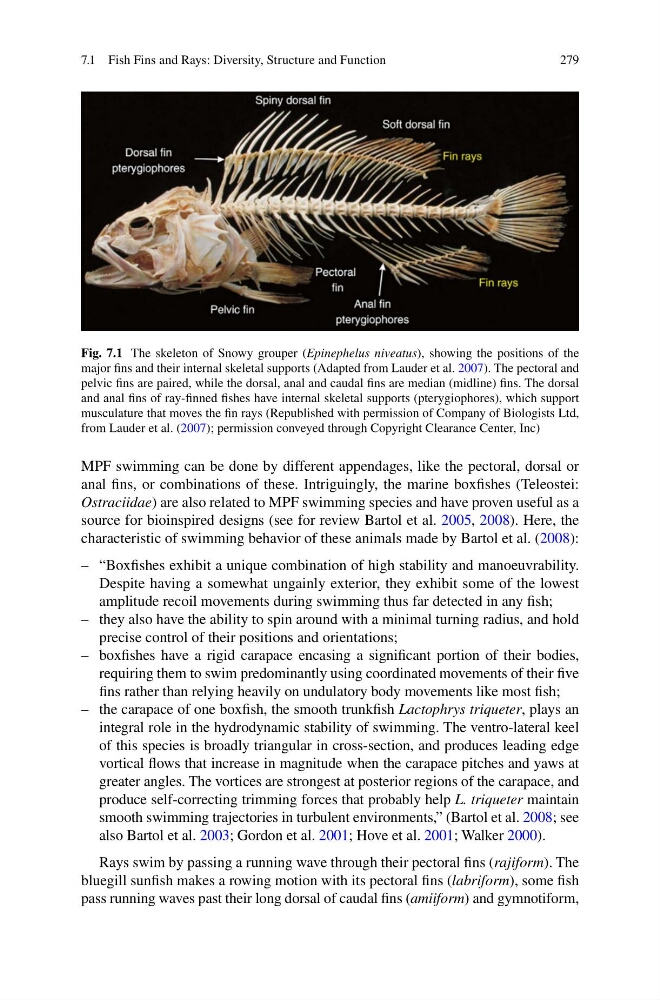
Fig. 7.1 The skeleton of Snowy grouper ( Epinephelus niveatus ), showing the positions of the
major fi ns and their internal skeletal supports (Adapted from Lauder et al. 2007 ). The pectoral and
pelvic fi ns are paired, while the dorsal, anal and caudal fi ns are median (midline) fi ns. The dorsal
and anal fi ns of ray-fi nned fi shes have internal skeletal supports (pterygiophores), which support
musculature that moves the fi n rays (Republished with permission of Company of Biologists Ltd,
from Lauder et al. ( 2007 ); permission conveyed through Copyright Clearance Center, Inc)
7.1 Fish Fins and Rays: Diversity, Structure and Function
MPF swimming can be done by different appendages, like the pectoral, dorsal or
anal fi ns, or combinations of these. Intriguingly, the marine boxfi shes (Teleostei:
Ostraciidae ) are also related to MPF swimming species and have proven useful as a
source for bioinspired designs (see for review Bartol et al. 2005 , 2008 ). Here, the
characteristic of swimming behavior of these animals made by Bartol et al. ( 2008 ):
– “Boxfi shes exhibit a unique combination of high stability and manoeuvrability.
Despite having a somewhat ungainly exterior, they exhibit some of the lowest
amplitude recoil movements during swimming thus far detected in any fi sh;
– they also have the ability to spin around with a minimal turning radius, and hold
precise control of their positions and orientations;
– boxfi shes have a rigid carapace encasing a signifi cant portion of their bodies,
requiring them to swim predominantly using coordinated movements of their fi ve
fi ns rather than relying heavily on undulatory body movements like most fi sh;
– the carapace of one boxfi sh, the smooth trunkfi sh Lactophrys triqueter , plays an
integral role in the hydrodynamic stability of swimming. The ventro-lateral keel
of this species is broadly triangular in cross-section, and produces leading edge
vortical fl ows that increase in magnitude when the carapace pitches and yaws at
greater angles. The vortices are strongest at posterior regions of the carapace, and
produce self-correcting trimming forces that probably help L. triqueter maintain
smooth swimming trajectories in turbulent environments,” (Bartol et al. 2008 ; see
also Bartol et al. 2003 ; Gordon et al. 2001 ; Hove et al. 2001 ; Walker 2000 ).
Rays swim by passing a running wave through their pectoral fi ns ( rajiform ). The
bluegill sunfi sh makes a rowing motion with its pectoral fi ns ( labriform ), some fi sh
pass running waves past their long dorsal of caudal fi ns ( amiiform ) and gymnotiform,
Fig. 7.1 The skeleton of Snowy grouper ( Epinephelus niveatus ), showing the positions of the
major fi ns and their internal skeletal supports (Adapted from Lauder et al. 2007 ). The pectoral and
pelvic fi ns are paired, while the dorsal, anal and caudal fi ns are median (midline) fi ns. The dorsal
and anal fi ns of ray-fi nned fi shes have internal skeletal supports (pterygiophores), which support
musculature that moves the fi n rays (Republished with permission of Company of Biologists Ltd,
from Lauder et al. ( 2007 ); permission conveyed through Copyright Clearance Center, Inc)
7.1 Fish Fins and Rays: Diversity, Structure and Function