

116
It seems that detailed analysis of biomechanical and material properties of these
unusual teeth will give us more understanding into mechanism of this very special kind
of biomineralization, as well as in the construction of similar artifi cial structures.
3.2.6.2 Hypermineralized Tooth Plates
Teeth, which are covered with a complex, hypermineralized tissue, have been
described in the cochliodonts, chondrenchelyiform fi shes and other Paleozoic
chondrichthyans. This was termed as orthotrabeculine (Zangerl et al. 1993 ).
According to Didier et al. ( 1994 ) “ in many of these archaic forms, the crowns of the
teeth were extensively hypermineralized, and the bases of the teeth within a family
showed a tendency to fuse, ” (Didier et al. 1994 ).
Also chimaeroid fi shes (Chondrichthyes, Holocephali) possess hypermineralized tissues (Owen 1945 ) in the form of tooth plates, which grow continuously
from the lingual, or posterior, margin throughout the life of the animal. Following
pairs of tooth plates have been described in the chimaeroids (Didier et al.
1994 ):
• “a pair of large mandibular tooth plates in the lower jaw;
• two pairs of tooth plates in the roof of the mouth;
• the posterior palatine and anterior vomerine tooth plates,” (Didier et al. 1994 ).
These structures look like “nipping” blades, some with hypermineralized rods
reinforcing the cutting edges (Huber et al. 2008 ).
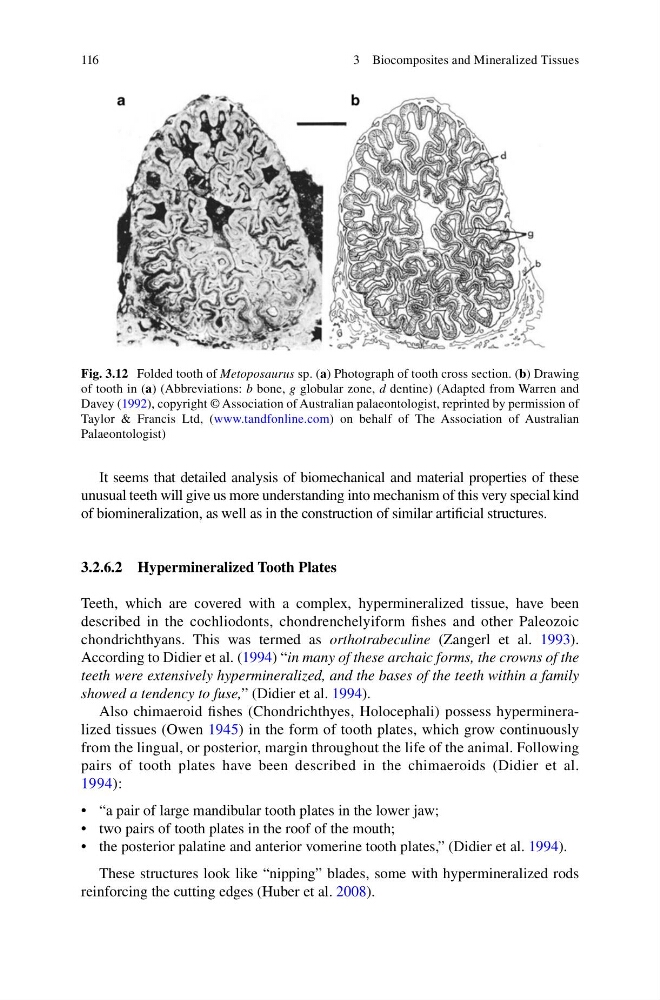
Fig. 3.12 Folded tooth of Metoposaurus sp. ( a ) Photograph of tooth cross section. ( b ) Drawing
of tooth in ( a ) (Abbreviations: b bone, g globular zone, d dentine) (Adapted from Warren and
Davey ( 1992 ), copyright © Association of Australian palaeontologist, reprinted by permission of
Taylor & Francis Ltd, ( www.tandfonline.com ) on behalf of The Association of Australian
Palaeontologist)
3 Biocomposites and Mineralized Tissues
It seems that detailed analysis of biomechanical and material properties of these
unusual teeth will give us more understanding into mechanism of this very special kind
of biomineralization, as well as in the construction of similar artifi cial structures.
3.2.6.2 Hypermineralized Tooth Plates
Teeth, which are covered with a complex, hypermineralized tissue, have been
described in the cochliodonts, chondrenchelyiform fi shes and other Paleozoic
chondrichthyans. This was termed as orthotrabeculine (Zangerl et al. 1993 ).
According to Didier et al. ( 1994 ) “ in many of these archaic forms, the crowns of the
teeth were extensively hypermineralized, and the bases of the teeth within a family
showed a tendency to fuse, ” (Didier et al. 1994 ).
Also chimaeroid fi shes (Chondrichthyes, Holocephali) possess hypermineralized tissues (Owen 1945 ) in the form of tooth plates, which grow continuously
from the lingual, or posterior, margin throughout the life of the animal. Following
pairs of tooth plates have been described in the chimaeroids (Didier et al.
1994 ):
• “a pair of large mandibular tooth plates in the lower jaw;
• two pairs of tooth plates in the roof of the mouth;
• the posterior palatine and anterior vomerine tooth plates,” (Didier et al. 1994 ).
These structures look like “nipping” blades, some with hypermineralized rods
reinforcing the cutting edges (Huber et al. 2008 ).
Fig. 3.12 Folded tooth of Metoposaurus sp. ( a ) Photograph of tooth cross section. ( b ) Drawing
of tooth in ( a ) (Abbreviations: b bone, g globular zone, d dentine) (Adapted from Warren and
Davey ( 1992 ), copyright © Association of Australian palaeontologist, reprinted by permission of
Taylor & Francis Ltd, ( www.tandfonline.com ) on behalf of The Association of Australian
Palaeontologist)
3 Biocomposites and Mineralized Tissues