

2 Metagenome Analysis
43
3’- 5’
- 3’
3’- 5’
- 3’
3’- 5’
- 3’
5’+
3’- 5’
5’- 3’
5’- 3’
5’- 3’
3’- 5’
5’- 3’
5
’
-
- 3’
5’- 3’
5’Template and random hexamers
Annealing of multiple primers
Elongation
Strand displacement
... multiple annealing
and elongation at
displaced strands leads to network
3
’
-
5’5
’
-
3
’
-
5 ’ -
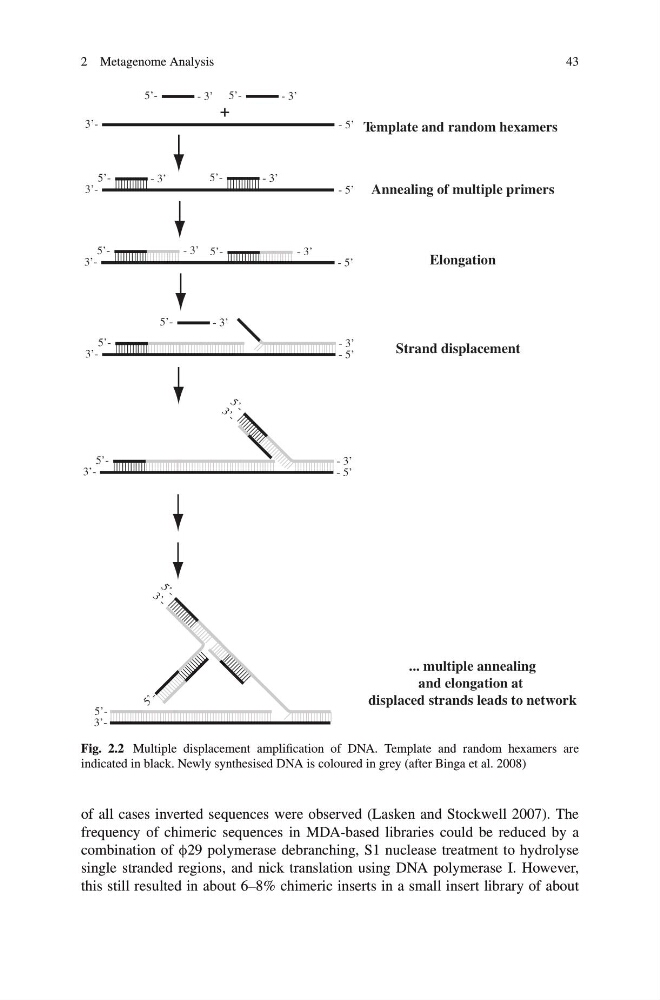
Fig. 2.2 Multiple displacement amplification of DNA. Template and random hexamers are
indicated in black. Newly synthesised DNA is coloured in grey (after Binga et al. 2008)
of all cases inverted sequences were observed (Lasken and Stockwell 2007). The
frequency of chimeric sequences in MDA-based libraries could be reduced by a
combination of φ29 polymerase debranching, S1 nuclease treatment to hydrolyse
single stranded regions, and nick translation using DNA polymerase I. However,
this still resulted in about 6–8% chimeric inserts in a small insert library of about
43
3’- 5’
- 3’
3’- 5’
- 3’
3’- 5’
- 3’
5’+
3’- 5’
5’- 3’
5’- 3’
5’- 3’
3’- 5’
5’- 3’
5
’
-
- 3’
5’- 3’
5’Template and random hexamers
Annealing of multiple primers
Elongation
Strand displacement
... multiple annealing
and elongation at
displaced strands leads to network
3
’
-
5’5
’
-
3
’
-
5 ’ -
Fig. 2.2 Multiple displacement amplification of DNA. Template and random hexamers are
indicated in black. Newly synthesised DNA is coloured in grey (after Binga et al. 2008)
of all cases inverted sequences were observed (Lasken and Stockwell 2007). The
frequency of chimeric sequences in MDA-based libraries could be reduced by a
combination of φ29 polymerase debranching, S1 nuclease treatment to hydrolyse
single stranded regions, and nick translation using DNA polymerase I. However,
this still resulted in about 6–8% chimeric inserts in a small insert library of about