

8 Marine Biotechnology
305
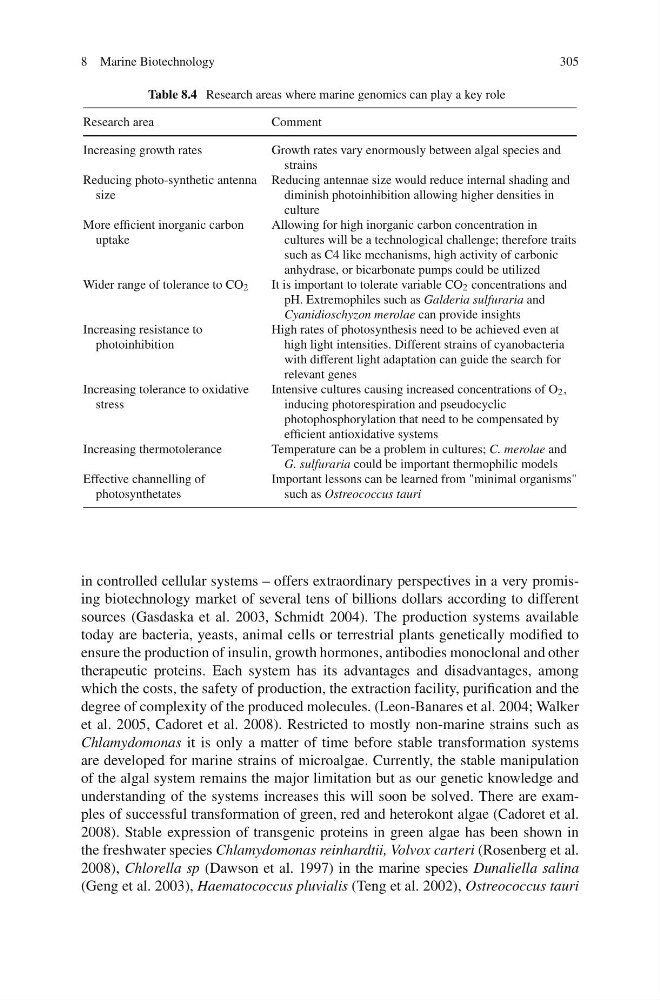
Table 8.4 Research areas where marine genomics can play a key role
Research area
Comment
Increasing growth rates
Growth rates vary enormously between algal species and
strains
Reducing photo-synthetic antenna
size
Reducing antennae size would reduce internal shading and
diminish photoinhibition allowing higher densities in
culture
More efficient inorganic carbon
uptake
Allowing for high inorganic carbon concentration in
cultures will be a technological challenge; therefore traits
such as C4 like mechanisms, high activity of carbonic
anhydrase, or bicarbonate pumps could be utilized
Wider range of tolerance to CO 2
It is important to tolerate variable CO 2 concentrations and
pH. Extremophiles such as Galderia sulfuraria and
Cyanidioschyzon merolae can provide insights
Increasing resistance to
photoinhibition
High rates of photosynthesis need to be achieved even at
high light intensities. Different strains of cyanobacteria
with different light adaptation can guide the search for
relevant genes
Increasing tolerance to oxidative
stress
Intensive cultures causing increased concentrations of O 2 ,
inducing photorespiration and pseudocyclic
photophosphorylation that need to be compensated by
efficient antioxidative systems
Increasing thermotolerance
Temperature can be a problem in cultures; C. merolae and
G. sulfuraria could be important thermophilic models
Effective channelling of
photosynthetates
Important lessons can be learned from "minimal organisms"
such as Ostreococcus tauri
in controlled cellular systems – offers extraordinary perspectives in a very promising biotechnology market of several tens of billions dollars according to different
sources (Gasdaska et al. 2003, Schmidt 2004). The production systems available
today are bacteria, yeasts, animal cells or terrestrial plants genetically modified to
ensure the production of insulin, growth hormones, antibodies monoclonal and other
therapeutic proteins. Each system has its advantages and disadvantages, among
which the costs, the safety of production, the extraction facility, purification and the
degree of complexity of the produced molecules. (Leon-Banares et al. 2004; Walker
et al. 2005, Cadoret et al. 2008). Restricted to mostly non-marine strains such as
Chlamydomonas it is only a matter of time before stable transformation systems
are developed for marine strains of microalgae. Currently, the stable manipulation
of the algal system remains the major limitation but as our genetic knowledge and
understanding of the systems increases this will soon be solved. There are examples of successful transformation of green, red and heterokont algae (Cadoret et al.
2008). Stable expression of transgenic proteins in green algae has been shown in
the freshwater species Chlamydomonas reinhardtii, Volvox carteri (Rosenberg et al.
2008), Chlorella sp (Dawson et al. 1997) in the marine species Dunaliella salina
(Geng et al. 2003), Haematococcus pluvialis (Teng et al. 2002), Ostreococcus tauri
305
Table 8.4 Research areas where marine genomics can play a key role
Research area
Comment
Increasing growth rates
Growth rates vary enormously between algal species and
strains
Reducing photo-synthetic antenna
size
Reducing antennae size would reduce internal shading and
diminish photoinhibition allowing higher densities in
culture
More efficient inorganic carbon
uptake
Allowing for high inorganic carbon concentration in
cultures will be a technological challenge; therefore traits
such as C4 like mechanisms, high activity of carbonic
anhydrase, or bicarbonate pumps could be utilized
Wider range of tolerance to CO 2
It is important to tolerate variable CO 2 concentrations and
pH. Extremophiles such as Galderia sulfuraria and
Cyanidioschyzon merolae can provide insights
Increasing resistance to
photoinhibition
High rates of photosynthesis need to be achieved even at
high light intensities. Different strains of cyanobacteria
with different light adaptation can guide the search for
relevant genes
Increasing tolerance to oxidative
stress
Intensive cultures causing increased concentrations of O 2 ,
inducing photorespiration and pseudocyclic
photophosphorylation that need to be compensated by
efficient antioxidative systems
Increasing thermotolerance
Temperature can be a problem in cultures; C. merolae and
G. sulfuraria could be important thermophilic models
Effective channelling of
photosynthetates
Important lessons can be learned from "minimal organisms"
such as Ostreococcus tauri
in controlled cellular systems – offers extraordinary perspectives in a very promising biotechnology market of several tens of billions dollars according to different
sources (Gasdaska et al. 2003, Schmidt 2004). The production systems available
today are bacteria, yeasts, animal cells or terrestrial plants genetically modified to
ensure the production of insulin, growth hormones, antibodies monoclonal and other
therapeutic proteins. Each system has its advantages and disadvantages, among
which the costs, the safety of production, the extraction facility, purification and the
degree of complexity of the produced molecules. (Leon-Banares et al. 2004; Walker
et al. 2005, Cadoret et al. 2008). Restricted to mostly non-marine strains such as
Chlamydomonas it is only a matter of time before stable transformation systems
are developed for marine strains of microalgae. Currently, the stable manipulation
of the algal system remains the major limitation but as our genetic knowledge and
understanding of the systems increases this will soon be solved. There are examples of successful transformation of green, red and heterokont algae (Cadoret et al.
2008). Stable expression of transgenic proteins in green algae has been shown in
the freshwater species Chlamydomonas reinhardtii, Volvox carteri (Rosenberg et al.
2008), Chlorella sp (Dawson et al. 1997) in the marine species Dunaliella salina
(Geng et al. 2003), Haematococcus pluvialis (Teng et al. 2002), Ostreococcus tauri