

214
M.L. Cancela et al.
evolution. Furthermore, since present day species have evolved following teleostspecific genome duplications, researchers now study how thousands of duplicate
sets of genes have evolved, in particular (i) the acquisition of new sequence motifs
leading to multidomain proteins, (ii) the diversification and multiplication of complex RNA processing mechanisms leading to a plethora of protein isoforms and
variants, (iii) the acquisition of new regulatory elements, leading to a diversification
of regulatory mechanisms and spatial-temporal changes in gene expression, or (iv)
the acquired functionality of non-coding sequences.
Recently, several fish species, including zebrafish (Danio rerio), medaka
(Oryzias latipes), Japanese pufferfish (Takifugu rubripes), spotted green pufferfish
(Tetraodon nigroviridis), Atlantic salmon (Salmo salar), three-spined stickleback
(Gasterosteus aculeatus), and to a lesser extent some shellfish (oyster and mussel)
have had their genomes published (only partially for nuclear genomes of shellfish),
and several more are in progress. In addition, growing sets of large EST (Expressed
Sequence Tag) collections are being produced for many and diverse fish species
(e.g. those recently produced for gilthead seabream (Sparus aurata), and European
sea bass (Dicentrarchus labrax), and shellfish (Pacific oyster Crassostrea gigas,
blue mussel Mytilus galloprovincialis) by the Marine Genomics Europe Network of
Excellence). With these draft genomes and their complementary ESTs, it has been
possible to begin aligning and comparing these sequenced genomes and deduce
their gene structure and corresponding protein sequences. However, once specific
sequences are identified and the genome annotated, one wonders whether the function of a given gene/protein/DNA motif is as predicted, or why specific sets of
genes/regulatory elements have been targets of positive selection. In contrast to
fish/shellfish genome sequencing and comparative analysis, which have taken a
leap forward recently, functional genomic tools have lagged behind and therefore
fish/shellfish-derived in vitro and in vivo tools for functional analysis remain an
important aspect requiring further efforts towards a continued development.
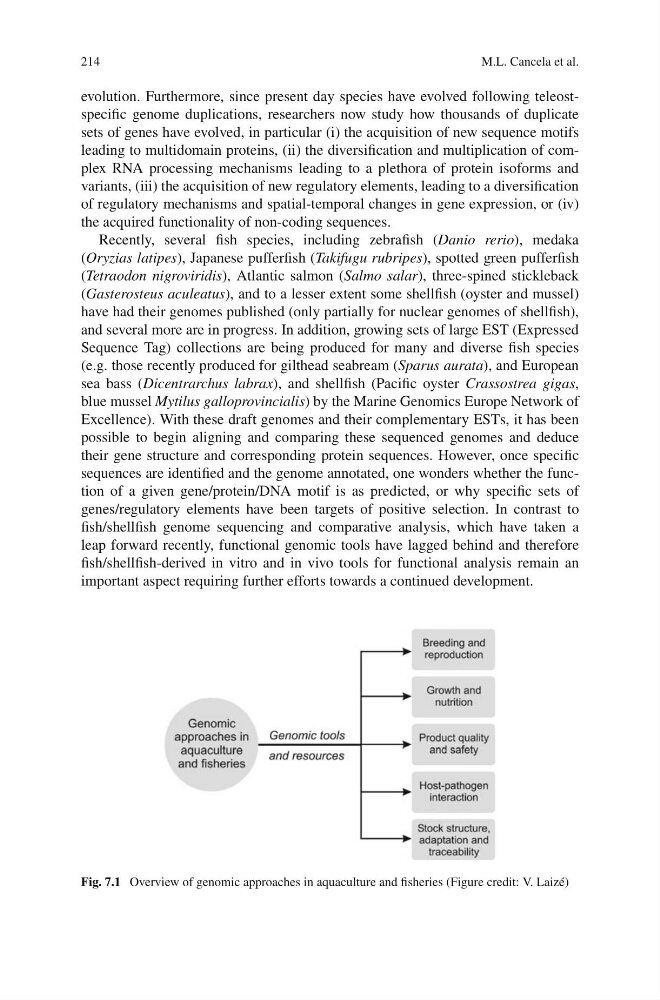
Fig. 7.1 Overview of genomic approaches in aquaculture and fisheries (Figure credit: V. Laizé)
M.L. Cancela et al.
evolution. Furthermore, since present day species have evolved following teleostspecific genome duplications, researchers now study how thousands of duplicate
sets of genes have evolved, in particular (i) the acquisition of new sequence motifs
leading to multidomain proteins, (ii) the diversification and multiplication of complex RNA processing mechanisms leading to a plethora of protein isoforms and
variants, (iii) the acquisition of new regulatory elements, leading to a diversification
of regulatory mechanisms and spatial-temporal changes in gene expression, or (iv)
the acquired functionality of non-coding sequences.
Recently, several fish species, including zebrafish (Danio rerio), medaka
(Oryzias latipes), Japanese pufferfish (Takifugu rubripes), spotted green pufferfish
(Tetraodon nigroviridis), Atlantic salmon (Salmo salar), three-spined stickleback
(Gasterosteus aculeatus), and to a lesser extent some shellfish (oyster and mussel)
have had their genomes published (only partially for nuclear genomes of shellfish),
and several more are in progress. In addition, growing sets of large EST (Expressed
Sequence Tag) collections are being produced for many and diverse fish species
(e.g. those recently produced for gilthead seabream (Sparus aurata), and European
sea bass (Dicentrarchus labrax), and shellfish (Pacific oyster Crassostrea gigas,
blue mussel Mytilus galloprovincialis) by the Marine Genomics Europe Network of
Excellence). With these draft genomes and their complementary ESTs, it has been
possible to begin aligning and comparing these sequenced genomes and deduce
their gene structure and corresponding protein sequences. However, once specific
sequences are identified and the genome annotated, one wonders whether the function of a given gene/protein/DNA motif is as predicted, or why specific sets of
genes/regulatory elements have been targets of positive selection. In contrast to
fish/shellfish genome sequencing and comparative analysis, which have taken a
leap forward recently, functional genomic tools have lagged behind and therefore
fish/shellfish-derived in vitro and in vivo tools for functional analysis remain an
important aspect requiring further efforts towards a continued development.
Fig. 7.1 Overview of genomic approaches in aquaculture and fisheries (Figure credit: V. Laizé)