

Nutrients
47
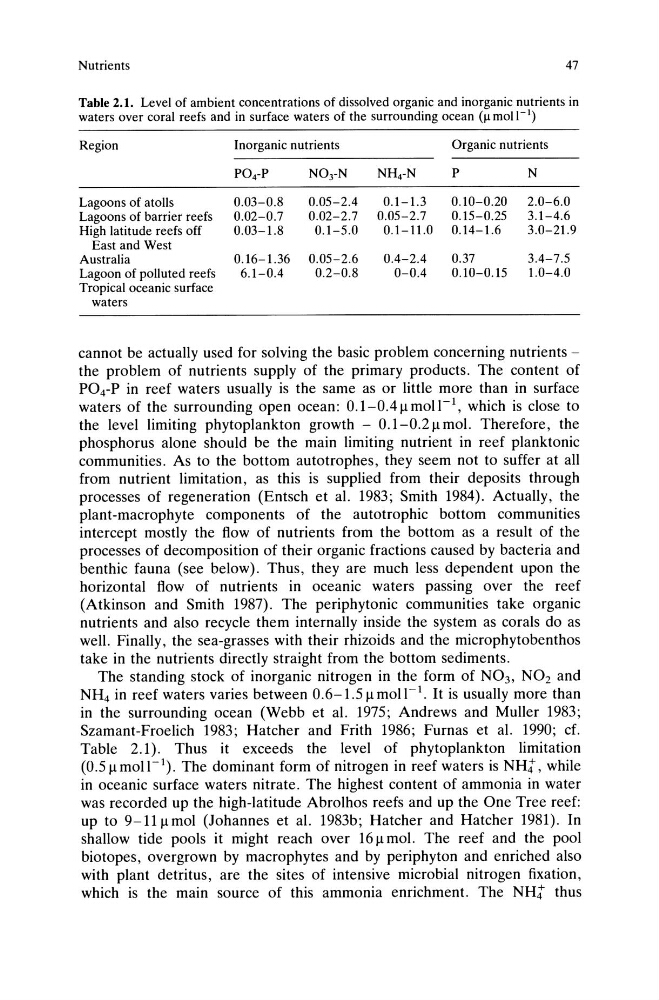
Table 2.1. Level of ambient concentrations of dissolved organic and inorganic nutrients in
waters over coral reefs and in surface waters of the surrounding ocean (11 moll-I)
Region
Inorganic nutrients
Organic nutrients
P04-P
N03-N
NH4-N
P
N
Lagoons of atolls
0.03-0.8
0.05-2.4
0.1-1.3
0.10-0.20
2.0-6.0
Lagoons of barrier reefs
0.02-0.7
0.02-2.7
0.05-2.7
0.15-0.25
3.1-4.6
High latitude reefs off
0.03-1.8
0.1-5.0
0.1-11.0 0.14-1.6
3.0-21.9
East and West
Australia
0.16-1.36 0.05-2.6
0.4-2.4
0.37
3.4-7.5
Lagoon of polluted reefs
6.1-0.4
0.2-0.8
0-0.4
0.10-0.15
1.0-4.0
Tropical oceanic surface
waters
cannot be actually used for solving the basic problem concerning nutrients -
the problem of nutrients supply of the primary products. The content of
P04-P in reef waters usually is the same as or little more than in surface
waters of the surrounding open ocean: 0.1-0.4/-lmoll- 1 , which is close to
the level limiting phytoplankton growth - 0.1-0.2 /-l mol. Therefore, the
phosphorus alone should be the main limiting nutrient in reef planktonic
communities. As to the bottom autotrophes, they seem not to suffer at all
from nutrient limitation, as this is supplied from their deposits through
processes of regeneration (Entsch et al. 1983; Smith 1984). Actually, the
plant-macrophyte components of the autotrophic bottom communities
intercept mostly the flow of nutrients from the bottom as a result of the
processes of decomposition of their organic fractions caused by bacteria and
benthic fauna (see below). Thus, they are much less dependent upon the
horizontal flow of nutrients in oceanic waters passing over the reef
(Atkinson and Smith 1987). The periphytonic communities take organic
nutrients and also recycle them internally inside the system as corals do as
well. Finally, the sea-grasses with their rhizoids and the microphytobenthos
take in the nutrients directly straight from the bottom sediments.
The standing stock of inorganic nitrogen in the form of N03, N02 and
NH4 in reef waters varies between 0.6-1.5 /-l moll-I. It is usually more than
in the surrounding ocean (Webb et al. 1975; Andrews and Muller 1983;
Szamant-Froelich 1983; Hatcher and Frith 1986; Furnas et al. 1990; cf.
Table 2.1). Thus it exceeds the level of phytoplankton limitation
(0.5 /-l moll-I). The dominant form of nitrogen in reef waters is NHt, while
in oceanic surface waters nitrate. The highest content of ammonia in water
was recorded up the high-latitude Abrolhos reefs and up the One Tree reef:
up to 9-11 /-lmol (Johannes et al. 1983b; Hatcher and Hatcher 1981). In
shallow tide pools it might reach over 16 /-l mol. The reef and the pool
biotopes, overgrown by macrophytes and by periphyton and enriched also
with plant detritus, are the sites of intensive microbial nitrogen fixation,
which is the main source of this ammonia enrichment. The NHt thus
47
Table 2.1. Level of ambient concentrations of dissolved organic and inorganic nutrients in
waters over coral reefs and in surface waters of the surrounding ocean (11 moll-I)
Region
Inorganic nutrients
Organic nutrients
P04-P
N03-N
NH4-N
P
N
Lagoons of atolls
0.03-0.8
0.05-2.4
0.1-1.3
0.10-0.20
2.0-6.0
Lagoons of barrier reefs
0.02-0.7
0.02-2.7
0.05-2.7
0.15-0.25
3.1-4.6
High latitude reefs off
0.03-1.8
0.1-5.0
0.1-11.0 0.14-1.6
3.0-21.9
East and West
Australia
0.16-1.36 0.05-2.6
0.4-2.4
0.37
3.4-7.5
Lagoon of polluted reefs
6.1-0.4
0.2-0.8
0-0.4
0.10-0.15
1.0-4.0
Tropical oceanic surface
waters
cannot be actually used for solving the basic problem concerning nutrients -
the problem of nutrients supply of the primary products. The content of
P04-P in reef waters usually is the same as or little more than in surface
waters of the surrounding open ocean: 0.1-0.4/-lmoll- 1 , which is close to
the level limiting phytoplankton growth - 0.1-0.2 /-l mol. Therefore, the
phosphorus alone should be the main limiting nutrient in reef planktonic
communities. As to the bottom autotrophes, they seem not to suffer at all
from nutrient limitation, as this is supplied from their deposits through
processes of regeneration (Entsch et al. 1983; Smith 1984). Actually, the
plant-macrophyte components of the autotrophic bottom communities
intercept mostly the flow of nutrients from the bottom as a result of the
processes of decomposition of their organic fractions caused by bacteria and
benthic fauna (see below). Thus, they are much less dependent upon the
horizontal flow of nutrients in oceanic waters passing over the reef
(Atkinson and Smith 1987). The periphytonic communities take organic
nutrients and also recycle them internally inside the system as corals do as
well. Finally, the sea-grasses with their rhizoids and the microphytobenthos
take in the nutrients directly straight from the bottom sediments.
The standing stock of inorganic nitrogen in the form of N03, N02 and
NH4 in reef waters varies between 0.6-1.5 /-l moll-I. It is usually more than
in the surrounding ocean (Webb et al. 1975; Andrews and Muller 1983;
Szamant-Froelich 1983; Hatcher and Frith 1986; Furnas et al. 1990; cf.
Table 2.1). Thus it exceeds the level of phytoplankton limitation
(0.5 /-l moll-I). The dominant form of nitrogen in reef waters is NHt, while
in oceanic surface waters nitrate. The highest content of ammonia in water
was recorded up the high-latitude Abrolhos reefs and up the One Tree reef:
up to 9-11 /-lmol (Johannes et al. 1983b; Hatcher and Hatcher 1981). In
shallow tide pools it might reach over 16 /-l mol. The reef and the pool
biotopes, overgrown by macrophytes and by periphyton and enriched also
with plant detritus, are the sites of intensive microbial nitrogen fixation,
which is the main source of this ammonia enrichment. The NHt thus