

266
h/'r------------------------,
J
Z
7
{l t7
Z{l
60
8{l S,%
Communities of Corals in Reef Ecosystems
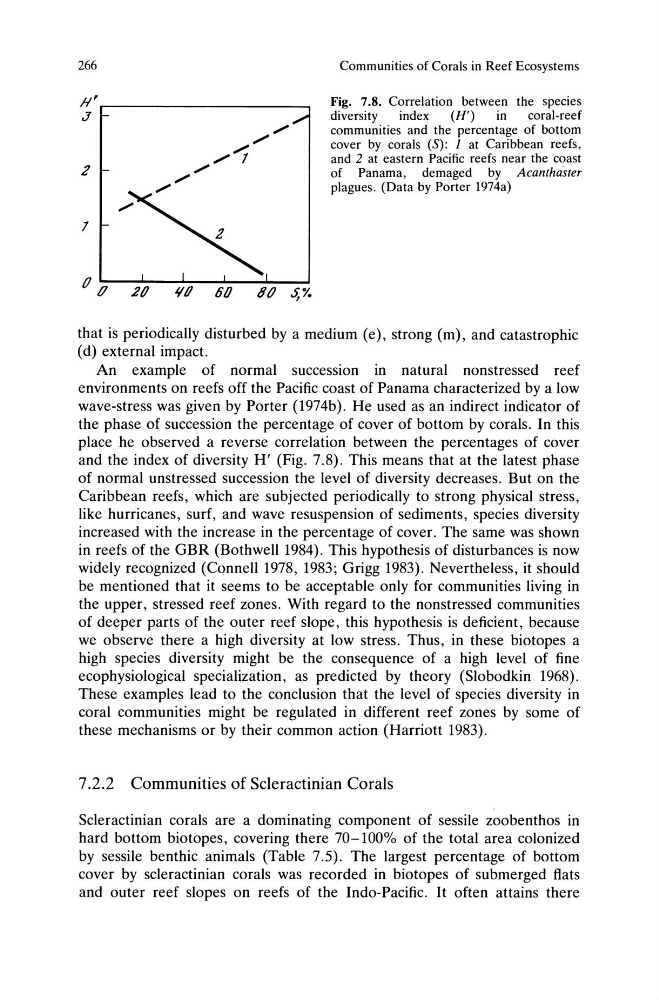
Fig. 7.8. Correlation between the species
diversity
index
(H')
in
coral-reef
communities and the percentage of bottom
cover by corals (S): 1 at Caribbean reefs,
and 2 at eastern Pacific reefs near the coast
of Panama, demaged by Acanthaster
plagues. (Data by Porter 1974a)
that is periodically disturbed by a medium (e), strong (m), and catastrophic
(d) external impact.
An example of normal succession in natural nons tressed reef
environments on reefs off the Pacific coast of Panama characterized by a low
wave-stress was given by Porter (1974b). He used as an indirect indicator of
the phase of succession the percentage of cover of bottom by corals. In this
place he observed a reverse correlation between the percentages of cover
and the index of diversity H' (Fig. 7.8). This means that at the latest phase
of normal unstressed succession the level of diversity decreases. But on the
Caribbean reefs, which are subjected periodically to strong physical stress,
like hurricanes, surf, and wave resuspension of sediments, species diversity
increased with the increase in the percentage of cover. The same was shown
in reefs of the GBR (Bothwell 1984). This hypothesis of disturbances is now
widely recognized (Connell 1978, 1983; Grigg 1983). Nevertheless, it should
be mentioned that it seems to be acceptable only for communities living in
the upper, stressed reef zones. With regard to the nonstressed communities
of deeper parts of the outer reef slope, this hypothesis is deficient, because
we observe there a high diversity at low stress. Thus, in these biotopes a
high species diversity might be the consequence of a high level of fine
ecophysiological specialization, as predicted by theory (Slobodkin 1968).
These examples lead to the conclusion that the level of species diversity in
coral communities might be regulated in different reef zones by some of
these mechanisms or by their common action (Harriott 1983).
7.2.2 Communities of Scleractinian Corals
Scleractinian corals are a dominating component of sessile zoobenthos in
hard bottom biotopes, covering there 70-100% of the total area colonized
by sessile benthic animals (Table 7.5). The largest percentage of bottom
cover by scleractinian corals was recorded in biotopes of submerged fiats
and outer reef slopes on reefs of the Indo-Pacific. It often attains there
h/'r------------------------,
J
Z
7
{l t7
Z{l
60
8{l S,%
Communities of Corals in Reef Ecosystems
Fig. 7.8. Correlation between the species
diversity
index
(H')
in
coral-reef
communities and the percentage of bottom
cover by corals (S): 1 at Caribbean reefs,
and 2 at eastern Pacific reefs near the coast
of Panama, demaged by Acanthaster
plagues. (Data by Porter 1974a)
that is periodically disturbed by a medium (e), strong (m), and catastrophic
(d) external impact.
An example of normal succession in natural nons tressed reef
environments on reefs off the Pacific coast of Panama characterized by a low
wave-stress was given by Porter (1974b). He used as an indirect indicator of
the phase of succession the percentage of cover of bottom by corals. In this
place he observed a reverse correlation between the percentages of cover
and the index of diversity H' (Fig. 7.8). This means that at the latest phase
of normal unstressed succession the level of diversity decreases. But on the
Caribbean reefs, which are subjected periodically to strong physical stress,
like hurricanes, surf, and wave resuspension of sediments, species diversity
increased with the increase in the percentage of cover. The same was shown
in reefs of the GBR (Bothwell 1984). This hypothesis of disturbances is now
widely recognized (Connell 1978, 1983; Grigg 1983). Nevertheless, it should
be mentioned that it seems to be acceptable only for communities living in
the upper, stressed reef zones. With regard to the nonstressed communities
of deeper parts of the outer reef slope, this hypothesis is deficient, because
we observe there a high diversity at low stress. Thus, in these biotopes a
high species diversity might be the consequence of a high level of fine
ecophysiological specialization, as predicted by theory (Slobodkin 1968).
These examples lead to the conclusion that the level of species diversity in
coral communities might be regulated in different reef zones by some of
these mechanisms or by their common action (Harriott 1983).
7.2.2 Communities of Scleractinian Corals
Scleractinian corals are a dominating component of sessile zoobenthos in
hard bottom biotopes, covering there 70-100% of the total area colonized
by sessile benthic animals (Table 7.5). The largest percentage of bottom
cover by scleractinian corals was recorded in biotopes of submerged fiats
and outer reef slopes on reefs of the Indo-Pacific. It often attains there