

258
Communities of Corals in Reef Ecosystems
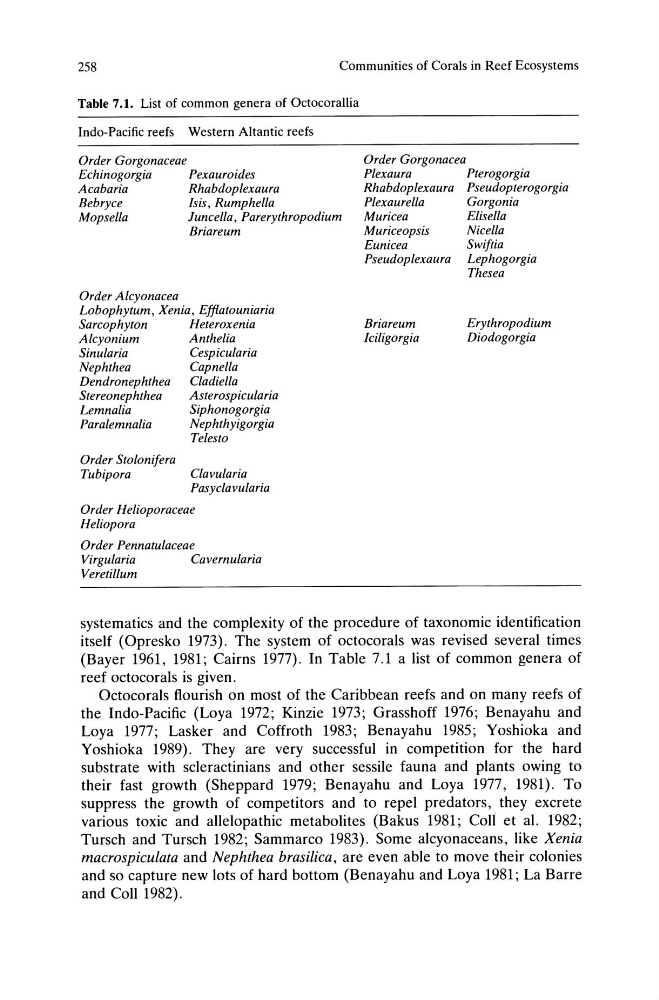
Table 7.1. List of common genera of Octocorallia
Indo-Pacific reefs Western Altantic reefs
Order Gorgonaceae
Echinogorgia
Pexauroides
Acabaria
Rhabdoplexaura
Bebryce
Isis, Rumphella
Mopsella
luncella, Parerythropodium
Briareum
Order Alcyonacea
Lobophytum, Xenia, Efflatouniaria
Sarcophyton
Heteroxenia
Alcyonium
Anthelia
Sinularia
Cespicularia
Nephthea
Cap nella
Dendronephthea Cladiella
Stereonephthea
Asterospicularia
Lemnalia
Siphonogorgia
Paralemnalia
Nephthyigorgia
Order Stolonifera
Tubipora
Telesto
Clavularia
Pasyclavularia
Order Helioporaceae
Heliopora
Order Pennatulaceae
Virgularia
Cavernularia
Veretillum
Order Gorgonacea
Plexaura
Pterogorgia
Rhabdoplexaura Pseudopterogorgia
Plexaurella
Gorgonia
Muricea
Elisella
Muriceopsis
Nicella
Eunicea
Swiftia
Pseudoplexaura Lephogorgia
Briareum
/Ciligorgia
Thesea
Erythropodium
Diodogorgia
systematics and the complexity of the procedure of taxonomic identification
itself (Opresko 1973). The system of octocorals was revised several times
(Bayer 1961, 1981; Cairns 1977). In Table 7.1 a list of common genera of
reef octocorals is given.
Octocorals flourish on most of the Caribbean reefs and on many reefs of
the Indo-Pacific (Loya 1972; Kinzie 1973; Grasshoff 1976; Benayahu and
Loya 1977; Lasker and Coffroth 1983; Benayahu 1985; Yoshioka and
Yoshioka 1989). They are very successful in competition for the hard
substrate with scleractinians and other sessile fauna and plants owing to
their fast growth (Sheppard 1979; Benayahu and Loya 1977, 1981). To
suppress the growth of competitors and to repel predators, they excrete
various toxic and allelopathic metabolites (Bakus 1981; Colt et al. 1982;
Tursch and Tursch 1982; Sammarco 1983). Some alcyonaceans, like Xenia
macrospiculata and Nephthea brasilica, are even able to move their colonies
and so capture new lots of hard bottom (Benayahu and Loya 1981; La Barre
and ColI 1982).
Communities of Corals in Reef Ecosystems
Table 7.1. List of common genera of Octocorallia
Indo-Pacific reefs Western Altantic reefs
Order Gorgonaceae
Echinogorgia
Pexauroides
Acabaria
Rhabdoplexaura
Bebryce
Isis, Rumphella
Mopsella
luncella, Parerythropodium
Briareum
Order Alcyonacea
Lobophytum, Xenia, Efflatouniaria
Sarcophyton
Heteroxenia
Alcyonium
Anthelia
Sinularia
Cespicularia
Nephthea
Cap nella
Dendronephthea Cladiella
Stereonephthea
Asterospicularia
Lemnalia
Siphonogorgia
Paralemnalia
Nephthyigorgia
Order Stolonifera
Tubipora
Telesto
Clavularia
Pasyclavularia
Order Helioporaceae
Heliopora
Order Pennatulaceae
Virgularia
Cavernularia
Veretillum
Order Gorgonacea
Plexaura
Pterogorgia
Rhabdoplexaura Pseudopterogorgia
Plexaurella
Gorgonia
Muricea
Elisella
Muriceopsis
Nicella
Eunicea
Swiftia
Pseudoplexaura Lephogorgia
Briareum
/Ciligorgia
Thesea
Erythropodium
Diodogorgia
systematics and the complexity of the procedure of taxonomic identification
itself (Opresko 1973). The system of octocorals was revised several times
(Bayer 1961, 1981; Cairns 1977). In Table 7.1 a list of common genera of
reef octocorals is given.
Octocorals flourish on most of the Caribbean reefs and on many reefs of
the Indo-Pacific (Loya 1972; Kinzie 1973; Grasshoff 1976; Benayahu and
Loya 1977; Lasker and Coffroth 1983; Benayahu 1985; Yoshioka and
Yoshioka 1989). They are very successful in competition for the hard
substrate with scleractinians and other sessile fauna and plants owing to
their fast growth (Sheppard 1979; Benayahu and Loya 1977, 1981). To
suppress the growth of competitors and to repel predators, they excrete
various toxic and allelopathic metabolites (Bakus 1981; Colt et al. 1982;
Tursch and Tursch 1982; Sammarco 1983). Some alcyonaceans, like Xenia
macrospiculata and Nephthea brasilica, are even able to move their colonies
and so capture new lots of hard bottom (Benayahu and Loya 1981; La Barre
and ColI 1982).