

218
Coral Reef Fish
Table 6.4. Number of species in common families of reef fish
found in explosion samples collected at a section across the
central part of the GBR (after Williams and Hatcher 1983)
Family
Pomacentridae
Labridae
Chaetodontidae
Gobiidae
Serranidae
Apogonidae
Holocentridae
Scaridae
Acanthuridae
Rest of 37 families
Number of species
in family
57
46
28
21
22
17
16
14
10
92
Total number of species recorded
323
Fish migrating in
daytime to the reef
flat from outer reef
slope looking for refuges
jj;
Fish communities of
outer reef slope
Fish, which live in the lagoon
and on the reef flat
only during juvenile stage
Predatory fish, which migrate
at night from outer reef slope
to feed on reef flat
Fish, which are permanent
residents of outer reef slope
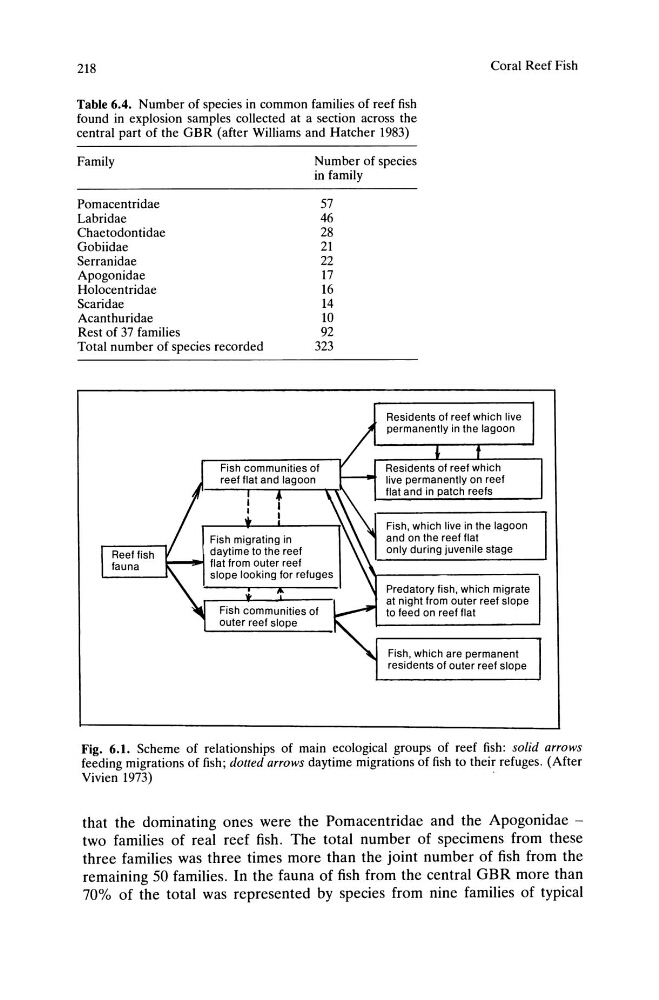
Fig. 6.1. Scheme of relationships of main ecological groups of reef fish: solid arrows
feeding migrations of fish; dotted arrows daytime migrations of fish to their refuges. (After
Vivien 1973)
that the dominating ones were the Pomacentridae and the Apogonidae -
two families of real reef fish. The total number of specimens from these
three families was three times more than the joint number of fish from the
remaining 50 families. In the fauna of fish from the central GBR more than
70% of the total was represented by species from nine families of typical
Coral Reef Fish
Table 6.4. Number of species in common families of reef fish
found in explosion samples collected at a section across the
central part of the GBR (after Williams and Hatcher 1983)
Family
Pomacentridae
Labridae
Chaetodontidae
Gobiidae
Serranidae
Apogonidae
Holocentridae
Scaridae
Acanthuridae
Rest of 37 families
Number of species
in family
57
46
28
21
22
17
16
14
10
92
Total number of species recorded
323
Fish migrating in
daytime to the reef
flat from outer reef
slope looking for refuges
jj;
Fish communities of
outer reef slope
Fish, which live in the lagoon
and on the reef flat
only during juvenile stage
Predatory fish, which migrate
at night from outer reef slope
to feed on reef flat
Fish, which are permanent
residents of outer reef slope
Fig. 6.1. Scheme of relationships of main ecological groups of reef fish: solid arrows
feeding migrations of fish; dotted arrows daytime migrations of fish to their refuges. (After
Vivien 1973)
that the dominating ones were the Pomacentridae and the Apogonidae -
two families of real reef fish. The total number of specimens from these
three families was three times more than the joint number of fish from the
remaining 50 families. In the fauna of fish from the central GBR more than
70% of the total was represented by species from nine families of typical